


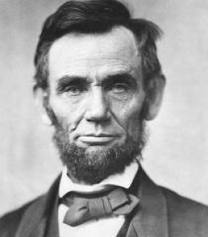
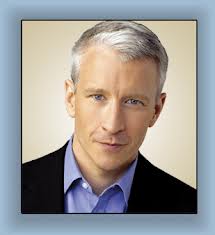
I’ve noticed recently a spate of blogs and websites declaring which famous people are bipolar (please visit: (http://pinterest.com/bipolarbandit/famous-people-with-bipolar-disorder/). This identification of plausible personalities is a definite indication of social change. To see familiar faces, icons, sport legends, entertainment moguls, and just plain “they’ve-got-it-too” types provides a sense of belonging to a community-at-large which includes not just me, or members of my support groups, but people whose face is undeniably recognizable and never dreamed that they, too, face the same challenges I face. And there’s a degree of comfort in that. Secondly, it begins to slowly tear apart the prejudice and educate the ignorant not necessarily about mental illness, but that anyone, their favorite hockey player, their dreamboat actor or actress, their business executive role model, can and do live with mental illness.

This identification is the initial crack in the shell of shame and stigma. And we (people living with mental illness) didn’t invent the tactic. For instance, a similar identification of the famous and powerful occurred during the homosexual march toward acceptance and respect. The exposure of the public’s least likely to be or to have is one step closer to the day when ordinary patients living with a mental 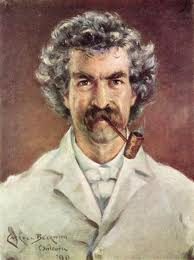 illness can disclose their disorder free from the fear of isolation, castigation, or retaliation by pointing to the recently exposed successful, popular, and famous comrades-in-madness. This identification of recognizable personalities borders on the romanticizing of madness which isn’t that dissimilar to the mid 90’s trend to have a gay friend.
I can testify to the similarities because I’m gay and I’m bipolar and I voluntarily disclose these two details with the same degree of importance as when I confess that I microwave my ice-cream or that I prefer medium starch on my dress shirts.
In the homosexual world your voluntary disclosure is commonly referred to as “coming out (of the closet).” The expression “coming out” was introduced to the gay lexicon first in the 20th century and has permeated the  American lexicon during the late 21st century. “Coming out” was seen as an introduction into the clandestine gay subculture and compared to a débutante’s coming out party. Today “coming out” is less likely a party and more likely an uncomfortable incident, like soiling your pants in public or getting arrested for peddling questionable pornography. Their concern is how the homosexual lifestyle will impact them (that is, the collective “them”) and are notorious for their absence of empathy or support. Some abandon; some think its a phase; some deny; some cover their ears; and some (like my mother) invoked the bigotry of my dead father and wept when she looked at me. And then there are others — embracing and supportive listeners; honored to have been told; and a few see the courage and witness the honesty and reverse their ill-informed ideas that homosexuality is Satan’s playground.
In 1952 the American Psychiatric Association listed homosexuality as a sociopathic personality disorder in the DSM (Diagnostic and Statistical Manual) . In 1969 a week-long gay uprising in New York City started by a police raid in a Mafia owned bar called The Stonewall Inn started the gay movement toward equality. In 1973 homosexuality was officially removed from the DSM and was no longer considered a psychiatric disorder.
Remaining quiet, covert, dishonest, and shameful simply reinforced the commonly held belief that there was something wrong with homosexuality. As early as the mid-19th century German’s were advocating the public admission by men and women of their homosexuality as a form of emancipation. It took another century and countless victims of bigotry, hatred, and ignorance before homosexuals coalesced into a unified voice demanding that the social stigma of being a homosexual be eliminated. It’s taken another 40 years before more than fifty percent of all American’s believe that gays and lesbians should have the same right to marry as heterosexuals.
I believe that there are great similarities between the long and painful trailblazing required to achieve acceptance of homosexuality as a legitimate lifestyle and the eradication of the social stigma people living with mental illness experience on a daily basis. Both groups perpetuated their own discrimination by remaining silent as society tortured, oppressed, and determined that it (homosexuality or mental illness) was an abomination which must be isolated, subjected to brutal and inhumane treatments, or permanently removed. The gay rights movement was sparked by one drag queen who was determined that she would not tolerate brutality at the hands of the police simply because she was homosexual. Her defiance was her voice and her protest was her high-heeled shoe parried in the face of her tormentors.
Will it be your voice that’s louder than the others? Will it be your courage that’s Tweeted around the world? Will you be the one that’s still mentioned fifty years later as the voice which shouted, “this is the last straw!”
Which it was.
All thanks to you.
Related articles
- Miliband takes on mental illness… (thisfragiletent.com)
- Mental illness at work: the last taboo (telegraph.co.uk)
- When The New York Times Came Out of the Closet (nybooks.com)




 HARLAN DIDRICKSON