Nothing More, Nothing Less

image

Of all the words of mice and men, the saddest are, “It might have been.”Kurt Vonnegut

My regret, as it relates to an incident which first occurred forty-five years ago, is a testament to the idiom, “What goes around, comes around.” It suggests that my intermittent regret is atonement for the pleasure discovered so many years ago. This regret appears when loneliness is in full bloom; this deep seated crater, evidence of a familiar collision between bond and betrayal. It’s then, at that point of emptiness, that my pleasing recollections tease like Saturday double-feature matinees. The collection of memories occurs as thirst, my unquenchable devotion; or reappears every once in a while like time’s patina on my beloved silver tea service.

I was hoping for a magnificent catharsis upon my reconciliation of the incident and my fractional culpability; that my written admission might forgive years of verbal omission; that truth is lighter than shame; that recollection isn’t always significant and time’s forgetfulness would diminish the episode in the tent to childhood antics. But that humid summer night awareness arrived like an overdue letter, the content of which landed like a heavyweight’s right hook to the kidneys burying his fist deep so as to eventually become a part of me. But that is not the case. Instead of a breeze wafting past my memory and snagging itself on the thin fan blades of time, I discover that recollection and the question of responsibility are loans against my character, and which will one day, demand to be settled. That is, someday everyone will confront actions which involved someone else to determine what fraction of the incident belonged to them, and what, if any, reparations they needed to make. I’ll pony up whatever it costs to finally discharge this forty-five year debt. And yet, I remain suspicious as to the degree of honesty, because truth is an All In bet played foolishly by amateurs then followed by ruin. The same with truth; uncovering white-lies is hardly threatening. But to declare my behavior publicly after four decades of denial is dangerous and alienating. We as a society avoid the truth: Just tell me what I want to hear and keep the truth for Mr. Jones, nothing more and nothing less.

image“Let’s not burden our remembrance with a heaviness that’s gone.”William Shakespeare

It was a torturous July night, one which promised cold fronts: instead Mother Nature kept Hot and Humid to work a second shift; it was hot and quiescent and a blanket of humidity wrapped itself around the tent like a gauze dressing. A bright summer moon shot its light through the opened, netted windows and collected at the foot of our sleeping bags. ‘Ihe only sound was the whisper of a passing Impala or Nova as it whispered down Lapham Street. Pete and Jimmy were fast asleep on their half of the tent; Jimmy laying on his side, Pete on his stomach, both facing the wall. David and I were both lying on our backs staring at the tents’ nexus. The heat kept chained dogs to bay for relief; thank God for their suffering as it was the only distraction rescuing us from Serendipity; Our slow, repetitive breathing, and perhaps the scratch of a bare foot on nylon. Calm to kids was known as bored and bored kids look for action. But calm with David was breathless. Perhaps we fell asleep; perhaps I turned on my side to face him and found him naked; perhaps it was all an accident; perhaps it was a cosmic collision, a misdemeanor in which one of us crossed the double yellow line of personal space and found ourselves in the middle of an adolescent fender bender.

Perhaps it was calculated; perhaps appetite and thirst were presented at auction to the highest bidder; perhaps I signaled to the Great Auctioneer in the sky my silent bid and purchased a lifetime of homosexuality. But in reality it was, simply, memorizing David. Naked. Nothing more and nothing less.

image“We rarely regret of having eaten too little.”Thomas Jefferson

I don’t know if it’s my self protection but I need to complicate the simplicity of this moment: as though my whole life were riding on this one throw of the dice. I need to turn this into something larger than life; a Busby Berkeley production filmed in Panavision or CinemaScope; a film directed by Cecil B. DeMille. I was in desperate need of an epiphany; I ransacked my memory for the appearance of an oracle; I hoped for a deity’s prophecy which I could present to friends and family foreshadowing my unexpected interest in the physiques of men? Christ, there must be some significance that I can assign to the reruns of a deteriorating memory which has been nailed to my consciousness for twenty five years? It can’t possibly be as simple as being mesmerized by Jim’s baby brother’s exhibition of arousal. It can’t be naïveté when David rolled to his side, pleased by my curiosity. it can’t be as careful as two boys fingers dancing along ridges of goose-flesh. It can’t possibly be as innocent as that. Christ! It could have been any boy, any night, any chance glance. And I cannot remember if I touched David or if David touched me or what we did, if anything, while we were naked. Or if we just laid there undressed and studied each other. It seems hard to imagine that David and I would have merely laid there, inactive for ten minutes. It seems plausible that there was activity. But if there was, I cannot remember it. And yet I was fascinated. Much more than curious, I was drawn, I could feel my attention consumed, my hesitation devoured. It wasn’t that he was completely different than I, it was that he was simply different than I. He was thin and lean, I was husky; I was dark haired, hazel eyes, he was blond and blue. All I knew was that I wanted to have a body like his, and if I wasn’t going to have a body like his then the next best thing was to get my hands on as many bodies like his as I could.


This Christmas, He Gave Me A Look From Outside, Inside.

present

“Surprise!”  is what I used to say, years ago, early on in our twenty-eight year relationship.  Back when we hadn’t really yet learned each other’s tastes (or better, tolerances).  Fifteen years ago I’d stand there, his gift balanced by my sweaty hands, my nerves knotted and twisted like the Strangler Fig tree, praying for his hullabaloo upon opening the gift, followed by a tight embrace, further followed by his quick kisses like a woodpecker atop some pine. A decade ago I’d pluck the gift from beneath the tree with little ceremony, hand it to him, then sit back and watch as he tested-then-tore layer by layer of packaging, similar to a child tasting her way through a box of chocolates.  The past few years like a couple of archaeologists, the dig was more fun than the discovery!  At last he found the gift and I present-modernwaited for the inconclusive and rudimentary sentiment followed by a brief embrace and a kiss as light as a hummingbird.  Three years ago I’d started to hear “How’d you know I wanted this?” his amazement falling to the side of curiosity rather than tickling admiration, and my answer, diluted through the years like cheap gin, “I thought you could use this,” at which he cocked his head like our dog’s misunderstanding, and then I presented the real gift, “There’s a gift receipt taped to the lid should you choose to exchange it for a color more to your liking than orange.”  I’ve learned over the course of twenty-eight years that we buy lovers/partners/spouses clothing we’d like to see them wear, and definitely not the clothing they like to wear.  So after two decades of my repeated attempts to upgrade his personal style year after year by giving him exquisite gifts (which he surreptitiously found ghastly) I learned that a gift receipt, like the “get out of jail card,” nullifies my responsibility for his disinterest in modern style, and ensures that he can exchange the atrocious article for an object of his liking.

But this Christmas his gift to me was different than the previous twenty-seven.  Very, very different.  Absent was the gift receipt.  He handed me the gift without fanfare, explanation, or apology.  He simply said, “Merry Christmas.”

Hidden beneath wrapping paper we’ve had for twenty years was a book.  But not some book he’d like to read.  No, this was a book I’d already read and reread; I had a greater degree of familiarity with the final pages, but the earlier pages popped once more like bubble gum.  The book he gave me was “Becoming not Became: The First 100 Posts,” by T.M. Mulligan.

IMG_0434

IMG_0436IMG_0435

I was dumbfounded then speechless then crying.  I was flabbergasted to hold Mr. Mulligan’s first 100 posts printed on heavy, magazine-grade paper and hardbound.  It’s rare indeed, to hold yourself up to yourself, to be reflected, to permit yourself to be tickled, concerned, angry, interested, and entertained.  I suppose narcissism might come to mind; but if you’re beautiful or handsome why not enjoy a modicum of self-appreciation.  Or, like me, those 100 posts represented dear friends, young and old, whom I haven’t visited, but whom all came together under the same roof for me.  I shall take my time reading these posts and thoroughly enjoy each one’s company greater than before.

Thank you so much, Nick.


Finally Understanding Life As Mani A.

manny-young

I first met Mani A. a few months after my father died when I was fifteen.  He appeared from around a blind corner where Wong-Su restaurant and Teddy’s Tavern meet like a knife’s edge.  He was a restless, sinewy, no-nonsense blond wearing his older-brother’s-hand-me-downs.  I apologized and excused myself immediately, but he roared to life like a freshly started chainsaw and lunged at me with a ferocious diatribe about a blokes right-of-way and his unalienable rights, to which I chimed in, “But you are an alien!”  He paused, his idling mind wafting the blue smoke of burning oil, when suddenly he hit the throttle baring his teeth and chortled that he wasn’t a bloody martian, see, so piss off with the alien bullocks; crikey, he has the right to use public property as a thoroughfare without being gobsmacked by some daft wanker! until, I think, he heard himself running-on about some kind of whack job hyper-speech at which time he slowed, eventually landing softly on a patch of green peckhamengland-1grass.  I sat next to Mani A. who opened up like a teenagers compact, and divulged his personal life in Peckham, England (just outside of London), which, by the way he described it, was a tortuous place; a hometown without a home, a chilling place that nobody admitted coming from, everybody just shows up one day, street-smart and dodgy, showed up-growed up because nobody ever had a childhood.  You were either born a teen-ager or plain old smeg.  Nobody was ever just a kid; and nobody ever saw a kid.  We were around the same age and dreamt of similar things, but whereas I knew mine were silly fantasies, Mani A. was certain that whatever he wanted he could have.  No kidding.  Without the slightest doubt or reservation, whatever Mani A. wanted, Mani A. could get.  Period.  Mani A. had balls.  Whether Peckham beat them into him or he developed that confidence on his own, the strength of his conviction, no matter the degree of unlikelihood, you had to think, hey, it just might happen.  I’ve never met anyone in my entire life that expressed the depth of fortitude that Mani A. did.  I said my life must seem like a cartoon compared to yours: I was two-steps west of being white trash, and while our home lives seemed oddly similar, I never learned how to survive; I just wait.  For what, he asked leaning his elbow onto the grass.  For anything.  Anything besides this shit hole I can’t get myself out from.  At which Mani A. leapt to his feet, extended his hand and said, come on mate, I’ll show you the dog’s dinner that’ll make your life now look like a wee bit of the hard lines.  Your going to get a crash course in Peckham Survival Know-How.  First, you learn about being borne:  In Peckham you didn’t cut your teeth; you growled and snapped!  We learn to bite before there’s anything to bite.  Being ahead, that’s tickety-boo; getting ahead never happens, especially in Peckham.  And so started six months of juvenile delinquency including assault (knife-school-teacher), battery (brother), truancy, and one stern lecture from a juvenile judge away from living in a home for dangerous boys.

It wasn’t until Mani A. left town did I get my head screwed back on tight.  I toed the line, straightened out school, became popular, played sports each season, acted, sang, even led student government.  Counselor’s referred to me as the idyllic example of reform.  But in the back of my head I could still hear Mani and all the things he said and showed and prompted me to do.  Being “ways” by choice, not by reaction.  Mani didn’t show me how to live,chubbyseniorportrait Mani showed me how to survive.  Mani and I have maintained our friendship for over forty years.  One of the things I admired about Mani was his bond of friendship.  Or should I say degree of bond of friendship.  Whenever he helped take care of something cagey, I’d ask him why he’d get involved?  His answer has always been the same: friendship.  He said all other relationships have their own bloody baggage and demands and expectations, and ways to screw you in the end.  But friends are simply friends.  Easy, like looking in the mirror.  I see a wee bit of my bloody self in you.

Mani continued to visit at irregular intervals, all of which were concurrent with troubling, impossible, or unavoidable circumstances.  For example, he swung into town when my junior year in high school devolved into adolescent chaos: ducking senior hazing, sidestepping discussions highlighting my grim blue-collared, unionized, married and fatherly fate; derailing any parochial collision between varsity lettermen and my shadowy shine for Mitchell, an underclassman; and my obesity targeted by jeering and loathsome bullies.  He arrived shortly after Stokowski and I went to Union Drop Forge hoping to snag summer work which leads to full time after graduation.  Our bus drove through the “Blue Mile,” a one mile corridor of heavy, eye-reddening, cough-inducing, toxin-saturated manufacturing exhaust.  We nicknamed that part of oldermani2town the “Blue Mile” because of that solar eclipsing blue haze belched from fifty-foot smoke stacks every minute of every day.  I took my application home where it still remains blank.  I wanted my future to be unexpected.  To be a lifetime removed from the cadence of the dead-end-man: a union job, a wife, a stuffy upper flat, kids we can’t afford, dependence on two incomes, kids dumped with objecting in-laws, hate and regret pitched at the other, and some place my hope tumbled out of my greasy coveralls pocket while reaching for my lighter which I never missed until I reached for it, right after she left with the kids flanked by her objectionable parents.  That tableau was the only life option offered to kids like me.  It was expected, and you were expected to follow the guy ahead of you.  But I dreamt of the unexpected, the unpredictable chaos of life beyond the “Blue Mile.”  College required good grades, but demanded money.  The costs were way beyond my family’s reach; so far afield that going to college became a family gag.  And then, when my avenues and alleyways around the tuition hurdle went bust Mani stopped by on his way back to Peckham.  His first words were, You look like a sorry sod, chum!  causing me to expunge my year of hopelessness and depression.  He waited until I stopped crying before he said, Sometimes you’ve got to be bonkers, your mates marching to a paycheck will call you a mug, but remember life is horses for courses!  And you’ve got to be bold!  You’ve got to be; because being bold and senseless and relentless are the only way out.  Back in Peckham if you’re pegged a nesh or are sussed acting naff the rest of life in Peckham is going to be piss poor.  You and your chums go about blagging tough, and sometimes it goes fist-to-cuffs.  In Peckham it ain’t about violence because violence there is like your factory here.  In Peckham it’s about surviving life, about tomorrow.

In 2008 Mani broke all the rules.  Rather than subtle clues that he’s a stones throw away, he decided that my end game was near, so he ruptured my barrier of sanity, perforated my character, elbowed out reality, and declared chubyoldermaniautonomy.  Mani was finally emancipated; freed from the crushing compliance of decency and propriety, he ignored laws, took chilling risks, discovered a steady stream of opiates which he washed down with lethal liters of alcohol, ignored vows, ruined friendships, tossed out of jobs, denied benefits, and finally barricaded himself in the office of a psychiatrist who eventually evicted him, and reinstated my authority over the dominion of my life.

I’ve never faulted Mani for his insurgency.  He was simply providing the bravado to traverse the craggy cliffs of life, and of which I was ill-prepared to navigate.  But as Mani A. learned, freedom from consequence isn’t freedom at all.  It’s destruction, it’s disregard, it’s vengeful and dangerous and hateful and lethal   But Mani did have a knack for getting the job done which he introduced, tutored, and polished in me, providing the backbone for a career.  I think that’s how he survived: Mani and I got hired by gentlemen to take care of things quietly and cleanly.  Not that we ever broke the law, but we definitely broke the rules.  Mani recited many adages over the years, but the single-most poignant he shared with me was:  You can’t quit; every bloody cry-baby “says” they want “it,” but quit the second they’ve got to act like a chancer.  There are just two times you can quit: when you take the biscuit or hop the twig. 


Related articles

Life: A la Carte or Prix Fixe?

I live life à la carte; by à la carte I mean by choice, especially my choice.  My brother for instance, abdicated his causative influence on life, and welcomes whatever life serves at whatever life costs.  In other words I enjoy the risk of tasting uncertainty while my brother prefers a routine cuisine.

When life is à la carte you can select depending on what’s offered, or you can request what you want and risk denial.  There are many people who anticipate rejection and therefore never make the request.  Are they ducking rejection or avoiding the chagrin of wonder.

Part of living life à la carte is the opportunity of choice; to determine things you like and things you don’t like.  For instance:

EXAMPLES OF THINGS I DON’T LIKE (but others of influence intervened)

  1. I don’t like fresh tomatoes; I do like most everything made with tomatoes because 1) It doesn’t look like tomatoes; and, 2) It doesn’t taste like tomatoes.  During the first decade of our relationship, I drove my partner home for the holidays and slept for a few hours before leaving by 5:00 am.  I reluctantly slid from beneath the warmth of the down comforter like a young dawdling duckling suspicious of life outside the nest.  Being atomatounfamiliar with the layout of their home, I was quiet as a church mouse on roller skates in a dark china shop chaperoned by a cat whose moniker was MouseOust.  I felt like a fighter lolling on the ropes desperate to get his footing; my intention of a tippy-toe takeoff was aborted when his mother’s voice encouraged me to eat before departure.  An encouraging mother-in-law at 4:30 a.m. motivated me like a drill Sargeant at boot camp.  She puttered about the kitchen when my partner shuffled to the kitchen table and sat at my side. Your mother insisted I stay for breakfast at which time he leapt from his seat like a cricket and raced to the kitchen.  I could hear them intensely talking in German when my partner walked to the table and whispered, I’m sorry, I tried everything including allergies, but she insisted!  Did you make a lot of noise to wake her?  I made some noise I sheepishly admitted at the exact moment his mother served me a piping hot, dense, and practically impossible to swallow without chewing cup of German Kaffe and a plate covered by a dozen rolling cherry tomatoes.  And then she sat next to me like a demanding nurse hovering over a boy, a tablespoon, and cod liver oil.  The first one exploded in my mouth when bit down; the second I tried to swallow like a gum ball; my partner quickly ate three and the other seven I tucked high inside my cheeks like chipmunks.  I was little more than five feet out the door when the tomato and coffee breakfast reappeared.  Right down the fender of their Plymouth Wagon.

  2. I don’t like dentists; I used to not like the sort of things dentists do, until I realized that dentists chose to do these things like an interrogator and his “talking tools.”  Actually, I’ve never liked dentists sin
    dentistce the age of three when I recall my father dragging me through the front door of Dr. Olson’s Dentistry Office and it’s tagline etched into the front window: “You’ll be happy to talk after just one visit!”  Every adult within a thousand feet knew that I didn’t want to be there; my father had to lift me, then hold me while Dr. Olson wrapped nylon-webbed belts around my shoulders and stomach.  Once I was trussed and couldn’t squirm, Dr. Olson slowly approached with that tiny mirror and that double-ended pick with which he digs cavities to fill.  “Open wide” the doctor ordered.  Nope.  Then came the first of three slaps to the back of my he
    ad, each one harder than the last; the last one produced a prickly feeling inside my head and polka-dots wandered about in front of me.  My father, his Pabst/E&J brandy breath, and the unstable, intimidating tone of his threat, said so close to my ear dampening it, made sure I understood what and how he’d express the embarrassment he’d suffer because of my shenanigans.  Well, I don’t fault my father because I was only three, and intimidation followed by threats of brutality was how he’d handle anyone threatening his authority, even three olds.  He told me to open my mouth followed by another whack.  I complied and the two men actually seemed proud that they’d broken the colt.  Sort of.  My father told me to open my mouth, but he never told me what to do next.  So I waited patiently for Dr. Olson’s right index finger to worm inside my mouth then WHAM!  My jaw snapped shut on Dr. Olson’s finger and the melee that followed can only be described as a fumbled football during the fourth quarter of the Superbowl.  We all know what happened to me, but it was peanuts compared to Dr. Olson who received five stitches in his finger and told my father that I was not welcomed at his practice muttering, “damn little mongrel.”
  3. I don’t care for urologists.  No, that’s not true.  I don’t like a urologist’s index finger every six months.  But enough about that.
  4. I detest liver.  I’ve tried it at my partners prompting but the peculiar gritty texture and the overpowering smell of a dank basement doused any desire.  Perhaps I was a child in a family of cannibals in a past life, and while waiting at the dinner table Mother Cannibal served a steaming platter of liver, to which I exclaimed, “What, Liver again?”
  5. I have an absolute phobia of physical therapists.  Do I doubt their degree of success in eliminating my excruciating pain, or have I become accustomed to Western Medicine‘s preferred method of treatment: Prbackpainescriptions designed to mask the symptoms yet never correcting the reason for my discomfort; I’ve become dependent on prescriptions for that simple reason:  They manipulate your reasoning of treatment asserting that the absence of symptoms infers successful intervention, when it’s really sleight of hand and our assumption that doctors cure our ailments.  Disappear and cure are 
    not synonyms, no matter how persuasive your physician may be.

The Crisp Season of Change

At last it’s arrived, like a visit from my favorite uncle who told tales of unimaginable childhood freedoms (having been raised on a fruit orchard farm).  At long last it’s arrived, the darkness of dawn mornings and the dimness of late afternoon twilights.  Finally, finally it’s arrived, the season of the apple and the pumpkin and hot cider.  And thank God they’re gone, days that grated like my cat’s yowling or, tortuous days akin to the incessant presence of my just-turned-teen sister and her coterie of screeching and cackling teensters (defined as a pimply, high-pitched, recently teened and obstinate-as-hell, alien transmutation); those chronically simmering days followed by feverous and languid nights, the forecasted but broken-promised breeze failed to arrive like those letters from your summer camp romance.  Relief has clocked-in, elbowing out a tireless summer which dropped anchor like a battleship of fervent seamen and remained well past dry-docking the sailboat.  The ease of fruit pie-like single-layered simplicity (shorts sandals shirt) has given way to the time-consuming layered bundling like wrapping grandmamma’s Chatsford teapot for shipping, encasing oneself with layer upon shedable layer.

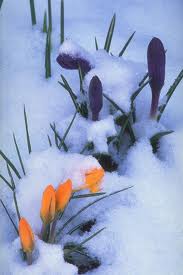
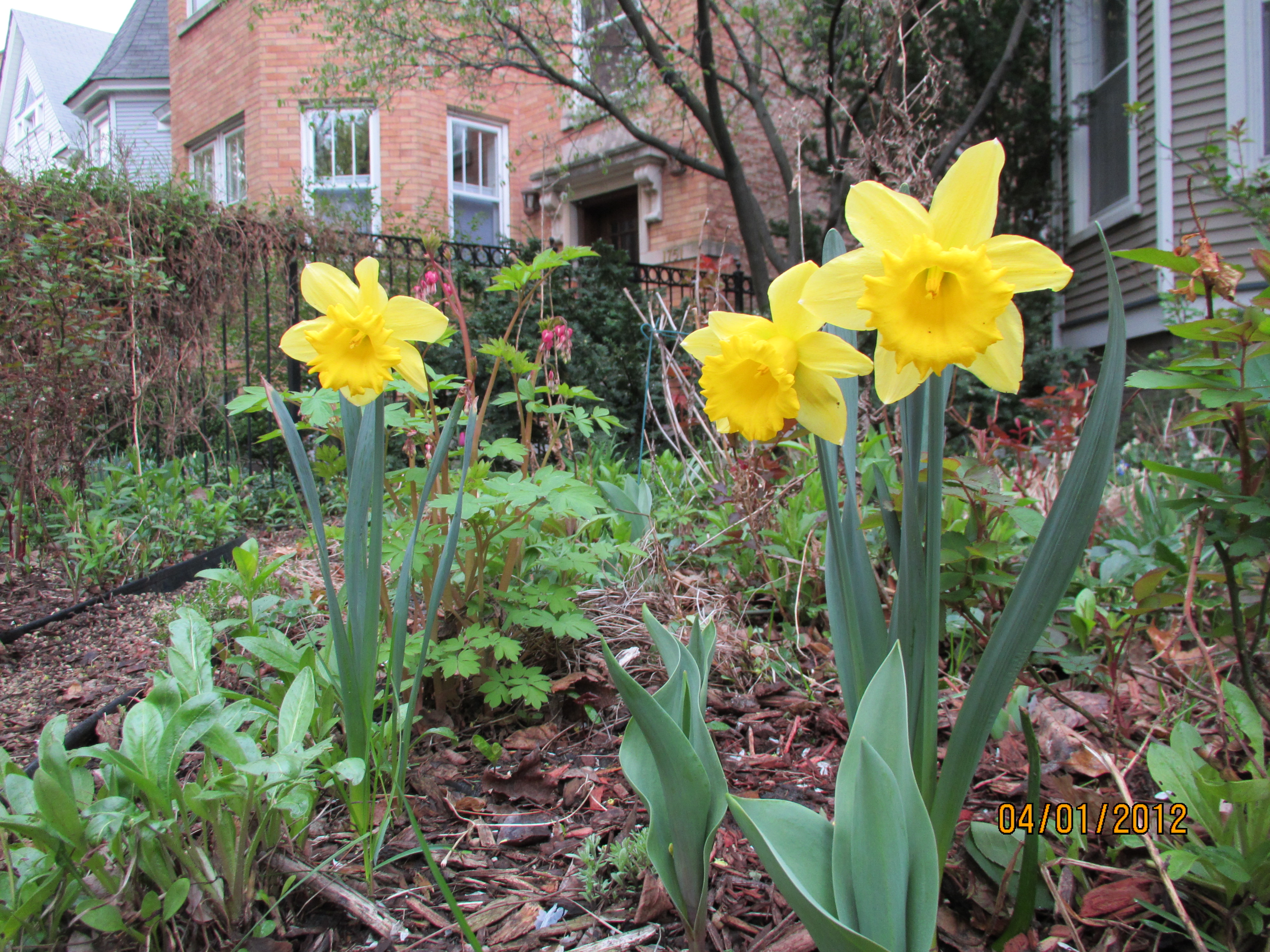
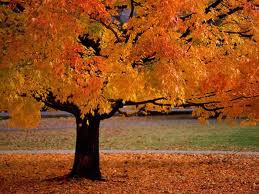
I’ve recently concluded that I prefer seasons of change (Spring and Fall) over seasons of suffering (Summer and Winter).  I enjoy the initial imperceptible adaptations which occur in the early spring and early fall: Spring’s first cautious knock of Snow Drops; fall’s tentative nips of brusque breezes.  Of course these trepidations soon give way to Spring’s salvo of elevating stems topped with an eternity of color and Fall’s broad strokes of vividly colored canopies which subtly cautions us of life’s temporal cycle.  The seasons of change also highlight our world’s overwhelming beauty and diversity; it’s also a testament that every piece of (what we call) life patiently waits its turn to express its individual magnificence, it’s solo, when the world recognizes its achievement during the season’s glory!

If only we, as part of nature, would patiently wait for our turn to shine with respect for each other (and our colorful diversity).  And that we, as a Snow Drop or a stitch in Autumn’s auroral quilt, are an irreplaceable verse in life’s grand narrative.