Hidden In My Blind Spot

I’m in the hospital: been since
Thursday, the day
my body packed on
seven pounds in two
days.  Med. Staff scurry like Lillyputians
upon sleeping Gulliver; all rubber-gloved
hands on deck!  Your charge: bee-line
to Admitting forthwith.  Cardiac
Floor has custody; such largess traded
for freedom; headboard resembles
cockpit; heart monitor spies
on any movement: feels like house
arrest.

My body threatens
my brain: both had breakdowns
mirroring the other: breakdowns
are my blind spot; mental
and physical illness collapse
beneath rubble of well-being’s
bombardment by remediless
disease.

A short while ago
my brain and my heart
were bright with promise
and smart with life’s storyline.
Today however, I can be found
in the scratch and dent
discounted department.

A Recent Visit With An Old Journal (July-September, 2008)

astormI do know how it happened, this convergence of the perfect storm, but the why I set it in motion is still a mystery to me. My feelings of absolute worthlessness have been building for years; starting much like the birth of a tsunami deep in some crevice in the ocean, a shifting of my inner tectonic plates, natural I suppose in the grind of life, but this shift caused great, unpredictable movement of the seas of my life which, by all accounts rose higher, and deeper, and soon engulfed the tiny town of my life, built, I suppose foolishly too close to the shore.

And then it came, this huge wave and friends and lovers fled. I on the other hand, all too well aware stood steadfast in its path. It washed over awaveme, this wave, crushing me against the only world I knew now, that which was beneath my feet. Gripping the sand I held firm, never certain that as it receded, that it would not pull me far, far out to sea.

Gradually it did retreat and once again the sun broke the surface and I lay gasping, choking on air which days before had given life and now condemns me to deal with this devastation.

I had a deep sense that not all was okay with me. I often complained of a dark gnawing I had felt, or heard in my mind. I always thought that it was my creative self scratching to get out in the form of writing. But now I wonder if indeed it was my inner self pleading for help. I could never articulate it sufficiently to those around me, nor did I ever think it was truly a cry for help. Until this week when, what I thought was my tidy little world fell absolutely apart. It was this week when I was diagnosed with major depression.
aquietzone2And from what I now understand it is taking a very predictable course complete with dark patches, rough zones, drifting away from reality, but the one part which I cannot fathom is my inability to be stimulated by more than one thing at a time. For instance, I cannot tolerate music playing and talking; I cannot tolerate stress; I cannot tolerate anger or anything except calm. If I sense more than one thing at a time I shut down and go to a quiet place.

I suspect it all fell apart when it all came together; a perfect storm as I have said; a convergence of three wholly separate, yet tumultuous events which I set in motion.

I had been in a loving 23 year relationship. We had all the trappings of a solid relationship: jobs, cars, cat, home, garden, money, retirement. But something was sorely lacking. Me. I wasn’t in it any longer. I couldn’t be in it. Being in it was too painful for me. The hurt which started as aloverskissingsuspicion around my drinking and drug abuse quickly cascaded into a kind of secret identity which I couldn’t share with him for fear of reprisal. I needed the drugs and alcohol to buffer the deepening sadness of my life. I didn’t want to face, didn’t know how to face this gnawing, this scratching which would never quiet on its own. The only way to silence it was through sleep, inebriation or a Vicodin high.

I also had a very romantic side which died when my partner no longer accepted my tokens of affection. It’s not that he didn’t want them, but they grew silly or unneeded or immaterial or expensive or, even I suppose worthless. Aren’t these tokens of affection best saved for times of seduction or apology or bereavement? And so into the roll-top desk of my life I placed this need to “show” my affection in the drawer called “get to later” right next to my sexual desires, overwhelming need for affection and self-worth. I simply closed the drawer and drew down the lid patting those things adieu. I knew they’d be withdrawn at some later date, when the amour would willingly accept my advances.

Should I have simply ignored his requests to cease and continued my gifts? Perhaps. But our finances had become so entwined that he would have known how much I had spent of these trinkets and he would’ve been cross. Could I have paid cash? Of course, I suppose, but when tokens of affection aren’t valued, the value plummets, the surprise ebbs, the feeling I get wanes. I learned to simply file it away.

I knew that our relationship had weathered many storms; it was built strong; based on honesty and open communication. But shouldn’t every abiggameman have a secret or two? A trinket of conquest placed deeply into a suit pocket? An amulet to ward off demons? A trophy? Hung handsomely on the wall? Hadn’t all my friends had trophies? Yes! Oh, yes, they had! Not one friend that I know has ever been in a relationship as long as ours without the occasional dalliance; but mine was different. Mine was a manic affair, built on a foundation of bogs and swampland and prone to sink.  A manic affair is a very dangerous liaison often resulting in collateral damage and repairable of which I did not fully anticipate it’s consequence.



When “Whom” Lost Majority To “What”

Bertolt Brecht (1898-1956) called it Estrangement;
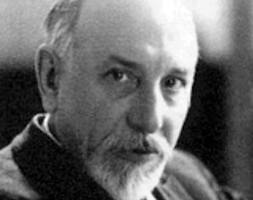
Luigi Pirandello, Nobel Laureate ( 1867-1936)
is often quoted as saying,
“. . . it is only a mask that man unconsciously assumes
in order to adapt himself to the social context in which he finds himself . . .”

abrecht2What was it that playwright and director Bertolt Brecht and Nobel Laureate and playwright Luigi Pirandello explored and recreated in the 1930’s?  Brecht called it Estrangement; Pirandello’s later works were framed self liberation by Disconnection. Both Brecht and Pirandello explored similar ideas through their plays and novels; and both arrived at the same intersection with theories and one fundamental question for audiences:  What condition or cause affords us to be estranged or disconnected, i.e. emancipated from a predictable life?  Both writers agreed:  We (representing humanity) wear various masks, depending on who we’re with, where we are going, for influence, or lust, or determination.  They challenged critics and writers alike by writing/directing that actor’s portray a character by imitation, impersonation, and isolation.  While they both wrote some of the greatest plays of the modern age, it was Brecht who pursued his theory of Verfremdung(They both wrote plays which explored their hypothesis:  but it was Brecht that had the advantage by writing and directing his plays).  Being both playwright and director he had the good fortune to write; test it on stage; rewrite . . . and so on, amalgamating ideas and discarding all but what worked within the Estrangement Movement: the actor isn’t the actual character, but a surreal representation of a character inside the play.  

Does that sound, in any way, familiar to you?  You’re not really crazy, you’re simply acting out; You’re not really crazy, you’re just vying for attention; you’re not the type, you’re just saying suicide to make me feel guilty.  So maybe you’re the shy but lethal type?  You stay in your room or apartment or Malibu Beach bungalow.  Maybe you have these conversations with . . . the character you play in your melodrama. It doesn’t matter which target you’re aiming your epithets.  Most of them don’t make sense any way.  In your gut you know you would never say or do any of the hollow threats or cynical promises.  Those things belong to the character you’re playing.  But the redemption you sought and were politely given isn’t yours to keep.  It belongs to that character you play (“a very convincing performance,” someone had said to you).

Your illness, it’s debilitating effects, duration, severity, and recovery provides a pension of patience and politeness.  But you’ve become conscious of a hushed and tiny change like a slow drip that floods a basement if ignored long enough.  This change, odd enough, isn’t about gettingappirandello smaller.  Indeed!  This change or sense of change remains like an irritating allergy.  And then, one day, one fine day, one more fine day, not another one fine day . . . you awaken to a certain degree of disorientation; you check your watch for the day of the week; the house has an eerily empty air; as though time simply passed by leaving you undisturbed.  You walk to the kitchen and see that the mundane morning rituals were indeed completed and one set of car keys was missing from the hook.

A magnificent change occurred during the night.  Quite similar to the fate of Kafka’s Gregor Samsa without all the bugginess.  The world stopped interacting with me as a lover,  friend, colleague, church member, brother and began to interact with me as an illness.  It’s as though a giant magnet simply plucked me out of my life, then delicately placed Mr. Mental Illness, a clone of me with one obvious exception:  it lacked me .  But this likeness, it was showered with change; attention when I spoke, belief when I discussed my illness, even slowing our pace to a speed I could manage.  A World of Magnificent Changes!

But it wasn’t quite the nirvana I’d thought.  In this World of Magnificent Changes it was expected that I would welcome the absence of all those akafkadecisions I had to make, like going to parties, movies, late dinners (“oh no, he won’t come, he has trouble with evening events,”); brunches, art museums, and botanical gardens (“Yep, both of us.  He likes daytime things,”) meeting friends for dinner, spontaneous day trips, “grab your-jacket-we’re-going-to-see-a-show-with-Richard (“He can’t do it, was all he said, he simply couldn’t do it.”)  All that life lost because of my illness has been changed to “What life lost; it’s who he is now.”

Like characters that Brecht, Pirandello, and Kafka created in an attempt to understand their cultures, I too, had been hard at work creating mine, and then training those around me, and then Opening Night/Opening Day when I was no  longer a guy with mental illness. Instead the world sees and interacts with my mental illness.  The old me’s been retired.


Mr. Buchanan’s Peach Orchard

apeach1

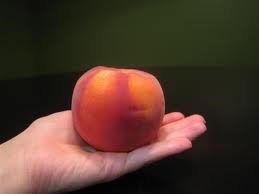
Today I feel like that carefully selected peach.  The one picked for its promise, for its intention, for its springtime when its dense pulp prediction comes of age.  Hands coddle, gently squeeze, study its color palette, infer its density.  This is the One; I can hardly wait for its cotillion; the fuzzy skin taught like an umbrella tested by exuberant winds; at long last its flesh liquefies into sweet extract; itself a parity of perfection.  

Arriving at its destination, it is cautiously extracted from the tote and collides with a biting downpour, where it’s tossed from hand to hand like packing the first snowfall’s first snowball.  Flour-sacks turned drying-towels swaddled the tender pelt, familiar with its shallow depth and bias favoring lacerations, the freshly showered peach sustains a dozen instinctive pats then takes its place among the others.  And waits.  And waits.  And waits . . .

Some are gone, snatched like field mice from above.  Others suffered dismemberment; a knife tilled dry mortality then quit, flushing succulent hope into the dust bin.  The remainders eroded to the Italian-painted bottom and waited.  While waiting each of us, privately, felt the shock when its flesh gave-way; and the longer our wait the greater our deterioration.

Where did they go, we thought collapsing, the intoxicating eyes that radiated suggestive, wanton, and greedy fortunes?  Where are those fussy hands that arranged us in the Italian-painted bowl like fowl on a nest?  It was upon the scavenger fruit-flies arrival did we sense movement then the iciness of steel pushing us closer, some clinging then scraping then tumbling, airborne, as though I were that one fortunate seed that landed on that one fortunate acre that grew into one of many fortunate peach trees in Mr. Buchanan’s orchard.

apeach4


Simple Square Box and Coasters

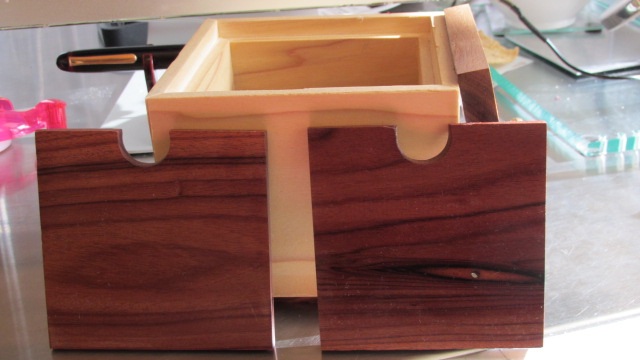
image I’m pleased to share my latest woodworking project, aptly named Simple Square Box and Coasters.  The commission originally asked for a simple slap-together wooden box in which he could place a necklace he purchased for his niece as a Christmas present.  So the slap-together wooden box would be tossed into the same heap of recently bloomed ribbons of nylon and a pile-up of ripped and twisted wrapping paper resembling a fog-induced tangle of abstract alloy.  Really, who remembers the wrapping paper of a long-forgotten gift they received at an indiscriminate holiday, the exception being gifts which modify destiny such as an engagement ring, new car, or divorce papers.  But I couldn’t imageshake the thought; an insignificant wooden coffer hand-crafted to exact dimensions whose sole purpose rose no higher than the oft ignored cardboard box, one of millions prefabricated generic boxes produced by manufacturers. Yet this box really should´ve been seen as the first part of her gift, but instead was just another obstacle to obliterate in a doggedly pursuit of the delightful bauble inside.  And after a few perfunctory refined and delightful “thank you’s,” the delicate bauble was distractedly deposited into her motherCoasters on Display´s cupped hands.  Her mother  placed the bauble (whose importance continued to nose-dive like the stock exchange in 1929) among other gifts.  And the slap-together box had been exiled to the paper mountain, and eventually would be crushed by the insensitive jaws of an indiscriminate refuse collector. Had I blithely reached into my pile of left-over lumber and found a throw-away board I suppose the box would experience a fate very similar to the one above.  However, a particular piece of Poplar caught my eye because of its deliciously creamy base color and like a dried riverbed, a thick, malted-milk brown ran the length of the board which was absent of blemishes, gouges, chips, and knots, a cappuccino’s foam decorated by a creative barista; or, the faintly dusting of heat transforming the peaks of whipped meringue from snow-covered to densely charred remnants of a serial forestimage fire.  I held the six-foot board respectfully in my hands, looked for cupping or warping at its ends like a sharpshooter whose focus remained on his target.  I found the board to be true then placed it on the workbench to calculate the cuts. That’s when it began. I can’t find words to describe it, but it was like balance on a bicycle: no one handed you a ball of balance, you simply had balance.  My experience with that board couldn’t be taught or handed down.  It wasn’t an indicator of mania.  It was simply, to respect the trees life in the differing colors of its rings.  Those rings identified that tree like fingerprints identify people.  And yet it was more:  I felt a growing sensitivity and responsibility to work with the lumber to create an object of beauty.  The longer I listened to the sensitivity of the wood, the greater my awareness of the woods signature became.  It was then that I worked with the wood, and so did the wood with me.