 It’s called imprinting, the rapid learning process by which a newborn or very young animal establishes a behavior pattern of recognition and attraction to another animal of its own kind or to a substitute or an object identified as the parent. Ducks must be given full credit for bringing this natural attraction to the world’s attention.
We’ve all heard of some unusual attractions that ducklings have developed: humans, dogs, even beach balls. So, if a duckling can blame nature for his predisposition for beach balls, perhaps our sexual proclivities are the combination of imprinting and sexual awakening: Love Potion No. 1.
My Duck Day coincided with the appearance of the concrete caravan and my budding sexual identity.
It happened during the dog days of summer, near the end of a blistering July, 1966 that the concrete caravan first appeared at the top of the hill on National Avenue and slowly made its way past Lapham Street, past the Roebuck house, skipped the alley, patched Elmer’s front walk and finally stopped to repair the crumbling curb in front of my house.
Most of the cement-men were career contract-labor: exceptionally efficient at chain-gang-hard-labor; blood-orange skin from the unrelenting sun, hints of aging hair poked from beneath hats, enormous bellies born from beer, and exhausted cigar stubs deeply wedged at the side of their mouths. And then there was this one guy, unlike the others, this one guy resembled the older brother of everyone’s best friend; this one guy was the guy that came to pick up your sister, bewitched your mother, and worried your father; this guy, handsome in a blue-blood kind-of-way but absent of the sophisticated grooming; his countenance was basic, organic, and naturally simple; his body was whittled by the repetitious pounding of pick-axes; his age was disguised and purposefully vague evoking my curiosity; he was a pioneer, trailblazing through his indecisive twenties.
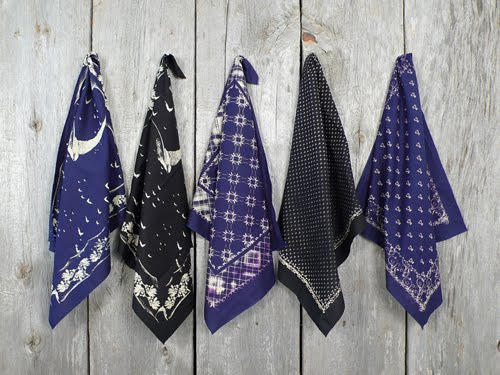
He wore identical clothing each day: A clean, sleeveless white T-shirt absent of any distracting graphics; tattered by abrasions, the frayed front pockets of his torn 501’s gave witness to his desperate deep-hand searching for loose change to feed the pop machine; a thick, brown belt wormed its way through the faded-to-white belt loops and cinched the denim preventing its avalanche; a navy blue bandana was tied tightly across his forehead to restrain a chalky cowlick; and concealing safety glasses which rationed the gleam of his lapis colored eyes. Draped yet suggestive, his broad shoulders were easily double the width of his narrow hips which plunged into the deeply concave impressions of his hindquarters which were kept aloft by fleshy legs challenging the denim’s restraint.
 Each morning he would arrive fresh like today’s baked bread. As the toil took its toll his sweat marked then saturated his T-shirt prompting its removal which resembled pulling peel from fleshy fruit. From my perch on Mrs. Bower’s front steps I mapped the pathway of his perspiration, its headwater found near his neck where it gathered then overflowed and trickled south swallowing isolated beads of sweat and tributaries which first appeared on his capped shoulders and added volume and speed which breached the sinewy levee of his spine and flooded the darkening waistband of his 501 ‘s as well as the white cotton banding which sat low on his hips.
I watched him for more than a week when my mother took notice and opportunity of my afternoon routine of sitting on the front porch. It was her idea that I take the hose and water Mrs. Bower’s flowers and front lawn. Perfect, I reasoned, an alibi should allay any suspicion caused by my daily observations. On Tuesday of the second week of their construction I walked through the gangway with the spitting hose and began to shower Mrs. Bower’s flowers. By the time I started to water the parkway (grass between the street and the sidewalk) the man in the blue bandana ambled cautiously over to me like a slow, curious cow to a farmer holding a bucket of feed. I stood on the sidewalk and thumb sprayed the grass when he asked, “Mind if I have a drink from there?”
I stood dumbfounded and handed him the hose, his wide, thickly calloused hands reaching across the freshly poured concrete for Mrs. Bower’s  Craftsman “Kinkless Guaranteed” one hundred foot garden hose, and moved the bubbling water to his mouth, drinking quietly, his lips pursed into a muscled “O”. I watched with a great deal of curiosity as his Adam’s apple moved up and down with each quenching swallow, the dimples in his cheeks mirrored the rhythm of his bobbing Adam’s apple. When sated he returned Mrs. Bower’s hose to my care and said, “Thanks; I’ve seen you watching us for a couple of days; thinking of a career in concrete? What’s your name?”
“T.M.,” I said quietly.
“Thanks for the drink, T.M.” he said with a wink, then turned and rejoined his crew.
July, 1966 became known as The Summer of Eye-High Marigolds and Mrs. Bower’s Famous Flowers as reported in one local paper. That July day  in 1966 when Bandana Man put his lips to Mrs. Bower’s Craftsman “Kinkless Guaranteed” one hundred foot hose and quenched his thirst, I, instantly developed an unfamiliar thirst rising from deep within, a thirst temporarily doused by Bandana Man’s proximity, but which would reignite moments after I switched off my bedroom light later that night; by morning I longed to be near Bandana Man. My disquieting need to putter around the front yard required a significant diversion, an understandable reason why I needed to be there. Which is why my camouflage became an avid interest in gardening. I think Mrs. Bower’s was exceptionally proud, and I’m happy that she took all the credit. It was her front yard of course which received my best intentions while I continued to catch furtive glances through the gardens towering stems.
It took the concrete caravan an unprecedented three weeks to complete its concrete repair from the Roebuck house on the north end of the block to the Nichols’ house at the south end. It was a Friday, I think, that the inevitable happened: I ran out of hose. The crew had just turned the corner and was heading west on Mitchell Street. I stood there, water pouring from the stretched hose, acknowledging yet not understanding life’s cruelty: Why were we both at the same crossroad at the same time, if all it meant was fame for Mrs. Bower’s flowers? As Bandana Man turned the corner he stopped, looked back at me, dropped his pick-ax and trotted in my direction, his tanned torso rippling like sheets on a clothesline.
He untied his bandana and held it beneath the cold water, wrung it out, then wiped his face and neck, returned it to the cold water and said, “You look kind of hot. You hot, T.M.?”
“Yes,” I answered while nodding my head.
He took the hose from me letting it drop to the ground, turned me around, and wrapped the navy blue damp bandana around my head and tied it snuggly in back. He spun me around, studied me for a moment, then said, “Cool man, you’re one of us now!” And with a tousle of my hair he turned and ran to catch up with the crew which from afar resembled a motley gang of vagabonds. I remained at that spot and allowed the water to drip down my face, catching a few droplets with my tongue, detecting a hint of salt which I knew was my first real taste of men.
0.000000
0.000000
 At last it’s arrived, like a visit from my favorite uncle who told tales of unimaginable childhood freedoms (having been raised on a fruit orchard farm). At long last it’s arrived, the darkness of dawn mornings and the dimness of late afternoon twilights. Finally, finally it’s arrived, the season of the apple and the pumpkin and hot cider. And thank God they’re gone, days that grated like my cat’s yowling or, tortuous days akin to the incessant presence of my just-turned-teen sister and her coterie of screeching and cackling teensters (defined as a pimply, high-pitched, recently teened and obstinate-as-hell, alien transmutation); those chronically simmering days followed by feverous and languid nights, the forecasted but broken-promised breeze failed to arrive like those letters from your summer camp romance. Relief has clocked-in, elbowing out a tireless summer which dropped anchor like a battleship of fervent seamen and
  remained well past dry-docking the sailboat. The ease of fruit pie-like single-layered simplicity (shorts sandals shirt) has given way to the time-consuming layered bundling like wrapping grandmamma’s Chatsford teapot for shipping, encasing oneself with layer upon shedable layer.
 and Fall’s broad strokes of vividly colored canopies which subtly cautions us of life’s temporal cycle. The seasons of change also highlight our world’s overwhelming beauty and diversity; it’s also a testament that every piece of (what we call) life patiently waits its turn to express its individual magnificence, it’s solo, when the world recognizes its achievement during the season’s glory!












 HARLAN DIDRICKSON
