Two Equal Boys (excerpt from “On the Periphery”)

A few months after I turned twelve I recall a banal moment (whose date is wholly forgotten like a New Year’s resolution) when the shiny gleam of my childhood curiosities began to tarnish, to take on a darker patina, to age.  While still filed under curiosity this newly discovered interest and its mysterious appearance led to strange and eager investigations of objects which, until recently, ceased to exist as anything more than minutia painted onto the backdrop of my life.  This sub-category of curiosity I was to learn later that year or earlier the next was known as lust.  I found lust to be an odd emotion, dormant until mixed with the inaugural yield of testosterone.  Its arrival was both odd and enchanting; I often found myself adrift in a boat without a rudder (the consequence of idle thoughts and deficient attention), but now, now lust was the captain and I’d been demoted to deck hand, essentially parasitic lust’s adolescent host.

It crept up slowly, like an itch that can’t be reached; brought on by a passing boy, or a sound, perhaps the tenor of someone’s voice; or a smell, reminiscent of a piece of clothing someone wore and that I inhaled briefly or deeply; an odor so distinctive that I’d soldered it to my cortex.  But it never attacked, it charmed, yearned for freedom at night and returned as a daybreak half-dream like our cat’s nightly routine.  It was fun at first, a distraction to science class, a daydream to wile away minutes in the school bus; fantasies with neighbor boys who are skinned of their shirts and jeans.  What I hadn’t known was that lust wasn’t idle entertainment.  Lust required expression and freedom; lust could be caged but also required parole.  I barely noticed at first when lust was an intermission, but soon it was everywhere like crawling ivy; it edged out innocence and substituted indecency.  At first lust glowed like a nightlight but now its brightness was blinding like the spotlight of the police car behind you.  My lust became carnivorous:  Like a beast it hunted when hungry and will, if forced, scrounge or take riskier chances.  I discovered that lust could be sated quickly and privately.  Or it would wander off to hunt, rupturing trust, morality, and safety.  But once lust loses its grip, sensibility takes control like a police riot line and estimates the damage: silly actions, minimal integrity, lack of conviction paid with excuses, confessions, apologies, or a fake phone number.
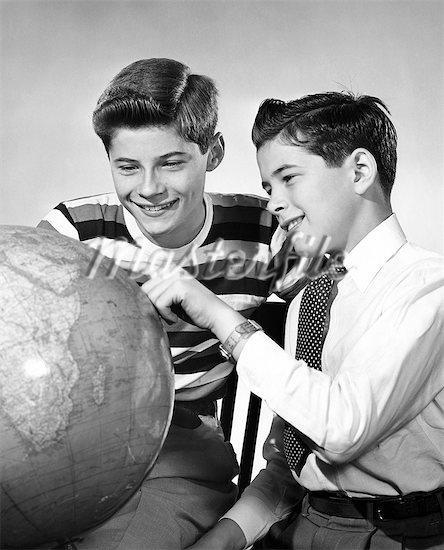
One of my earliest fascinations was Robbie, a boy my age who wore a pea coat in the fall that smelled like the inside of his house.  He rarely wore jeans vying instead for plain-front khaki chinos made popular by Wally Cleaver and dark colored Ban-Lon polo’s.   Thoroughbred-brown, straight-edged hair crowned an otherwise waspy face, but he had those dreamy bedroom eyes, the kind that coax you, like quiet hand pats on cushions, to take a seat next to him on the sagging basement sofa from which extrication was impossible once it snapped shut like a Venus Fly Trap.  He was the brain behind  many mischievous pranks at St. Joe’s (our Catholic grade school).  Of course he never moved a muscle and wisely kept a safe distance from the exploding toilet, ruptured water fountain, or the infamous girl’s locker room mouse-capades.  Instead he’d delegate the execution to some of the bigger and dumber kids like Jim or Billy.  And like the suspicious neighborhood dog that discovers a chunk of meat abandoned just beyond the stoop where boys that torture cats live, I tried to imagine what might happen if I. . .and there it was!  Hidden behind those dreamy eyes like cops at-the-ready behind the billboard, were cold eyes, calculating eyes, entrapping eyes.  I grabbed my parka, tripped going up the stairs, and rushed out the door all the while hearing his cynical and cold-hearted catcalls echoing from the basement.

But the real deal, the apple of my eye was Jeff.  He was as beautiful as a boy could be and not be a girl.  He had that soft, ivory colored skin, baby-fine blond hair, cool blue eyes, and eyelashes that were the envy of all the girls.   But his smile, ah  — the smile was warm and crooked and always made one wonder what was hidden behind the grin; it was the kind one would have if he already knew the punchline.  Jeff was seduction.  Boys and girls alike were willing to cast aside moral convention just to please him.  Reciprocity was of no concern; just the opportunity to be close, to listen to his whispers, to see him waiting for you, to be his was all anyone wanted.

My chance happened  in the alley behind my house at dusk on a summer week night.  Jeff and I and a few of our friends were involved in some kind of pursuit game when suddenly both Jeff and I realized we’d been hoodwinked. The sun had just set behind a row of bungalows and an iron husk of a retired steel plant carved the last bit of sun into the crooked and bony fingers of old women.  Jeff stood on the rise of a hill, and I at the bottom in the alley. Cupping his hands around his mouth he said, “Looks as though they’ve left us.”

Taking a quick survey I finally looked up at him, “Seems like they have. What now?”

“How the hell should I know,” he snapped.

Walking up the hill to face him I said, “because they’re in your freakin’ club, is why!  Brotherhood, ain’t that your motto?”

He turned quickly and after a long moments pause said, “Hey, blow me!”

And without hesitation I blurted out the dare of all dares, “Whip it out!”

I watched his face as I heard that familiar pop of a brass snap at the top of his jeans, that notorious crawl of teeth as they fanned out from each other, and that silent stop, knowing that his jeans were now thrown open like the agitated jaws of a dog, the white of his underwear exposed  like the sharp teeth. “Stop there”  I muttered to myself, “Don’t  go any further” I wished under my breath.

I knew that no matter how often I’d drifted off to sleep thinking of him, no matter how often I had glanced quickly as he ran down the gym floor to the other basket and scored; no matter how often I risked my own humiliation to stay in the shower five questionable minutes longer to perhaps catch a brief glance at his naked body; no  matter that I tried out for wrestling just to have an opportunity to hold him once in an embrace that no one would suspect; I nearly turned and ran as fast and as far as I could. But for those thirty seconds as Jeff stared at me and as I struggled to lock my eyes on his; and to not, no matter what happened, to not look down at the front of his jeans, to keep my eyes focused like a bird dog pointing at a grouse; in those brief thirty seconds my silly little life flashed before me and although what I had wished for all those erotic, half-asleep, fully aroused nights, all those embarrassed, wall-hugging gym classes in the pool as he swam laps and sideswiped me with every turn, he was now presented to me and if I were to act I would certainly be condemned to a life I abhorred, even before I was completely aware of the consequence. One that I was certain held only loneliness and abandonment, a life of damnation, accusation and reproach.  A life of darkness.  A life of listening over your shoulder  for the snickers; of always wearing up-turned collars; nocturnal; predatory.  And I suppose as I reflect on that  incident,  the confusion that  had  really gripped  me wasn’t so much my desire versus my identity, but rather my longing versus my dream.

I so wanted him.  But not presented in that grotesque, obvious manner.   I noticed then that although my body enjoyed the sensations that another boys’ body could provide (and it was clear that there were other boys’ bodies available), there was an intricate piece missing, a small one, down in the corner somewhere, it would’ve been easily masked, an ornate frame or wide mat, or even some other piece forced to fit, but it was that piece that I searched Jeff’s eyes for:  It was in his eyes that  I saw  a  reflection  of  my own desperation:  And it was then, at that very moment that I crawled out from under his spell and separated lust and love, and realized that boys weren’t interested in matters of the heart, but instead were only interested in lusty bravado, and that any method was as good as the last or the next so long as the method wasn’t self-inflicted.

It was  then,  right  then,  that  I decided  that  although I imagined I’d enjoy all the activities associated with a sissy, I was not going to be a pansy, and if Jeff wanted me to blow him, then he was going to show me how!

I backed away from him, unzipped my jeans, yanked down my shorts, walked back over to him and stood, half-naked and double-daring. He was dumb-struck.  And then, as if the whole incident never happened, he turned around quickly and closed his pants.  “Come on,” he said, “let’s go find the other guys before they think we’re queer or something.

He started down the hill as I stood there in the deep dusk, arranging myself in my jeans, and finally running after him.  I lowered my shoulder and bumped him in the kidneys.  He hesitated for a moment, then threw himself at me and wrestled me to the ground as only two equal boys could.

On The Periphery (novel excerpt)


The school day at St. Joe’s started promptly at 7:30 am with a Latin low mass. We were ushered into the high-backed wooden pews and told to face the altar, to stop fidgeting, ignore a classmates whispers, to focus on Christ’s suffering for our sins and pray to God Almighty for trespassing. The nuns, clothed from head to toe in long black habits waddled up and down the aisles, on the look-out for any misdemeanor, and at the first sign of insurrection, would crush an entire pew of second graders to surprise the hoodlum from behind; her thick, strapping hand landing with phenomenal precision on the scruff of the heathen and plucked him from his spot like an ugly weed.  They all appeared to be well over the age of eighty and kept their hands tucked snuggly beneath wide, white sashes or knotted behind their backs.  Corporal punishment by way of rulers, canes, and paddles was customary even for the pettiest offenses like wetting your pants.  They enforced zero-tolerance of misbehavior almost daily.  It was rumored that they were part of a special Holy See order of nuns responsible for nurturing young and vulnerable catholic students:  Sisters of the Evil Stepmother.

I began St. Joe’s in the second grade.  The coagulation of cliques hadn’t yet occurred so a new kid didn’t draw suspicion and I was able to easily take my seat in the third row, behind Peggy, in front of Billy, and next to Jim.  But it began soon enough, the curdling, the formation of small clumps of friends; those that chased girls at recess; those that sat quietly against the fence; those that hoped and waited for an indication to advance, the willowy ones, still too shy to attract and too timid to pursue.  For the better part of the next five years I sat on the periphery, looking in at the popular, my nose flattened coldly against the window of their circle.  They were the small, the athletic and most importantly the obnoxious boys; the same boys that would terrorize the girls, but those same girls would wait, patiently, like the family dog for the briefest encounter after school.  I’d bet my mom was one of those girls when she was growing up.

That small, popular group of boys appeared to be completely satisfied; life occurred like a roaring adventure; the next day was another step towards their adulthood and independence. But for I and the other three boys on the periphery; Billy (who lacked personal hygiene); Gary (the nerd); Timmy (who had an affecting odor) observing the popular group, each day seemed to be just another  in a long line of days, some horrendously long life-sentence, perhaps passed on generation after generation.   It was a fact that a boy in the popular group was always the son of a popular father, a father that had a full-time job; a father that was a scout leader or athletic coach; a father that was found at home.  That was what the boys on the periphery envied, more than friendship, more than even membership, even more than the popular group leadership, was a home-focused father, a man that taught manliness.  For boys on the periphery it was an abysmal and persistent  absence, a longing to have that one guy to show you how and what and where and when, that guy and only that guy you could call dad; your dad to look up to, to count on, and whose discipline was fair and to the point and feared.  As I look back there was a void, a yearning that was never sated, a howling that never quieted, a wink never seen, a slap on the back that never stung.

The boys on the periphery seemed destined to spend their life in orbit, circling around others, singular, finding comfort in ourselves rather than as a pack.  However, when the popular group would turn their attention to something other than themselves it usually turned  to one of us; one of us on the periphery.   And when the popular boys would begin their attack we would scatter like a flock of pigeons, only turning back to see if we had been caught or remained free.  Unlike their pursuit of girls where each boy would target one girl like a pilot in a dogfight, one of the popular  boys would leave the pack like a scout, sniffing out the school yard for the oblivious periphery boy, and upon selecting his patsy, tempt his thirst for attention through false complements, and finally summon the rest of the pack.  In they’d come at full run to taunt, slap, tease, jeer, punch,  push, tickle . . . any action that would confuse the stooge, until the desired effect would come to pass, tears, stuttering, even urination.    It was in the grotesque embarrassment that the popular boys seemed to draw energy.  It was a hideous game and all the boys on the periphery knew that their time would come when a gangster with wandering eyes and too much time would turn, setting his sights.

I flew under the radar until the fifth grade when I learned that Jim (the boy that smiled when I first arrived in second grade) despised me from the start and his perfunctory “smile and nod,” as benign as it was, didn’t mean “welcome,” it meant “game on, big boy.”  Jim never missed an opportunity to exercise his animosity, a four-year commentary on my shortcomings, misgivings, and awkwardness.  His rancor finally turned the corner of hatred and hostility during a mid-morning lavatory-break: I was using a urinal during his standard, derisive monologue when he noticed the absence of his audience (bullying him is boring, the other boys thought) and that was it, his disgust had compounded daily and that day he decided to close his account.  I felt the hand on my shoulder grab tightly and pull me back, away from the privacy of the urinal; belt, snap, and zipper open, my fingers entwined in the fly of my brief’s, I stood there, the epicenter of mockery, ridicule, and indignity, my distress instantly appearing as damp and darkening spots on my trousers.  Initially there was raucous laughter (to which I’d become accustomed), but slowly, boy-by-boy, the lavatory grew quiet, pity replaced ridicule as boy after boy turned and walked out.  I stood there until Sister Reynolds threw open the door determined to discover delinquents but stopped immediately upon seeing me.  She closed the door quietly, walked to me, and placed her ample arm around my shoulders.  All I remember after that extraordinary display of compassion was letting four years of shame finally come out as sobs and weeping and finally dead silence as I finally understood that I would always remain outside the circle.


And Yet She Cried The Day He Died

IMG_0838My earliest recollection of my dad came when I was four or five and he had come home from working as a second shift foas foreman at a drop forge plant.  He was sitting at the kitchen table eating poached eggs and dry toast, washing it down with a boiler maker.  “The Twins” as he would refer to them with great affection were my dad’s undoing; he would drink when manic, especially near the end of an episode, when his aching bitterness and resigned sarcasm hinted at a common premonition: he would soon retreat to his basement work shop for days on end tortured by his emotional evolution, and his inescapable march down the steep stairs of depression.  He must’ve been in the throes of mania  when convention insisted they marry upon discovery that his rakish bullying on the back seat of his Packard on a rural road outside Thorp not only massacred her wide-eyed naiveté but abolished any hope of extricating herself from beneath the clammy, sour-smelling, incoherent beast.  Her surrender of modesty produced more than forty-five minutes of vintage 1955 passion.
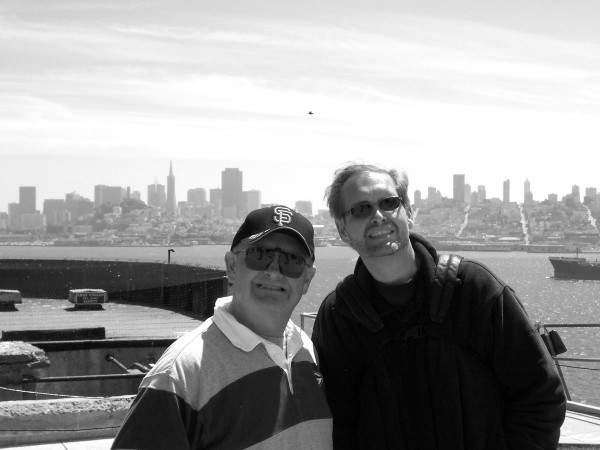
They found themselves in a stone-cold courthouse in Green Bay with a couple of bar friends to witness.  My mother clutched a small handful of wildflowers they bought from a farmer’s road stand that morning.  My mother was a beauty queen back in 1955, with full, red lips, wavy, blond hair that fell over her shoulders, and bright, anxious blue eyes.  She stood looking at my father, the barrel-chested, dark-haired, first-generation Norwegian she met less than one month before.  I’m certain that neither one of them intended for the wedding to be the result of a quickie in the back of a sedan on a country road, but in 1955 it was more important to uphold convention than it was to be in love.  No one ever questioned their motives in getting married, instead hoping and wishing them the best of luck in the new life together. They never won the prize of a 1960’s nuclear family, a foursome driving a new sedan, owning a new house in a new sub-division, boys going to the standard public school, belonging to a crisp, new Catholic church, it just never happened.  It never worked out and eventually corroded beyond what was once recognizable as a relationship, and turned physical, my father opting for punches and slaps instead of hugs and kisses. I want to believe that it was hard for both of them, especially my mom, of course, but also my dad, landing punches onto the delicate face; the face of a woman that once he had found so attractive that he invited her to share his rumble seat.  I want to believe that neither of them was a monster, that neither of them hated the other, that maybe, in the beginning they held the same blind, young hope that life would work itself out.

It started with a cymbal crash, or it might’ve been a car accident, or even the frying pan falling out of my mother’s hand as she scrubbed the caked egg.  But it struck with velocity, as though it had been tossed, no, more like it had been thrown, aimed at the floor, or better, the cupboard, for it never made its mark, instead falling short and striking the edge of the table and finally the floor.  My eyes shot open and I listened only to hear the sirens race toward the accident, but the suburb was four-thirty quiet, and the only sharp wheeze I heard bumped first against my door, then slid slowly down to the floor, her form eclipsing the bright kitchen light. As though the car she was driving careened out of control and struck some child in a cross walk I heard her whisper some apology and asked him to think about me.  I slipped out from my bed and crawled over to the rag rug, and put my face to the door.  His voice was a distant gush of slurs and profanity, italicized by the growling.  She stayed there, mashed against my door, her long, painted fingers clutching the same rag rug on which I sat and which had slid half-under the door, clutching, as though her whole life was that simple rag rug.

Suddenly the door thumped with a low, heavy sound, like dropping a melon on the table.  I dropped to the floor and pressed my face into the colorful coils, and saw his black, steel-toed Oxford’s sparkle in the bright overhead light.  I saw the swift shadow, perhaps a bird and heard that same heavy thud, and watched as crimson rain sprinkled the linoleum.  The color spotted the vinyl floor slowly, as though it were being restrained somehow, pulled in, withheld, and swallowed. It was quiet for a moment, the shiny black Oxford’s rolling as though they were standing on the deck of a heaving ship, the scarlet rain drops preceded by a sniffle.  Through the whole time I had held my breath until I exhaled with a small sob.  My mother’s face grew enormous as I saw her eyes and bloodied nose drop to the floor, pressing herself to the door.  Her hand waved him off saying, “Ssh, he’s awake, he’s been listening. . .”  Her bright blue eyes caught mine and we looked at each other for a moment.  As I began to move towards her, to . . . I don’t know what, help her . . . again I saw that fluttering shadow, except this time it was no shadow, but a black, heavy steel-toed Oxford, and it landed its iron nose at the back of her head and crushed her face into the crack at the bottom of the door.  Her eyes didn’t close, but opened further as though she were releasing any blind hope and I moved quickly away from the door and crawled under the bed.  I heard his heavy steps move off and watched as the kitchen light was turned out.

It was months before I could sleep in my bed, often crawling under it once she turned out the lamp and closed the door.  I suppose the worst part though was for her: For me to see her like that, in a position of no hope, no dreams, just the flat end of a hand or the blunt toe of a shoe.


Has Been’s, Could’ve Been’s, Once Was’s, and Children

My brother got my dad’s physique; I got his mental illness.

Once I assumed the role of cook a couple of years ago, I planned my menu so that every other day I’d prepare a new meal.  The only cookbook I owned was a 1960’s copy of Betty Crocker’s Cookbook.  This cookbook was my mother’s, and if you saw it, you’d think Betty Crocker herself passed it along to my mother.  It was a solid first-step for me, my hesitation quieted by my mother’s obvious use of the cookbook, evidenced by the incredible number of batter-splattered pages; missing pages; half-pages; and an index at the rear which resembled the color palette of Crayola’s 64-Color box of crayons.  There were highlighted recipes; notations at the margins; and just a few, but oddly significant in an extreme way, an ad infinitum decree by way of thick, heavy lines, one or two eliminated altogether by a formidable, dense marker, applied as determined and repeated coats, forbidding any chance that these recipes might appear on our kitchen table.

My father was already a train wreck when my brain began recording his presence.  Failing at life (mainly due to his undiagnosed mental illness, bipolar), his appearance was infrequent: his social mask was one of humor: albeit acidic sarcasm and shearing, pointed wit composed in the key of tease and enacted before an unending column of untried yet promising second-shift ladies.  His role as a bullying, boorish big shot, whose sole domestic purpose was to reprise the 1963 verbal variety of water boarding. His peacocking drove us  closer and closer to suffocation, as though with each matinée he pressed another thick pillow of despair onto our faces and then, just when our desperation went quiet and we felt that first, foamy wave of disappearance, back we’d go into his second act and the shrill, ingenuous cackle of his subordinate’s callow laughter warned us that he was gaining adoration.  And the louder the laughter, the more lewd, raunchy, and viscous his anecdotes became, and our mention increased proportionally until, by the end, the three of us, his family, descended well past indecency, a good way beyond degenerate, and somewhere between contemptible and worthless.

And as the ladies stood and he, broadcasting his manners, helped them with their coats, those ladies whose saturating attention fueled my father’s mania sending him further and further afield, looked at the three of us, fodder of my father’s insanity, and delicately lifted the corners of their mouths in an effort to produce a symbol of empathy that my father couldn’t decode.

But what those lips produced was that sneer tossed at has been’s, could’ve beens, once was’s, and children who repeatedly witness their father falling apart.