Chicago Tribune Feature – Set to Appear This Week

Early last week I was contacted by a staff reporter from the Chicago Tribune newspaper asking if I’d be willing to share Life With Bipolar II.

I’m a private person by nature, but also an author rummaging through his past looking for experiences which, when written in my style will leap from me and land on you resulting in some degree of change expressed through your thought or action.  I don’t write for the sake of writing.  I write with purpose; with hope that my style captures your attention; and with honesty so that a kinship occurs as you read and when finished actually feel something whether it be acknowledgement, empathy, entertained, or moved.  If you don’t experience any shift then I have failed you as a writer.

So many people know so little about mental illness generally, and Bipolar specifically, that to decline the opportunity to be featured in a full-page story in one of the top five newspapers in the country (not too mention their on-line edition) would be foolhardy.  There’s no possible way that I and this blog occupying a little corner of the internet could reach the number of readers that this article will touch.

I have spent ten hours on telephone interviews; two hours of photography here at my home; my partner’s been interviewed, and so has my physician.  The process has been, frankly, unnerving and profoundly confronting and nowhere near as safe as if I’d been writing it.  But I agreed because too many American’s need to understand that mental illness is a disease.  Doctor’s need to understand that a post-gastric by-pass patient won’t respond to medications as expected.  Patients living with mental illness need to believe that sharing themselves with others is the only way to dilute discrimination based on mental health.

Please watch for it!

Maybe We’re Just Like Ducks

It’s called imprinting, the rapid learning process by which a newborn or very young animal establishes a behavior pattern of recognition and attraction to another animal of its own kind or to a substitute or an object identified as the parent.  Ducks must be given full credit for bringing this natural attraction to the world’s attention.

We’ve all heard of some unusual attractions that ducklings have developed: humans, dogs, even beach balls.  So, if a duckling can blame nature for his predisposition for beach balls, perhaps our sexual proclivities are the combination of imprinting and sexual awakening: Love Potion No. 1.

My Duck Day coincided with the appearance of the concrete caravan and my budding sexual identity.

It happened during the dog days of summer, near the end of a blistering July, 1966 that the concrete caravan first appeared at the top of the hill on National Avenue and slowly made its way past Lapham Street, past the Roebuck house, skipped the alley, patched Elmer’s front walk and finally stopped to repair the crumbling curb in front of my house.

Most of the cement-men were career contract-labor: exceptionally efficient at chain-gang-hard-labor; blood-orange skin from the unrelenting sun, hints of aging hair poked from beneath hats, enormous bellies born from beer, and exhausted cigar stubs deeply wedged at the side of their mouths.  And then there was this one guy, unlike the others, this one guy resembled the older brother of everyone’s best friend; this one guy was the guy that came to pick up your sister, bewitched your mother, and worried your father; this guy, handsome in a blue-blood kind-of-way but absent of the sophisticated grooming; his countenance was basic, organic, and naturally simple; his body was whittled by the repetitious pounding of pick-axes; his age was disguised and  purposefully vague evoking my curiosity; he was a pioneer, trailblazing through his indecisive twenties.

He wore identical clothing each day: A clean, sleeveless white T-shirt absent of any distracting graphics; tattered by abrasions, the frayed front pockets of his torn 501’s gave witness to his desperate deep-hand searching for loose change to feed the pop machine; a thick, brown belt wormed its way through the faded-to-white belt loops and cinched the denim preventing its avalanche; a navy blue bandana was tied tightly across his forehead to restrain a chalky cowlick; and concealing safety glasses which rationed the gleam of his lapis colored eyes.  Draped yet suggestive, his broad shoulders were easily double the width of his narrow hips which plunged into the deeply concave impressions of his hindquarters which were kept aloft by fleshy legs challenging the denim’s restraint.

Each morning he would arrive fresh like today’s baked bread.  As the toil took its toll his sweat marked then saturated his T-shirt prompting its removal which resembled pulling peel from fleshy fruit.  From my perch on Mrs. Bower’s front steps I mapped the pathway of his perspiration, its headwater found near his neck where it gathered then overflowed and trickled south swallowing isolated beads of sweat and tributaries which first appeared on his capped shoulders and added volume and speed which breached the sinewy levee of his spine and flooded the darkening waistband of his 501 ‘s as well as the white cotton banding which sat low on his hips.

I watched him for more than a week when my mother took notice and opportunity of my afternoon routine of sitting on the front porch.  It was her idea that I take the hose and water Mrs. Bower’s flowers and front lawn.  Perfect, I reasoned, an alibi should allay any suspicion caused by my daily observations.   On Tuesday of the second week of their construction I walked through the gangway with the spitting hose and began to shower Mrs. Bower’s flowers.  By the time I started to water the parkway (grass between the street and the sidewalk) the man in the blue bandana ambled cautiously over to me like a slow, curious cow to a farmer holding a bucket of feed. I stood on the sidewalk and thumb sprayed the grass when he asked, “Mind if I have a drink from there?”

I stood dumbfounded and handed him the hose, his wide, thickly calloused hands reaching across the freshly poured concrete for Mrs. Bower’s  Craftsman “Kinkless Guaranteed” one hundred foot garden hose, and moved the bubbling water to his mouth, drinking quietly, his lips pursed into a muscled “O”.  I watched with a great deal of curiosity as his Adam’s apple moved up and down with each quenching swallow, the dimples in his cheeks mirrored the rhythm of his bobbing Adam’s apple.  When sated he returned Mrs. Bower’s hose to my care and said, “Thanks; I’ve seen you watching us for a couple of days; thinking of a career in concrete?  What’s your name?”

“T.M.,” I said quietly.

“Thanks for the drink, T.M.” he said with a wink, then turned and rejoined his crew.

July, 1966 became known as The Summer of Eye-High Marigolds and Mrs. Bower’s Famous Flowers as reported in one local paper.  That July day in 1966 when Bandana Man put his lips to Mrs. Bower’s Craftsman “Kinkless Guaranteed” one hundred foot hose and quenched his thirst, I, instantly developed an unfamiliar thirst rising from deep within, a thirst temporarily doused by Bandana Man’s proximity, but which would reignite moments after I switched off my bedroom light later that night; by morning I longed to be near Bandana Man.  My disquieting need to putter around the front yard required a significant diversion, an understandable reason why I needed to be there.  Which is why my camouflage became an avid interest in gardening.  I think Mrs. Bower’s was exceptionally proud, and I’m happy that she took all the credit.  It was her front yard of course which received my best intentions while I continued to catch furtive glances through the gardens towering stems.

It took the concrete caravan an unprecedented three weeks to complete its concrete repair from the Roebuck house on the north end of the block to the Nichols’ house at the south end.  It was a Friday, I think, that the inevitable happened: I ran out of hose.  The crew had just turned the corner and was heading west on Mitchell Street. I stood there, water pouring from the stretched hose, acknowledging yet not understanding life’s cruelty: Why were we both at the same crossroad at the same time, if all it meant was fame for Mrs. Bower’s flowers?  As Bandana Man turned the corner he stopped, looked back at me, dropped his pick-ax and trotted in my direction, his tanned torso rippling like sheets on a clothesline.

He untied his bandana and held it beneath the cold water, wrung it out, then wiped his face and neck, returned it to the cold water and said, “You look kind of hot.  You hot, T.M.?”

“Yes,” I answered while nodding my head.

He took the hose from me letting it drop to the ground, turned me around, and wrapped the navy blue damp bandana around my head and tied it snuggly in back.  He spun me around, studied me for a moment, then said, “Cool man, you’re one of us now!”  And with a tousle of my hair he turned and ran to catch up with the crew which from afar resembled a motley gang of vagabonds.  I remained at that spot and allowed the water to drip down my face, catching a few droplets with my tongue, detecting a hint of salt which I knew was my first real taste of men.

My One and Only Rolex

Fifteen years ago I developed an obsession for Rolex watches which eclipsed practically every other interest or desire.  Its greatest impact was felt by my spouse: He was hostage to my unyielding resistance to any gift that wasn’t a Rolex.

Eventually Nick’s patience and resolve buckled beneath the burden of my expectation.  One Christmas he handed me an easily overlooked brown paper bag.  As I took it from him I felt a significant heft; I heard a steel bracelet shift at the bottom; I spied a bezel and Oyster case peeking out from an afterthought of concealment.  I slowly lifted the folds of vaguely familiar tissue paper which revealed the indubitable shape and renowned style of the classic stainless steel Rolex.  He said he’d been looking for one (for almost a year) when the week before a dealer called to say that a customer recently presented a used (and much older) Rolex as a trade-in and it’s “as-is” retail price is with-in Nick’s price range.  He purchased a Rolex manufactured in 1958 (the year of my birth) and it wasn’t until this year did I learn the historical significance of this watch.

A month later I found myself overheating in a Puerto Vallarta hot tub.  I dragged my lobster-red body to the swimming pool and jumped in.  Upon surfacing I heard Nick ask for time. While wiping away the stinging chlorinated water I noticed that there was moisture condensing on the inside surface of the watch crystal.

The Rolex watch is often perceived as an extravagant luxury and status symbol outshining its fundamental purpose: telling time.  But Rolex, SA (manufacturer) has played a significant role in the history of the wristwatch.  Rolex, SA can lay claim to being first at: automatically changing date on face; show two time zones at the same time (GMT Master (designed by request of Pan Am pilots); automatically changing day-and-date on face; earning “chronometer” designation (meaning that it’s mechanical movement is extremely accurate and consistent that it can be used to navigate ships.  But the fundamental and most notable characteristic (which it achieved first in 1926 and again in 1953) is being waterproof (1926); not water resistant; waterproof to a depth of 330 feet BSL (1953).

Obviously Nick’s gift had forfeited that foremost characteristic.

I was greatly disappointed that the Rolex Nick had worked so diligently to uncover had been compromised by irony: its fundamental purpose (time keeping) was also its assassin (time passing, i.e. years of use).   I took the infirm watch to the only certified Rolex repair center in North America (at the time) and was saddened by their conclusion: it would cost more to rebuild than the price Nick paid.  A friend gave me the phone number of a reseller in Georgia that represented Rolex watches on consignment.  Overnight I received three brand new stainless steel Rolexes from which to choose.

When I slid on the first, then the second, and finally the third I had exactly the same reaction: These Rolexes had lost their mystique, their meaning, their value; these were simply very expensive watches.  (And frankly, my time isn’t that valuable!) 

The watch given to me by Nick was, in my opinion, the only true Rolex because it was the one he generously gave me.  I wanted that Rolex; and I wanted that Rolex to function like any other Rolex.  So I returned to the Rolex repair center and placed it in their expert hands.  Six months later it was returned to me in pristine condition.  It is now thoroughly serviced every three years to keep it in working order.

So why did I share this with you?

You may get what you ask for in life, and while it may not be exactly what you wanted, you were very fortunate to have received it.  It may be imperfect, or damaged, or used.  But it is less about what you’ve been given, and much more about how you hold it, what it means to you, and how you care for it.

Bipolar Diagnosis Is Not An Insanity Defense

I’ve been paging through comments left recently at Chicago news sites regarding the recent revelation that Representative Jesse Jackson Jr. (Congressman, Illinois) has been diagnosed with Bipolar II and is currently experiencing a major depressive episode and is being treated at the Mayo Clinic.  He’s been on a leave-of-absence since June when he was discovered by his father, Rev. Jesse Jackson, exhausted at Rep. Jackson’s Washington, DC home.  The family took Rep. Jackson to Sierra Tucson Treatment Center in Arizona, then moved him to the Mayo clinic where he remains, undergoing treatments for his significant depression.

If the picture I just painted was about your husband or wife, your child, a relative or neighbor, teammate, fellow parishioner, acquaintance, sister-to-the-father-of-your-daughter’s-fiance’s-birth-parents, or celebrity, your reaction, most likely, would contain differing degrees of empathy based in part on your knowledge of mental illness, specifically Bipolar II.  But what if the picture I just painted was about a politician in a state known for its bipartisan political corruption.  The reality that 20% – one in five – of the last century’s governor’s have been indicted or convicted of felonies in Illinois is a damaging statistic to all Illinois politicians.  Damaging is one thing, but suspicion on a federal level and a House Ethics Committee investigation for ties to imprisoned former Illinois governor Rod Blagojevich is quite another.  This federal investigation provides a significant foothold of suspicion in Rep. Jackson’s June disappearance and yesterdays news story confirming his diagnosis and treatment for major depression (one-half of the mental illness, bipolar).

The vitriol posted in comment sections of Chicago area TV stations extolling Rep. Jackson’s disclosure of mental illness and gastric by-pass as a creative and sympathetic smoke screen hoping to derail the federal investigation or, at the very least, to mitigate its voraciousness.  The assertion? That Rep. Jackson was in the middle of a hypo-manic (the other half of the mental illness, bipolar) episode which characteristically emboldens the patient to behave dangerously, generate grandiose plans well beyond his normal specter of life, and indulges in dangerously poor judgement particularly in highly sensitive or personal areas of the patients life.  If Rep. Jackson never mentioned (prior to the Blagojevich sting) that he’d like to advance his political career by winning a senate seat and then suddenly (and privately) begins the high-stakes game of buying (rather than campaigning for) a senate seat, Rep. Jackson could defend his uncharacteristic behavior as that of his manic-self (though at the time he was unaware of his mental illness), and that if his bipolar diagnosis was being properly treated (and he was compliant) he would’ve steered clear of any illegal activities.

Which is, by the way, a creative and sympathetic defense.  But our legal system does not recognize bipolar disorder as insanity, and therefore cannot be used as a defense in legal proceedings.  It could pluck on the heart strings of those on the House Ethics Committee, but any preferential treatment Rep. Jackson hopes his bipolar disorder might garner will be sanctimonious.  However, if the Committee (and subsequently Federal Prosecutors) sense blood in the water, Rep. Jackson’s recent disclosure of personal and private information will be sympathetically and respectfully noted.  And then the hounds will be unleashed and will, eventually, tree the red fox.

But what I find the most deplorable is the velocity and distribution of judgement by every-day citizens whose faith in politicians has been crushed by an unending parade of scandal, corruption, and greed.  Jesse Jackson Jr.’s job is a congressman.  Jesse Jackson Jr. also happens to be human, a husband, a brother, a son, a friend, and now part of my bipolar II world. 

It is shameful that the suspicious and the quick-to-judge deny their empathy to the mortal and vulnerable  Jesse Jackson Jr. who is suffering horribly, whose life is teetering on pharmaceutical roulette, who goes to sleep dreadfully depressed and wakes to the loathsome, disastrous, and painful reality that he must learn to live with bipolar disorder, not suffer from it.  To those casting stones, humanity and empathy aren’t yours to keep; they are given.  I pray that one day you won’t stare into the cold eyes of a stranger wholly disinterested in your immediate suffering because of a far-off suspicion of guilt.

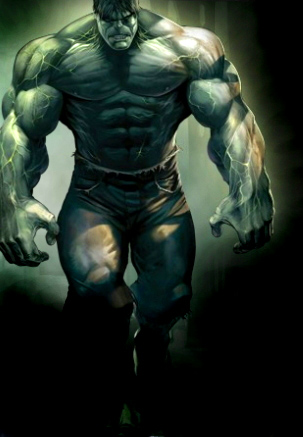
Maybe Bruce Banner, Tony Stark, Logan, Bruce Wayne & Clark Kent Were Bipolar

I’ve identified the significant trigger, which, if pulled, catapults my otherwise sensible, responsible, and respectful self into a derivative of me, but one which possesses out-of-this-world dynamism akin to superhero’s or mutants.  The physical me doesn’t change, just the degree of acumen and acuity I’d refined in furtherance of a twenty-year career playing The Fool to a cadre of Somebody’s.  These heavyweight’s attained their ascendency via marriage; owning an avaricious, pugnacious and predatory law firm; partnership with an iconic architectural firm; ruthless attorney for corporate raiders.  Not one cared about procedure; they simply expected what they’d requested.  Failure was my burden to bear and under which I would suffer.

Only once did I return empty-handed: “I flew to Florida; drove to the grove; oranges are out of season; no juice.”  She pushed her Eames chair away from her desk and stood in front of me, “Do I look like an idiot to you?  I mean, when you think “idiot,” is it this face you see?  Because that’s precisely what you so deftly hand-delivered.  But I didn’t ask for an example of an idiot, did I?  I mean, if I did, which I didn’t, but if I did then you could get a mirror from one of the secretaries.  You wouldn’t simply fire-up the Ol’ Gulf stream and coast to Florida (at $2,350.00 per flight hour plus pilot time, hotel, fuel,, and food).  No, no explanations: I asked for orange juice from “Lily’s Grove,” of which I own by the way: Oh!  Didn’t you know that?  What?  No investigation before you saddle-up and zoom to Miami?  When I’d heard from Jorge that a “chiquito desmandares” demanded that he sell him orange juice for his “gillpollas cacia” the only conclusion I could draw was, “Mulligan must think I’m an idiot!”  Since you’re absolutely certain there’s no orange juice from Lily’s Grove, just for fun, let’s see if I might know someone who could help. . .Buenos dias, Jorge. . .”

That lesson (failure) provided an essential insight: if a heavyweight asks for something that has the appearance of impossibility, they already know where and how to get it.  They simply aren’t interested in doing it for themselves.  Self-effacing, tenacious, and propriety could be helpful behaviors in discovering a source for this item.

Only when forethought (plan B, escape route) is absent and I discover that I’m in a wholly defensive position with no options does this derivative of self appear.  This derivative is my super-hero or, as I now recognize, my manic-self (who I will name “Heartless”).  “Heartless” has a single purpose: self-preservation amidst unyielding stress, confusion, and fatigue, the by-products of an extremely complicated problem or series of problems which causes inescapable mental burden and my organic belief that failure cannot be considered because of its dire consequences and the real-life ramifications to everyone involved.

“Heartless‘s” appearance goes unnoticed and the logjam that promoted his incantation begins to loosen and the stalled efforts discover renewed vigor, and less and less sleep is needed, and more and more and more organization and meticulous paperwork are demanded.  “Heartless” remains present for varying lengths of time: Sometimes 3 months, sometimes a year.  But his denunciation follows the same pattern: “Heartless” turns his attention away from the situation of which he was borne, and on to me, which he sees as the real victim of the entire circumstance.  And then he uses every weapon in his arsenal to create as much collateral damage as possible: spending huge amounts of money on items which I’ve wanted, yet dare not buy (dog, tattoo, Rolex GMT II, 55″ TV, fully outfitted wood shop, custom-made Japanese fountain pen); ingesting too little or too much of my medication; abhorrent social behavior; and the worst and most pointed, vehement, and hateful: accusations and ceaseless arguments with my spouse.

The moment someone, anyone really, recognizes that I’m in the midst of a manic crisis, “Heartless” disappears.  And all that’s left behind is a meandering trail of damage, some salvageable, some not.  Destruction is definitely his foot print.  But I’ve considered too, that perhaps “Heartless”buys and says and behaves in ways some tightly-tucked-away part of me wants to behave or say or buy.  But I, like so many of us, have toed the civil line and buried our uncensored selves in a nook no one will find.  Wouldn’t it be tragic if we’ve been taught that decorum dictates that superhero’s remain in comic books and not shopping at Prada.