Thank You, Doctor . . .

There was a time, oh, not so long ago that friends Michelle and Peter and Nick would remember that I sat in a chair in a public forum and wept because I never became a doctor.  Friends recommended nursing, but on my first day my instructor, wearing one of those origamitized hats mentioned the adjective caring in hundreds of examples.  By the end of the day I’d grown so weary of the word caring I returned my shiny new mules and knew I didn’t have the dedication to the lives of total strangers simply because your unyielding care and uncompromising affection for humanity seemed as close to grace as most of us will ever know.

I’ve been very lucky to have been able to continue my 20 year relationship with my primary care physician.  In 20 years we’ve both learned a lot about each other: he more so of course, especially with those physician distributed x-ray glasses (and we thought they were some manifestation of a cartoonist’s imagination) because how else could doctors have the degree of insight simply by engaging in an innocent conversation.

I’ve been thinking lately that all these men and women who voluntarily step up to education and raise their hands so strongly, so surely, and so hopefully that witnessing that depth and degree of service to strangers must be one of the most moving examples of humanity stepping into a life where their life is secondary.

Why they do this happily, proudly, compassionately in order to be in the presence when most of us aren’t gussied up for prom astonishes me and thanks God for loaning humanity a few hundred thousand angels to leave Heaven and come to earth (by way of unimaginable hours pouring over manual after manual after manual and I can’t even remember 3 things to buy at the grocer’s), then share their own type and degree and experience of the comfort they know to be true once we let go and become fine examples of colorful balloons rising higher and higher and out of sight but not out of mind.

To all those selfless and defenders of the weak or ill or mentally compromised or children or any other of the millions of disenfranchised a mere thank you will never repay your kindness. But maybe God’s set up a 401(k) for you in heaven.


One More . . .

3-One

5-One

1-One15-One

One more trip to the doctor.

One more admission of humiliating symptoms.

One more physician‘s persevering uncertainty.

One more hunch about drugs even after repeated failures of 6 week trials.

One more hopeful bottle of toxins to ingest.

One more set of side-effects to endure.

One more crippling debility: Illness’s strong swing of a sharp ax into the pulp of my dignity cutting deeply.

One more intentional assault leaving me with a staggering and teetering propriety.

One more debility before I’m disqualified from sovereignty; stripped of my liberty, freedom, and independence, my self-reliant character reverts to childhood, a time of absolute dependence for survival.

One more obedient abdication of my extinct identities and forthcoming dog’s age.

One more no more.


Our Cultural Conflict: “I-centric” vs. “Us-centric”

I’m still crying.  Especially for the amount of preciously rare innocence lost that day.  I fear a crevasse of cruelty ripped open our discouraged plains of humanity and swallowed acres of hope, kindness, and gentility.  The displaced societysurvivors have been inoculated with indifference.  Recently, our society welcomed the technological efforts to promote the importance of the individual thereby neglecting the citizen’s toil required to maintain a individualcohesive and unified society abiding by civil law, ethics, and respectability.  This change strongly suggests a recent shift and an alarming unraveling of the knotted threads which bind us together as a cohesive society.  It  suggests that the aggressive “me-me-meism” trumpeting self-importance repudiates the codes of propriety and civil obedience.  It’s appearance is fueled by social networks promoting the innate yet invisible importance of the individual, and their  dull and oft mundane daily rituals as provocative, riveting, and jocular.  This “I-centric” movement supplants the laws of society with a horde of myopic pronouns (I, me) living in the surreal world developed by the late physicist Dr. Berners-Lee.  This environment is wholly the fabrication of a society of scientists working together while at the same time relying on fixed rules, regulations and laws.  The “I-centric” movement relies upon the ICQ protocol to herald their importance and distinguish themselves.

electricity2 That is, until the power goes out.
 

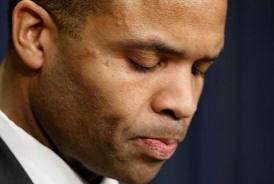
(Ex-Representative) Jesse Jackson, Jr.: Denouement

Hoodwinked?  A definite possibility.  Bamboozled?  Most likely.  Hornswoggled?  Should be considered.

Whatever you want to call it, Mr. Jackson Jr. disappeared six months ago; five months ago Mrs. Jackson Jr. read a prepared statement which delicately described Mr. Jackson Jr.’s sudden absence without divulging the root cause.  Mrs. Jackson’s calculated disclosure purposefully neglected any explanation of Mr. Jackson’s bizarre journey from Washington, D.C. to an addiction retreat in Arizona and finally his willful confinement at the Mayo Clinic in Minnesota.  Someone with considerable influence strongly urged Mr. Jackson to depart Washington, D.C. without a peep and bee-line himself to the addiction retreat in Arizona.  Certain accounts told of Mr. Jackson reaching out to Reverend Jackson who, it was said, immediately went to aid his son.  Upon arrival Rev. Jackson described Mr. Jackson’s condition as serious: weight-loss, insomnia, restlessness, hopelessness, fatigue, and a general feeling of depression.

When I presented very similar symptoms at the pinnacle of my ascension to mania, I was strongly advised to immediately be evaluated by a psychiatrist in order to determine if I was clinically depressed.  Were my self-medicating behaviors indicative of a substance addiction?  Certainly, especially if that’s what you’re looking for.  But a member of Congress with the best health insurance in the country?  Did he seek an evaluation from a psychiatrist in Washington? Is it likely that a psychiatrist prescribed an addiction treatment facility in Arizona while ignoring Walter Reed Army Medical Center or the Psychiatric Institute of Washington?  Doubtful.  Are we to believe that no one in Mr. Jackson’s inner circle was curious as to what other illnesses might Mr. Jackson be suffering when presenting his specific symptoms?

I must admit that a fair percent of public comments insinuate that timing for political gains has been, from the very start, the predominant focus.  His alcohol addiction (reason for in-patient treatment at an Arizona Rehab Center), bipolar diagnosis (reason for his transfer to the Mayo Clinic), and clandestine exodus from Washington (to protect his privacy while en route) is, to his discredit, a shrewd, calculated, and well-executed chain-of-events whose purpose, Mr. Jackson’s representatives said, was to seek the best treatment centers for his addiction and subsequent bipolar diagnosis.  One month passed before Mr. Jackson’s representatives confirmed he was at a HIPAA protected treatment facility.  Then he was transferred to the HIPAA protected Mayo Clinic.  Then he ran for re-election without a campaign: no appearances, no advertising, no lawn signs.  And he won 64% of the vote!  Finally, six months after his twilight departure from Washington, the requested and ultimately expected communiqué was delivered to House Speaker Mr. Boehner in a two-page letter of resignation citing health issues and a federal investigation.

And that’s it.

But. . .if he has an addiction and suffers from bipolar disorder, then his timing couldn’t be worse for his career and the reputation of his family.  But then again. . .if it was all a ruse to buy time and strategize his reaction to the upcoming federal indictments, then his actions were dishonest, cowardly, and ignorantly insensitive and offensive to those of us who struggle with mental illness on a daily basis.  But what if. . .he is an addict and bipolar and anticipating federal indictments?  It’s difficult, even for me who defended him on this very blog, to be sympathetic.  After all, he’s a crooked politician who stole tens of thousands of tax-payers money for personal gain, who then fled under the guise of addiction and mental illness to protected locations for six months, abandoning his job, his constituents, and those who voted for him, in order to clean his own house and strategize his legal response and perhaps a plea bargain.  Oh, and he’s an addict and suffers from bipolar disorder.

Well Mr. Jackson, I suffer from bipolar disorder and face that fact every single day head on. . .I don’t hide behind it. . .and I certainly don’t break the law and then use my mental illness to garner sympathy.

Truth is Mr. Jackson, you’re a coward, a liar, and a thief.  The Illinois politician’s trifecta!

After 50 Years, I Can Speak My Father’s Language

I became Harold’s (my father’s name) youngest son when he was forty-nine years old.  Forty-nine today isn’t what it was in 1958, especially when you lived life full bore.  By the time I became conscious of his presence (three years old) he’d already begun his initial descent.  He had the looks of Walter Cronkite, the physique of Jackie Gleason, the temper of John McEnroe, the contempt for women of August Strindberg (Swedish Playwright and infamous misogynist 1849-1912), the alcoholism of Johnny Cash, and a creative and innovative mind in the areas of electrical and mechanical engineering.

There were just two of us (me and my older (2 years) brother.  That is, until 1972 (I was 14 years old), when the dirty laundry was aired: Our father had a previous marriage which produced two daughters and a son.  As I recall I was excited by the prospect (kind of like the “Brady Bunch“) and my brother was apprehensive and quite angry.  The confession of a first marriage only occurred because the eldest daughter had the strong desire to discover what happened to her “real daddy.”  The first wife’s precept that no one was to try to find their father until she had passed was strictly enforced and subsequently honored by all.  She passed in the early 70’s after which the eldest daughter’s search began.  As to why our mother or father kept this secret and never disclosed anything about it is anyone’s guess.

The marriage bond between my father and mother was broadsided by the wrecking ball in 1963 when the County Sheriff appeared at our front door to serve our dad his notice to vacate immediately which, we learned later, was a bitterly contested condition of their divorce. From that day on and until the day he died he expressed a cruel, ruthless and chronic acrimony and rancor toward our mother which he publicly and conspicuously displayed, especially when we visited on Sunday afternoons.  I don’t know if his brutish and vengeful behavior during our visits was aimed at my brother and I, or if he thought we’d run back to headquarters and repeat verbatim his vitriolic euphemisms such as “that god-damned pollock” (those were the only words he ever used to reference her).  I think his ruthless contention began after his first wife deserted him in the middle of the night with the children and his business partner and their business’s assets liquidated to cash.  The few things he treasured had fled in the night leaving him alone and penniless.

But he was not the victim; he was the perpetrator.

As I was to learn later in life, my father lived fast!  It took me a number of years before I could admit that my dad had already been someone else’s dad before he was mine.  What’s more, he was dad to three kids and husband to some lady some place and neighbors and club members and tavern buddies and business partners and customers all of whom I would never meet, but of whom meant very much or very little to him, and this whole other life never ever in a million years, not even for a split second ever imagined that somewhere some day in the universe there’d be Harold’s youngest child telling you their life story.  Well, until the age of fourteen I thought Harold being my dad was a one-act play; I was shocked to discover that there had been an earlier play, a one-man production entitled The First Dad is the Real Dad penned by his first family, which unbeknownst to me, devolved my one-act into a superfluous epilogue found in ancient Greek dramas.

Yet there were earlier chapters, when he was practically barbaric; young and handsome and strong and libertine.  Chapters in which he had pockets stuffed full of youthful immortality and adventurous hunger. Chapters which bore great resemblance to the stories of Hemingway or Faulkner or Steinbeck.  Chapters of male bonding and passage: acquiring the finesse of fly fishing; developing the patience of a deer hunter; learning how to set up camp.  Chapters about acquiring mechanical and electrical skills when combined with his creativity conjured up devices which awed his employers.  It’s these chapters that are out-of-print, those few siblings able to remember have long passed, names of friends or places or dates abandoned.  It would seem that my understanding of who and what my father really was would be conjecture, similar to explanations of figures in portraits painted by famous artists.

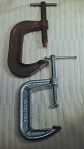
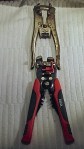
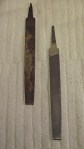
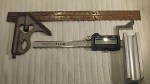
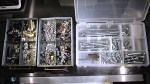
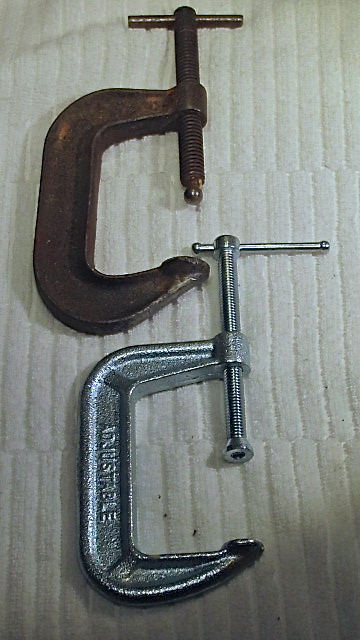
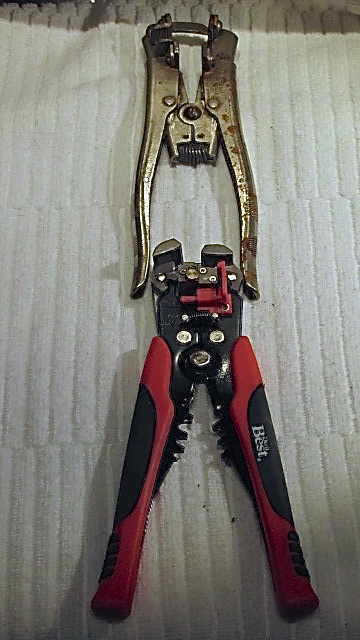
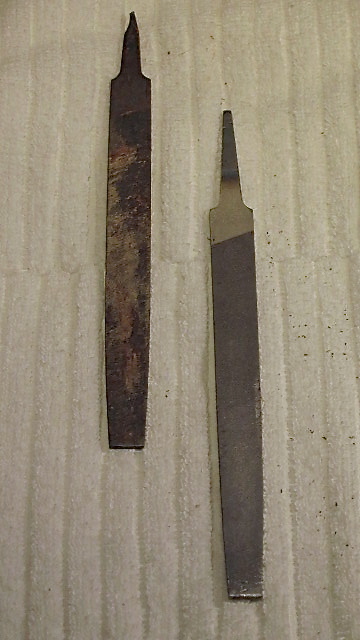
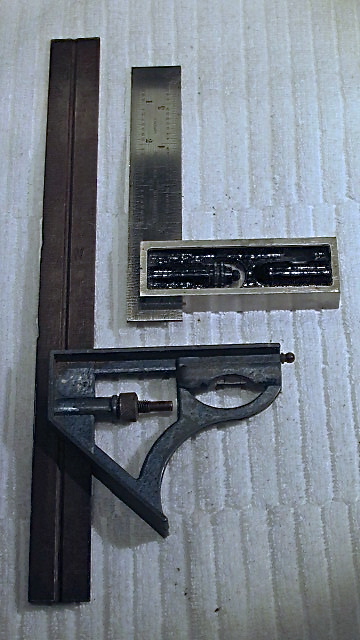
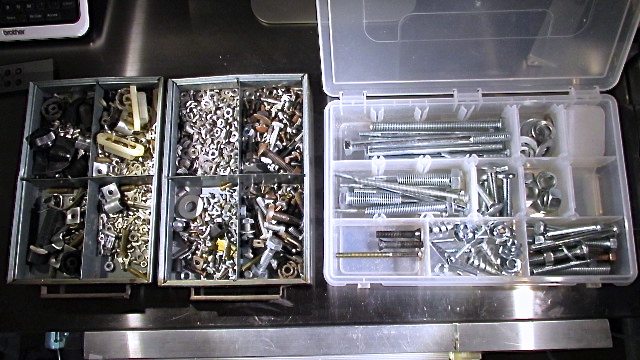
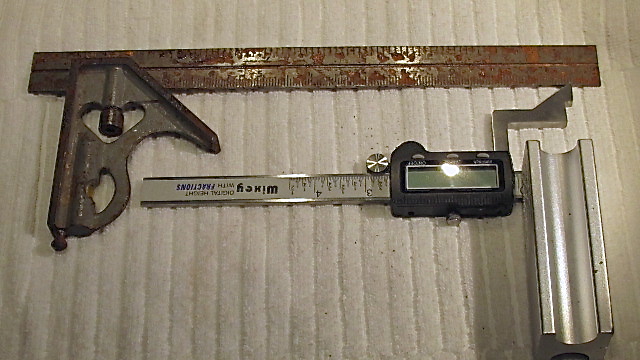
Except, there was one trail which we’d never bothered to follow: a couple of phenomenally heavy boxes which contained an enormous array of hand tools, parts, components, knobs, fuses, and rust.  These boxes had been buried in my brother’s basement for years, neither he nor I had any practical use for them.  In fact, they reminded both of us of particularly painful memories when both of us declined our dad’s invitation to study drafting in high school (and therefore follow his life’s path) and turned our attentions to the performing arts.  That was when I could feel my father’s pride drain from him as though he’d just been gutted.  But fifty years later, after I endured a break down and was determined to entertain my curiosities and creativity I spotted the art of wood working.  And I read a passage: “A Woodworker works wood with hand tools, he doesn’t machine wood with power tools.”  And so began my acquisition of various tools, all with specific purposes, and some which looked distantly familiar, as though I’d stumbled across them long ago but didn’t know what, if any, use they’d have.  What I didn’t understand then, I clearly understand now: Context was missing; meaning was missing; purpose and use and technique and discipline and understanding were all missing the first time, as an adolescent, I had found them.  But today, as I work wood with my hand tools I finally understand my father’s native language.  A language of tools and imagination and creativity.  A language of applied science.  A language which died the same day he did.

But it’s been rediscovered and is as important to me as the discovery of the Dead Sea Scrolls.  I finally understand the language he’d been speaking, how he saw his world, what he’d use to solve problems, and why he was so devastated when my brother and I impolitely snubbed his advice about drafting class and joined glee club instead.  And while I’m overjoyed to finally uncover a common thread uniting me to my dad, it’s also bittersweet: It’s a reminder that he’s gone and a wish that I’d give anything if he and I could, for just one day, sit together in my work space and “talk shop.”

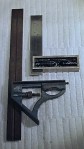
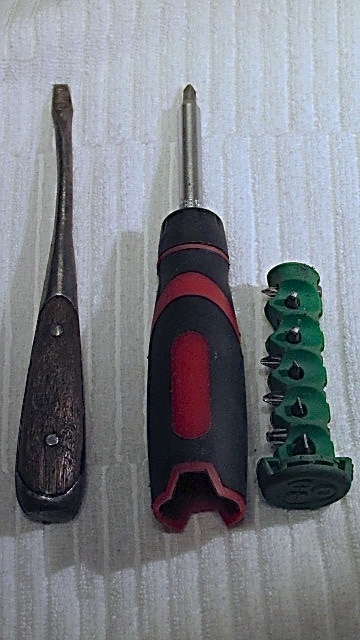
The attached pictures show my dad’s tool at the top or the left and my tool underneath or to the right of his.