Bipolar Diagnosis Is Not An Insanity Defense

I’ve been paging through comments left recently at Chicago news sites regarding the recent revelation that Representative Jesse Jackson Jr. (Congressman, Illinois) has been diagnosed with Bipolar II and is currently experiencing a major depressive episode and is being treated at the Mayo Clinic.  He’s been on a leave-of-absence since June when he was discovered by his father, Rev. Jesse Jackson, exhausted at Rep. Jackson’s Washington, DC home.  The family took Rep. Jackson to Sierra Tucson Treatment Center in Arizona, then moved him to the Mayo clinic where he remains, undergoing treatments for his significant depression.

If the picture I just painted was about your husband or wife, your child, a relative or neighbor, teammate, fellow parishioner, acquaintance, sister-to-the-father-of-your-daughter’s-fiance’s-birth-parents, or celebrity, your reaction, most likely, would contain differing degrees of empathy based in part on your knowledge of mental illness, specifically Bipolar II.  But what if the picture I just painted was about a politician in a state known for its bipartisan political corruption.  The reality that 20% – one in five – of the last century’s governor’s have been indicted or convicted of felonies in Illinois is a damaging statistic to all Illinois politicians.  Damaging is one thing, but suspicion on a federal level and a House Ethics Committee investigation for ties to imprisoned former Illinois governor Rod Blagojevich is quite another.  This federal investigation provides a significant foothold of suspicion in Rep. Jackson’s June disappearance and yesterdays news story confirming his diagnosis and treatment for major depression (one-half of the mental illness, bipolar).

The vitriol posted in comment sections of Chicago area TV stations extolling Rep. Jackson’s disclosure of mental illness and gastric by-pass as a creative and sympathetic smoke screen hoping to derail the federal investigation or, at the very least, to mitigate its voraciousness.  The assertion? That Rep. Jackson was in the middle of a hypo-manic (the other half of the mental illness, bipolar) episode which characteristically emboldens the patient to behave dangerously, generate grandiose plans well beyond his normal specter of life, and indulges in dangerously poor judgement particularly in highly sensitive or personal areas of the patients life.  If Rep. Jackson never mentioned (prior to the Blagojevich sting) that he’d like to advance his political career by winning a senate seat and then suddenly (and privately) begins the high-stakes game of buying (rather than campaigning for) a senate seat, Rep. Jackson could defend his uncharacteristic behavior as that of his manic-self (though at the time he was unaware of his mental illness), and that if his bipolar diagnosis was being properly treated (and he was compliant) he would’ve steered clear of any illegal activities.

Which is, by the way, a creative and sympathetic defense.  But our legal system does not recognize bipolar disorder as insanity, and therefore cannot be used as a defense in legal proceedings.  It could pluck on the heart strings of those on the House Ethics Committee, but any preferential treatment Rep. Jackson hopes his bipolar disorder might garner will be sanctimonious.  However, if the Committee (and subsequently Federal Prosecutors) sense blood in the water, Rep. Jackson’s recent disclosure of personal and private information will be sympathetically and respectfully noted.  And then the hounds will be unleashed and will, eventually, tree the red fox.

But what I find the most deplorable is the velocity and distribution of judgement by every-day citizens whose faith in politicians has been crushed by an unending parade of scandal, corruption, and greed.  Jesse Jackson Jr.’s job is a congressman.  Jesse Jackson Jr. also happens to be human, a husband, a brother, a son, a friend, and now part of my bipolar II world. 

It is shameful that the suspicious and the quick-to-judge deny their empathy to the mortal and vulnerable  Jesse Jackson Jr. who is suffering horribly, whose life is teetering on pharmaceutical roulette, who goes to sleep dreadfully depressed and wakes to the loathsome, disastrous, and painful reality that he must learn to live with bipolar disorder, not suffer from it.  To those casting stones, humanity and empathy aren’t yours to keep; they are given.  I pray that one day you won’t stare into the cold eyes of a stranger wholly disinterested in your immediate suffering because of a far-off suspicion of guilt.

An Open Letter to U.S. Representative Jesse Jackson Jr.’s Mayo Clinic Physicians

Dear Dr. So-and-So, et. al.:

I read with tremendous interest and a degree of de ja’ vu the front-page story written by Ms. Michael Sneed in the Sunday, August 5, 2012 Chicago Sun-Times which reported that U.S. Representative Jesse Jackson Jr. recently collapsed and had become completely debilitated by depression.  Upon reading the story, I experienced a staggering degree of recognition, for I too, have (and continue to do so) hit the same kind of wall as Representative Jesse Jackson Jr.: A crippling mental illness diagnosis, specifically major depression (changed later to Bipolar II) following gastric by-pass surgery.

The story reported that Ald. Sandi Jackson (wife of Representative Jesse Jackson Jr.) doesn’t know if her husband’s depression is connected to his weight-loss surgery.  As a person who finds himself in a very similar situation the development of major depression after elective gastric by-pass surgery) I would like to suggest that determining the cause of this on-set of depression is irrelevant and nearly impossible to determine.   Based on the past four years of failed orally administered pharmaceutical treatment attempts, I strongly suggest that you titrate the dosing levels of psychotropic therapies dramatically (50%-75% higher) or increase the potency of the psychotropic therapies to compensate for the substantial degree of malabsorption (the basic tenet of Duodenal Switch Surgery) caused by the significant reduction in stomach volume (up to 70%) and the dissection and rerouting of a large percentage of the small intestine (which is largely responsible for caloric absorption).  If the goal of the Duodenal Switch surgery is to limit volume and reduce absorption of food ingested orally, then common sense suggests that anything ingested orally will greatly lose its effectiveness (especially if the drug’s efficacy during clinical trials was based on subjects that did not undergo weight-loss surgery).  Except now we want the body to absorb what it’s ingesting!

I endured two needless years of trial and error attempting to discover pharmaceutical regimen which would lift me from depression and put a lid on my mania.  My psychopharmacologist knew I’d undergone gastric by-pass surgery a decade earlier yet refused to consider malabsorption as the cause of the ineffectiveness of every single prescription.  Frustrated by my psychiatric team’s myopia, I returned to the care of my internist; he was the first doctor to consider that my body’s ability to absorb oral treatments had been reduced by as much as 75%.  If an increase in dosage is impossible, then a different delivery system (IV, inhalation, transdermal patch, suppository) must be manufactured.   Please don’t waste Representative Jesse Jackson Jr.’s time prescribing the usual litany of drugs at their recommended doses: It’s akin to trying to stop a charging elephant with a water pistol.

Morbidly obese patients who were diagnosed as depressed and were being treated successfully through oral medications prior to gastric by-pass surgery discovered that post surgery their depression worsened and their pre-surgery oral medication treatment failed to reproduce the expected degree of pre-surgery success and relief.   Your patient is in crisis; your patient is experiencing a major depressive episode; your patient’s natural ability to absorb what he ingests has been compromised to the degree of ineffectiveness; your patient needs an extraordinary, preposterous, wholly unimaginable antidote, not a boilerplate solution. 

I salute the Jackson family for supporting Representative Jesse Jackson Jr. through this difficult period and wish them all God’s speed.

Quality Counts

I recall favorably the first night I spent in my spouse’s garret twenty years ago.  Naturally, I maintain this memory carefully, doting on it like a delicate photograph that’s aging, edges first, a creeping brown border and satellite-like spots threaten my recollection.  There are certain details which remain as crisp as a carrot because their impact struck me with tremendous velocity: his lingering fragrance hidden in the cotton of yesterday’s white shirt, the organization of his morning rituals: washcloth, cream shave, razor, brush.  I remember these sneak-peaks into his privacy because they played important roles in who he was daily.  All men have similar morning rituals but what impressed me, even back then, was his carefully selected instruments.  Many men could care less, but for him it was important to have the precise razor or brush or after-shave balm.

Another time we’d been invited to a business colleague’s home for dinner.  He orchestrated a wonderful meal which reflected skill, passion, and pride in what he presented to his guests.  But most amazing was the absence of commotion, replaced instead by ease and fluidity and sufficiency produced by efficient use of very few utensils.  I never ask for a recipe, but I did ask the secret to his efficiency.  His reply?  Limit yourself to four knives, but buy the very best knives: spend the extra money in the beginning, rather than repeatedly replacing them.

I allow myself the luxury of paying close attention to my private rituals and the tools by which I perform them.  Personal details or items (whether tool, accessory or peculiarity) does someone select?  These very personal choices provide a glimpse of who they really are, who they are and how they behave in private, when no one is watching or evaluating.  These details are the intimacies of an individual.  They’re not declarations or pronouncements or bravado; they’re not obvious, are often found in private rooms (bedroom, bathroom), are easily overlooked as an insignificant article or one of propriety’s niceties.  But I have found them to contain much more passion than everyday items.

Personal details are often sought out or surreptitiously discovered or introduced by way of kindred spirits.  They’re rarely received as gifts because their personal significance is concealed for fear of ridicule by friends for their dandiness.  Cost is rarely a deterrent; if a person has selected a specific item their determination to acquire it is very strong; they’ll scour the marketplace; they’ll participate in auctions; they’ll keep abreast of discounts; and if all else fails they will happily exchange money for the possession or, if it is simply beyond their reach, they’ll step away and always admire the item with the hope of a giddy teenager meeting her teen idol.

It’s possible to obtain objects which are more than capable of performing the same tasks.  For example fountain pens and ball-point pens; Bulova and Breitling watches; thermograph and letterpress stationery.  It’s not the price that assigns value.  Workmanship, materials, design, style, function and longevity all play important roles in my decisions.

A word of caution if the item is categorized as luxury: the old adage you get what you pay for is very important.  A replica of an item is not an inexpensive version of the item.  A replica is, at its basest, a forgery, misrepresenting itself as authentic at a 75% mark down.  If you find a deal too good to be true, it is too good to be true!  If you’re really in the market for luxury items do a lot of homework first; learn everything you can about the item; understand the difference between worth and value; and don’t buy as an investment unless you’re an aficionado.

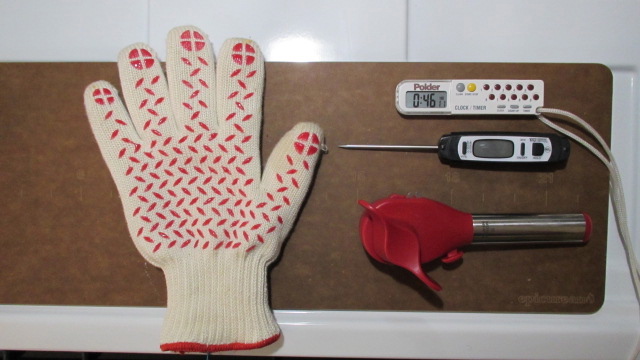
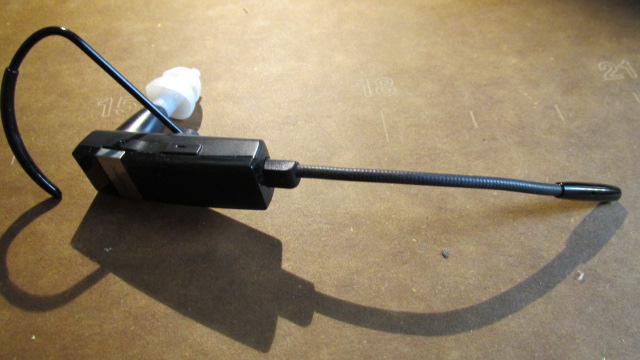
These are my personal details: Grooming: Merkur safety razor, Niegeloh Topinox nail trimmer, Erbe scissors (Solingen, Germany); Kent hair brush (UK); Proraso shave cream and after-shave; Burberry Brit Eau de Toilette; Stationery: Letterpress monarch paper and envelopes, fold-over note card and envelopes, calling card, and return address label; Nakaya Urushi-Lacqured Long Writer fountain pen; Kitchen: Victorinox 10-inch Chef’s knife, 3-1/4-inch Paring knife, 12-inch Granton Edge Slicing knife; ARY Hot Gloves with red silicone grip; Polder Digital timer; Kuhn Rikon can opener; Audio: Etymotic Research HF5 in-ear earphones; Etymotic Research High-Fidelity ear plugs; Etymotic Research er89-2 Bluetooth cell phone headset; General: Fenix LED flashlights; Boker Solingen pocket knives; Barking Dalmatian Soap Dispenser.

Back Then, Ignorance Was De Rigueur

At the end of the 60’s and carrying into the 70’s there still seemed a deep-rooted sentiment: if it’s none of your business, then keep your nose out of it.  Which seemed to work fine for most people.  Of course every neighborhood had its busybody, just as it had its grouchy-keep-off-my-grass-senior-citizen, and bubble-gum-snapping-younger-than-her-bosom-suggests-daughter-of-a-longshoreman.  But by-and-large, if it didn’t directly involve you then you were commanded to stay-out-of-it.  And woe be the kids with clumsy feet: too inattentive or naive to jump when they spot trouble; or those nearest the melee when it explodes, or the small-fry-wanna-be whose taunts often ignite newly produced testosterone because they all will be hauled to the principal’s office for punishment followed by the famous litany of idiotic parental rhetoric: “. . .well, if he jumped off. . .;” “If I’ve told you once. . .;” and the classic “I  could see those <insert surname  here> boys were trouble. . .”   But the message was always the same: mind your own business.

Now, that’s not to say there was a lack of dinner-table rumor-mongering, my mother usually updating us on the goings-on of the neighborhood.  But, if the rumor was rated PG-13 and above, we were given the briefest synopsis, censored beyond recognition, devoid of any example of debauchery, infidelity, or any despicable acts whether or not the “I’m-not-naming-names-neighbor-three-doors-down” was perpetrator or victim.  My mother’s talent for omission was legendary, but her dinner-table-abridging offered very little by way of a storyline, but witnessing her agility at avoiding incriminating details while maintaining a conversational tone was so entertaining that my older brother wanted to call the Watergate crew and offer them her secret of how-to skirt the truth and avoid prison for perjury.  He said he tried but was told they don’t take messages for inmates.

But even spreading gossip was considered a breach of social convention and was practiced with the highest degree of discretion.  I overheard my mother talking on the phone about Mrs. Bowers and her recent loose-lipped huddle at Kroger’s with Mrs. Hanson about boys, booze, broads and a bathtub: to Mrs. Bowers chagrin the broad and bathtub belonged to Mrs. Hanson.  Right there in aisle 5-A Mrs. Hanson’s strong upper lip began to quiver and like a mudslide, her conviction simply gave-way taking her sand-bagged courage with it and Mrs. Hanson dropped to the floor as if someone had cut her marionette strings.

Back then the message was loud and clear: keep your mouth shut! 

And I suppose it was that exact 1960’s deflection of responsibility, respect for authority, and absolute ignorance of any activity which happened outside the euphemistic “four walls” of our family (and home) that created a vacuum of moral accountability.  This social ignorance was the fertile ground from which victims sprouted already marinated in the tenets of civic propriety: keep your mouth shut and mind your own business.  Now add a new genus of Catholic leadership: an indubitable, irrefutable and influential priest whose intentions, if questioned, are defended rigorously by the diocesan hierarchy.  These two social renunciations: bewilderment on the part of the parents and blindness on the part of the Catholic Church created the perfect playground for sexual predators that mocked piety and disgraced through indignity and malice, the Christian image of the protector of children.

We had a predatory priest back in Catholic grade school.  As a pedophile he’d developed quite a reputation and a skillful set of traps which left little, if any scars, except those which appeared years later.  He developed a certain degree of notoriety: A staggering example of the decades-long failure of the Church’s treatment (reflection and counseling) resulting in reassignment or perhaps the estimated number of casualties he produced (across generations in one family).  His ecclesiastic devotion was a stark contrast to his budding reputation as “overly affectionate” or “physical with boys beyond acceptable behavior” so the Arch Diocese of Milwaukee continued to pry his paws away from parishioners at one church (akin to “running him out of town”).

He was hurried over to a safe house for an overhaul: counseling, hand-slapping, celibate reminders, penitence, forgiveness, and then off to some R & R (restoration & repair), placed back into the deck, reshuffled, and dealt to an ignorant congregation of affable and duteous parents who’d bred reverent and obedient children.  Some devote parishioners believed that the affection of a doting priest was reserved for the innocent of the innocents, were venerated by God and anointed (via the local messenger, i.e. priest) with an extra helping of divinity.  I remember hearing that some devoted parents would volunteer their children’s time to vocational pursuits i.e. ironing vestments, vacuuming sacristies, opening the weekly offering envelopes, in order to maintain proximity to the priest should a divine message be received.  But back then, back in 1969, that’s how Catholics behaved because they were taught that a priest was called by God to act as emissary here on earth; and the most important (mysterious, and grossly misunderstood) tenet of a priest’s appointment was his unconditional vow of celibacy (the state of being unmarried and, therefore, sexually abstinent).

And that presumption, that priest’s were not sexual, was the perfect degree of insulation these priest’s and their superiors needed to stave off accusations of impropriety brought to the diocese.  And here’s the revelation:  No matter how impassioned, no matter how unthinkable the alleged violations seemed, no matter that these abominations were reruns from previous parishes, the victim, a child, with nothing to gain (and so much to lose) were often suspect!  First by the parents, then the parish leaders, then when facing the priest in his rectory, and then, if pursued, again face-off with highly respected and very suspicious diocesan officials and the priest (whose interest and adorations became manipulative, threatening, painful episodes and were so outrageous and impossible to prove, that the only logical and least damaging conclusion anyone with any sense could draw:  the child is  exaggerating, misconstruing, or unintentionally and without malice positioned themselves near the priest and misunderstood their physical contact as egregious.

And frankly I don’t know which buckled first: The highly improbable assertion that a child repeatedly seduced a religious official vowed to celibacy or the unquestionable devotion of generations to the Catholic Church (the age-old collapse of a faith in God and a faith in the Godliness of men ordained by Him).  But what it took to shift the burden of proof from the victim (child) to the perpetrator (priest) was a departure from isolation and silence to community and conversation.  When adults decided that blind allegiance to any organization purely based on what that organization tells you to believe is, in and of itself, questionable, was when the fortified walls of some of the world’s oldest and most revered organizations began to weaken.

It’s not what we’re told by leaders (whether religious, political, corporate) that has the capacity to tear this world apart.  It’s what we believe that we’re told.  It’s not the children’s fault that the Catholic Church protected and permitted decades of sexual abuse.  It’s the adult’s fault (whether or not your the priest or the parent or the pope).  It’s an adult’s responsibility to question authority each and every time it violates freedom!

There isn’t one person on this planet that stands above repute.  Except, that is, perhaps the children.

As a Playwright: Notes & Excerpt from “Afterward”

Initially my focus was poetry: Simile and Metaphor; juxtaposition; possessing the “ear” to hear.  That is, to identify words not only by their meaning, but also how they sound when blended with their kin folk in the paragraph.  Some call it style: I was taught that it was called my voice.

I attended the only university that accepted me.  Good fortune (cousins twice removed to Serendipity and Veracity (both of which I mention in a couple of different posts) eventually led me to the Chancellor’s office, Dr. Warren Carrier, a contemporary poet, and my mentor for three years.  Through Warren I met esteemed poets such as William Stafford, Richard Hugo, Madeline DeFrees and Robert Bly.  I asked Warren, upon completion of my first publishable poem, “Do I have my voice now?”  With a quiet chuckle he replied, “Voice?  You’ve just begun to whisper.”

When I tired of poetry’s whittling, I turned to a genre which permitted a certain degree of gluttony:  Playwriting.  Since then I’ve written over a dozen full-length plays.  The following excerpts come from my latest play, “Afterward.”

A little about “Afterward:” it’s based on the premise that everything happens because of something else. In this case Joe is uncertain whether he loves Rene enough in order to continue their relationship; and Jeffrey, having recently dissolved a male menage trois is seeking desperately for a new relationship. It’s a play of parallels: Joe’s uncertainty of his long term relationship and Jeffrey’s uncertainty of his freedom. Yet both men’s angst often cross paths when they articulate that what each of them has is indeed what the other is seeking. And therein lies the conflict. How does someone argue his point free of his own emotion; or rather, can someone advise a close friend to stay where they are if, indeed, that is where they wish to be? I haven’t been able to write its conclusion because I haven’t quite lived the conclusion. There are a few elements which I have yet to introduce: Joe’s testosterone therapy which has increased his sexuality, and in turn, has brought his desire for men to the forefront. How does he explain this uncovered desire to Rene who has known him only as heterosexual? One would think that it would be simple: tell her. But what if Joe has met someone with whom he wishes to bed? With low testosterone your sex drive decreases and, harshly put, Rene was enough for him. Now that the testosterone is normal his sexual appetite has increased unleashing desires which Joe is unused to communicating. And more recently my experience with depression will undoubtably wind its way into the action. Perhaps Joe is on the verge of collapse? And like me, the perfect storm is brewing. Perhaps I should re-title the play “Convergence”.

Aristotle, the father of drama wrote about three unities: Time, Place and Action. He argued that a well made play should embrace these three unities. Time means all action takes place in real time: If the action starts at 8:00 pm and the action lasts 90 minutes, then the play should end at 9:30 pm; Place means all action occurs at the same location; Action means all characters involved in the play are seen on-stage. I don’t need to tell you that abiding by these three unities is no easy task. Action is the easiest to draft; Place is a bit more difficult; but Time! That is by far the most difficult. No ones life is so dramatic that you’d want to watch it, non-stop for 90 minutes. Except some good porn, I suppose. So the inherent problem with “Afterward” is that it MUST be overwritten in order to edit down to 90 minutes of solid drama. The beauty of Aristotle’s unities is that the life of the play lies squarely in the hand of the playwright. It is my responsibility to build, breakdown, build, breakdown, build, crescendo and conclude the most horrific or funny 90 minutes of the characters life. Which again, is no small feat.

JOE

I love Rene. I really, truly do. I love being with her. Touching her. I enjoy her smell. I enjoy her taste. It just seems as though it’s all become expected. Like you expect the door to open when you turn the handle. Like you expect
the light to go on when you throw the switch. It’s all become. . .routine. It’s become a routine. Expected. Except she’s not expecting. Not much anymore. I try all the same old tricks: stroking the inside of her arms, the lingering,
trailing kiss down her neck, the old, common jokes; rubbing her feet, drawing her bath; meeting her for lunch; glasses of wine in the garden; jewelry. We sit and too much time passes between us, too much silence.

JEFF

Silence is comfortable.

JOE

Is that what life becomes? Silent and comfortable? Silent and comfortable aren’t passionate. I remember years ago. . .maybe not even that long ago. . .when fights flared up between us like brush fires. . .hot, screaming, saying things we’d regret. . .painful, hurtful things. . .emotional jabs and punches. . .and then we’d lock each other up like exhausted boxers and throw sexual upper-cuts that landed us both on the floor. . .and all there was was brutality. . .clothes became obstacles, then torn, ripped. . .and we were coupling like animals and the same jabs and punches were thrown lower, thighs pushed open, panting and sweating and screaming. . .until we. . .together. . .at the same time…like trapeze artists flying through the air reaching, grabbing, clutching. . .and freshly embarrassed laughter tripped from our mouths and we both felt madly, deliciously, one, even though by then we had disengaged and fell next to each other and quiet washed over us like a crisp cotton sheet. That quiet was different than this silence. That quiet was a respite, an earned pause. This silence is deafening. This silence is stifling, full of humidity. The silence I hear now is the result of twenty years of conversation. As though we’ve heard it all before. As though we’ve already read this page, this chapter, this novel. Almost as though, predictably, we know how this will end. How can we know the ending? How can a love affair like ours have a predictable denouement? How in the world did we get here? Here has always been where I’ve always wanted to go, but now that I’m there I keep wondering. . .

JEFF

Wondering what’s over there? I can tell you what’s over there. I’m over there. Over there is lonely. You try to shore up the desperation you feel by humping strangers. . .ten different men in a week. . .but there’s no union. There’s the gaze, the dance, the drinks, the touch and rub and grope and zip and grind and suck and come. And it’s all madly, deliciously sexual. But there’s no investment. There’s no pain. There’s longing, but not the longing for what once was. There’s no memory. There’s not even hope. It’s started and ended in ten brief minutes and you’re now more of a stranger than when you walked in the door of the bar because you gave something so familiar to someone so unfamiliar.

JOE

So what’s a guy to do? How come once we get to where we thought we wanted to go the place looks strikingly different than the brochure? Where’s everything we’ve always been dreaming about? Where’s the cottage and the lake and the loons and the pine trees and the two-person row boat and the big fluffy bed and the sunset? How come I don’t see that? Christ, I love Rene. And isn’t love enough?

JEFF

Maybe you’ve gone away. Have you thought about that? Maybe you’ve gone away. It doesn’t sound to me like Rene has gone anywhere. It sounds to me like you have. Have you? Have you, Joe? Have you gone away?

JOE

I don’t know. Maybe. Maybe I have. Maybe. Maybe I should just masturbate more. Maybe that’s what I should do. Masturbate more. And don’t dare reduce this to the whole mid-life crisis thing. I’m past the mid-life crisis thing. My mid-life crisis is parked in the garage: Midnight blue, six cylinder six-speed, satellite radio equipped convertible. It turns heads. I smile on its behalf. That’s done.