. . . later that night . . . (excerpt from “The Other: A Collection of Doubt”)

“So, what did you want to know?” Scott asks placing the bottle of wine on a coaster.

Tom stands, adjusts the flame and walks to the sofa where he sits.  Scott sits cross-legged at the corner.  “Well, how you came to be here.  Not here, in my house per ce, but, I guess, how you came to be period.  I mean, I know about your mom and your dad and how they came from China and about your sister, but I don’t really know anything about you besides you’re an excellent kisser and I love the softness of your skin and blackness of your hair and your smell.  I want to know about you.”

Tom reaches for the bottle and pours himself more wine and refills Scott’s glass all the while struggling with the desire to simply strip him naked and bring them both to a mind-blowing orgasm.  Scott remains steadfastly silent.  “You don’t have to tell me, if you prefer,” Tom adds finally.

“I don’t know how to answer.  I mean, no one has ever asked me that question before.  Has anyone ever asked you to tell them about yourself?  How do you answer that question?  I feel like anything I say will sound grossly trite and insignificant.”

“But those are the things I want to hear.  And I’d rather than hear them now. . .than after.  Maybe I’m afraid that. . .after. . .you won’t feel so compelled to share them with me,” Tom says feeling suddenly embarrassed and insecure.  “I’ve never had anyone over to my house like this,” he admits.

“Like this, like what?” Scott asks.

“Like you,” Tom continues.  “And it’s not like I’m trying to protect the house or even myself for that matter.  It’s just that this is all so unusual.  This morning, this day, tonight, even you.  It’s all very unusual.   I don’t normally behave this way, not that the way I’m behaving is bad, it’s just different.  Different is all.  And I guess I want to understand you.  In a way that’s bigger or deeper or larger than kisses and erections and orgasms,” Tom says sheepishly.

Tom feels that slight sickening feeling of overexposure, that sorrow you feel when you realize you’ve stayed out in the sun too long and you’ve got a fitful night of prickly sunburn ahead of you.  Perhaps he should’ve kept his mouth shut and quickly stripped Scott in the kitchen and wasted no more than ten minutes including the awkward “so long.”  Perhaps by now he’d be in his shower washing away the remnants of weakness.  Simple.  Easy.  Clean.

Tom takes a long swallow of wine and looks at Scott, at the front of Scott’s jeans which no longer suggest his passion, but which now sit folded politely much like his own.  All that remains of their bodies collision against the countertop is an unforgiving stickiness.

“I never knew what I wanted.  Growing up, I never knew what I wanted.  What I wanted to do, wanted to be, or who I wanted to be with.  I knew almost immediately what I didn’t want.  What I didn’t want to do or who I didn’t want to be or who I didn’t want to be with.  And it seemed easier, I guess, to eliminate things than to chase things.  So I’ve spent the better part of my life in a state of subtraction.

“I never gave it much actual thought, you know, the reason for the activity of eliminating things from my life.  I guess I just found it to be an easier way to get by. And somewhere, some time I thought that I’d eventually find something that I’d be interested in enough to actually add to my life.  Something that I’d be willing to pursue.”

Scott takes a long drink and studies the wine as though he were reading tea leaves.  Tom watches Scott’s intense stare into the wine glass.  Leave him alone, Tom thinks.  Maybe all Scott wants is a quickie and you’re trying to make it into something more.  Maybe all this talk will lead to nothing.  Maybe Scott will find you too needy.  Maybe you should simply lean over and kiss him so you can get this over with; but Tom feels that their attraction has waned.

“I can give you a ride home if you’d like,” Tom says quietly, uncertain of Scott’s desire to stay.

“Why?  Did I say something wrong?”

“No, no you didn’t say anything wrong.  I just thought that. . .” Tom adds quickly, trying to allay Scott’s uncomfortableness.

“See?  This is exactly the reason why I never tell people what I’m thinking!  It’s like they think they want to hear it, and then when I’m straight with them they realize that they’re not really interested.  It happens all the time.  So I think it’s just easier to do what we both want and get it over with.  Simple.  Clean.  Easy,” Scott says defensively.

Tom stands up and walks to the fireplace for no reason than to move away from Scott.  He studies the fire and wonders how this day could end this way.  “Well, what is it that you think is so simple, clean and easy?” he says without looking at Scott.

“The same thing you do,” Scott says still studying his wine.

Tom watches the fire immediately realizing that they have reached the fork in the road.  The same divergence he has reached scores of times before: the familiar scenarios play out in his head like a montage: Scott stands and lets himself out; Scott stands up and walks to him, kisses him lightly and leaves; Tom walks to Scott, kisses him and they do indeed play out the inevitable, in exchange for the fifteen awkward minutes when scraps of paper with false phone numbers are exchanged and Tom locks the door securely behind Scott.  They all seem obvious.  They do seem simple and clean and easy.

Tom rubs his face with his hand, “I don’t think so, Scott.  I don’t think I want simple, clean and easy.  Not this time,” he admits finally looking at Scott.  “I think this time I want it difficult, dirty and hard,” he says walking to the sofa.  “And I think it all has to do with you, with you Scott” sitting next to him, “and I think it’s all about me letting someone in and all about you knocking on a door you want to open.  I think it’s all about you and me, here and now.  I think both of us are done, at least right now anyway, with simple, clean and easy.”

Tom reaches a hand to Scott’s face which he tilts upward.  Scott’s eyes meet his.  They both sit in silence for a few moments.  Tom’s thumb gently caresses Scott’s cheek and chin feeling the soft stubble of his beard.  Scott smiles slightly at his tenderness and reaches a hand to Tom’s face which he touches softly.  Tom thinks that this is the tenderness discovered between friends, friends willing to be naked and exposed, friends that share intimacies deeper and darker than just sex.  These are the moments which relationships are built on he thinks as their tender caresses continue.

Scott leans forward and kisses Tom’s cheek, then pulls away slightly, “no one’s ever taken the time to articulate it like that,” he says, “usually they simply dismiss me.  Usually by this time I find myself on the stoop of their house wondering how in the hell I’m going to get home.”

Tom takes Scott’s hand off his cheek and kisses his exposed palm, “but are you up to it, Scott?  Up to the difficult, dirty and hard?  Because I am, I mean, at least I think I am, right now anyways.  If you’re not then I’m not sure I want to complicate this any more,” he admits, again kissing the hand, “and I think that that would be a shame because it seems that we’ve already achieved a certain distance.  Given all the opportunities we’ve had today to simply sprint to an orgasm it would seem odd that you’re not up to the long distance run,” he adds.

Scott lifts himself out of the corner of the sofa and kneels at Tom’s side.  He leans in close and turns Tom’s face to his and kisses him devotedly, closed mouth, without passion but with longing.  “I’ve trained for a run like this all my life,” he says quietly while kissing Tom’s cheek.

Tom stands and places his wine glass on the coffee table.  He moves in front of the fireplace and slowly begins to undress starting with his shirt and opening one button at a time.  His fingers move slowly over the fabric feeling its softness, the stitching of the buttonholes; as he pulls the tails out of his trousers Scott takes a drink from his glass, places it on the coffee table next to Tom’s and walks in front of him.  Scott reaches for the hem of his fleece and in one smooth motion pulls it over his head and drops it on the carpet at his feet.  Tom peels the shirt off his shoulders, pulls his arms out of the sleeves and allows the shirt to slip out of his hand and fall to the floor gathering in a cotton heap.

Scott reaches slowly for the buckle of his belt, pulls on the length of leather which winds its way through loops, tugs at it, and unbuckles the latch.  At the same time Tom undoes his own belt.  They are now in-sync with each other as they both reach for the closures on their pants: Tom’s clasp and Scott’s button.  Both pop open as they grab the metal tab at the top of the zipper and slowly pull down, the metal teeth sliding into a wide-mouthed grin showing the soft fabric of their underwear to each other; Scott’s being steel-gray with Tommy Hilfiger emblazoned in purple on the waistband and Tom’s being simple, white Nautica boxers.  They stand motionless for a moment studying each other.  Tom grabs the edges of his wool trousers and lifting one knee withdraws one leg and then the other from his trousers; Scott simply allows the added weight of keys, cell phone and change to draw his jeans off his hips and down his legs like an anchor being dropped into the ocean and settle at his feet.  He stands watching Tom fold his trousers neatly laying them on top of his shirt.  Scott pulls one foot free from his jeans and then slowly, the other.  He kicks the denim to the side.  They stand three feet apart in only their underwear looking at each other.  Scott moves first, slowly hooking his fingers in the waistband of his shorts and drawing them down his hips, past the curve of his buttocks, out and over his erection and past his thighs releasing his hold on the cotton which folds like meringue at his feet: now naked in front of him.  Tom hooks his own fingers into the waistband of his boxers and pulls them in one swift motion off one leg, then the other finally naked to Scott.

Tom feels the heat of the fire brushing his back as he studies Scotts body: his long, lithe neck meeting the angle of his clavicle dissected by its horizontal bones; shoulders which spread out and bend with muscular caps bow slightly at the junction of his biceps and triceps; the mounds of his chest crest with lean muscles and are topped with two, quarter-sized auburn nipples which are separated by small, sparse hairs; the chest falls onto the ribs which look like pale piano keys and descend into the diamond form of his abdominals which drain into the slightly indented bellybutton centering his core; muscles like hands forming a “V” fan out on either side of his groin, a furrow of muscle rising from his crotch up to his hips and disappearing into the flesh of his buttocks; his hairless thighs give way to bony knees and lithe, muscular calves which have a splattering of stray, black hairs.

Scott studies Tom’s form: the wide chest painted by brown hair which continues down his stomach and empties into the hair surrounding his erection; muscular thighs support the heavy foundation; the most obvious characteristic is the abundance of body hair which Scott finds very sexy; Scott yearns to bury himself in Tom’s masculinity.

“You’re absolutely beautiful,” Tom hears himself whisper, afraid he’s sounding trite and wishing he could summon up words he thinks would be worthy of the apparition.  He wishes he could utter the oohs and aahs reserved for firework displays he enjoys.

“You’re better than I had imagined,” Scott admits while feeling himself pulled by an invisible string into Tom’s embrace.  Better than I imagined, Tom thinks to himself, better than he imagined.  No one has ever said that to him before, and, he wondered, if anyone had ever even thought it.

At the same moment they both take steps towards the other and meet in the middle of the carpet, Tom feeling a cooling of his backside and Scott feeling the warmth of the fire wash over his body.  They stand less than a foot apart, their hands at the same time begin to touch areas of acute attraction; Scott to Tom’s formidable chest hair, Tom to Scott’s slender hips.  At first their touch is tentative, as though they can’t quite believe they have acquired permission, but quickly their caresses gain momentum and purpose.  As they move closer together their hips, pressed tightly together as hands continue to roam, to explore, to touch and discover.  Tom’s hand leaves Scott’s hips and move hastily around to his back then hungrily to his bottom, groping, kneading the soft flesh which tightens as Scott pushes himself against Tom, feeling himself being blanketed by Tom’s abundance of soft yet protective hair, recalling a similar feeling when his mother would pull the blanket to his chin and tuck in the sides; bliss he thought, blissful then and simply bliss tonight.
Recovery: A Saw Blade and Alpine Climbing (Journal: July, 2008)

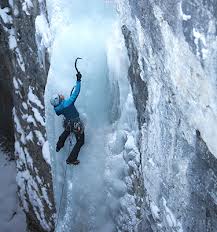
I had thought that an increase in medication would signal a decrease in depression. But my psychiatrist corrected my logic and chose two separate metaphors to describe my recovery: 1) A hand saw; and, 2) Alpine Climbing.

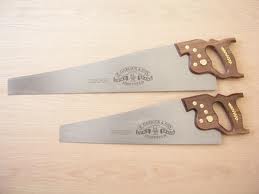
Picture a well-made 26″ cross-cut hand saw with its blade facing upwards.  Don’t look at the teeth but look at the blades carefully honed angle-of-rise as its surface broadens to eventually equal the width of the handle.  And the teeth are hand-shaped on a grinder causing the familiar serrated edge which means there are several contact points (peaks and valleys) along the saws blade.  My mind when in major depression is like a serrated cross-cut hand saw blade. There’s a consistent up hill climb but in order to achieve the handle one needs to live through a number of peaks and valleys.

Similarly, the Alpine Climbing endeavor is peaks and valleys to which I am ignorant: I am not a mountaineer, having lived for 50+ years at or slightly above sea level.  But something odd occurred recently: my sea level suddenly rose skyward and I, lacking any previous experience went tumbling like poor Jill after Jack tripped showboating his coronet.  And then there it was, sea level, way up there, beyond tree canopies, even higher than some clouds.  It wasn’t until my psychiatrist explained that sea level remained fixed; it was I who had tumbled downward, spiraling like bath water down the drain.

From its approach I studied the aspect or face which I would climb to reach my first base camp.  The first leg I climbed alone (except for talk therapy and psychiatric medications) and joined my psychiatrist/sherpa at base camp where he was waiting with our racks.  We left the dark despair and feelings of hopelessness at base camp in mid-July, 2008.  We lightened our load by leaving behind my feelings of worthlessness and the idea that my life has collapsed, I am invisible in my own life and I would be better off dead. We both agreed that we didn’t need to drag those thoughts with us to the summit. We shouldered our racks and tightened the harnesses, checked and rechecked; thus began my apprehensive and cautious attempt to the distant summit of Peak Recovery.  The trek had been an exhaustive challenge across an unfamiliar landscape filled with dark crevasses of suicide and treacherous, newly fallen snow provided a dense foothold for our crampons, but which also hid the setbacks of insufficient dosages. But the activity of climbing and breathing the thin, cold air provided a sense of refreshment and newfound challenge.

Friends of mine and especially Nick have asked why I would’ve been so lucid for so long, then after meeting my psychiatrist it seemed as though my bottom gave out. It wasn’t until this afternoon as I write this entry that the reason occurred to me: I had spent the better part of two years in an utter state of unhappiness; unhappiness in my job, unhappiness in my relationship and unhappiness in my life. Yet, everyone in my life thought everything was swell and marvelous and happy! I had tried everything I knew how, from changing jobs, to self-medicating, to alcohol abuse, but nothing would erase that consistent gnawing pain I felt in my heart, or quiet those scratching, irritating noises in my head. Right up to the end I tried desperately to hold on, to simply hold on to the last end of rope, my fingers bleeding and numb. Until I saw my psychiatrist for the first time and he said, “there’s nothing to be ashamed of when you ask for help. You cannot possibly do this alone.”

It was then, right then, that I knew the futility of my fight; it was right then that my heart recognized kindness and a serene noiselessness smothered the incessant clamor filling my head.  This epiphany of surrender brought an end to my life as desperation.  When I released my hold my consciousness experienced a forced power-off; a reboot in safe-mode.  When I eventually opened my eyes there stood my psychiatrist who helped me to my feet and said “Now we can start at the beginning rather than the end.  The end which you fought valiantly to avoid never would’ve been avoided. Life starts when labor ends.  We all start on the heels of the end.”

My recovery continues to be slow with delays and disappointments along the way.  And yet, as we stop to rest I tell him of the anger and disappointments in my life. My psychiatrist/sherpa listened intently and then offered the most important advice of all: “Climb this mountain as though your life depends on it, because it does.”

Is My Left Index Finger A Carrot?

Prior to all this mental illness mumbo-jumbo, my hands Left and Right, fraternal twins with Right seconds older (Left, it is said, grabbed anything within reach to avoid birth).  They’ve developed a symbiotic relationship on the one hand, while on the other they’ve taken completely diverging paths and developed distinctly disparate identities.  As Left was once quoted as saying, “we’re not two of one thing; we’re one of two things.”  Which is an important distinction in their world, a world where two things are commonly referred to as “one thing:”  The oft pedestrian reference: A Pair.

The human body is classical in terms of design styles.  It is proportional, balanced, and harmonious.  Its design style highlights the importance of parity, especially object parts divisible by 2.  Parity is reduced in importance only by singularity.  However, singularity is an expression of a Prime Object.  Unlike Parity Objects which if divided by two would result in one (not one-half), Prime Objects cannot be divided which results in an increased degree of importance.  Further, for many Prime Objects, the statistical probability of locating a perfect replacement is less than one percent.  A few Prime Objects are impossible to replace thereby aggrandizing their importance and diminishing the importance of two Parity Objects.  It’s because of the human body’s classical design style and a common belief that a human body can exist with one-half of a pair of Parity Objects that Parity Objects often develop the kind of relationship that honors longevity, but also promotes independence.

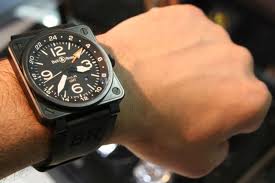
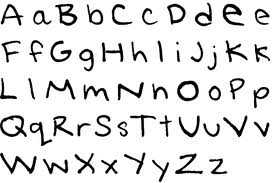
Left and Right have been inseparable for as long as I can remember.  Left is the quiet, ostentatious one when it comes to pretentious accessories (watches, bracelets); but Left is also the bearer of an object of significant proportion: the wedding ring.  Meanwhile Right is clearly the winner when it comes to handedness and the Brain’s division of labor.  Right was the first to learn that 90% of humans prefer to use his side as the “heavy lifter.”  As such, it’s Right who reaches out for a handshake, gives a panhandler a quarter, hails a taxi, scolds a child, dials a phone number, beckons a suitor to approach.  Unless the activity requires both the left and right hands, for instance playing the piano, forming a snowball, applause, typing this post, Left will wander off by himself, and routinely ends up in a jacket or trouser pocket catching a cat nap.  Right couldn’t care less.  He sees himself as invaluable, impossible to live without, the go-to-guy; deputized to effectuate distinguished gestures including devotional, patriotic, insulting, and vulgar (the latter is used so often it hardly qualifies as “distinguished”).  As a matter of fact, Right’s not entirely sure if Left has the ability to execute the oft practiced and drilled Ambidextrous Transmutation which Right first discussed with Left the night immediately after first grade when Right snatched the yellow stick from Left and began to trace the alphabet.  Right said, “Now Left, you should pay attention too; I know your holding the paper, but you’ve got to practice in case. . .”  Left reached across to Right, alarmed, “In case of what?  What?”  Right patted the top of Left, “In case I get hurt, wrapped like a mummy; you need to be ready to jump in!” And Right made it his duty to train Left in skills like handwriting, key-turning, locker-combinations, can openers, hairbrush, toothbrush, razor, utensils, and the secret one, the never-discussed-one, the door-locked-under-cover-personal-exhaustive-and-bemoaning-ritual.  Almost every night for fifteen years; sometimes more than once; then later in life strangers appeared and Right simply followed orders.  Left has seen action in 3rd grade (broken wrist), 6th grade (broken arm), and 11th grade (dislocated elbow).  Right beamed with pride when Left took ahold of the reins. 

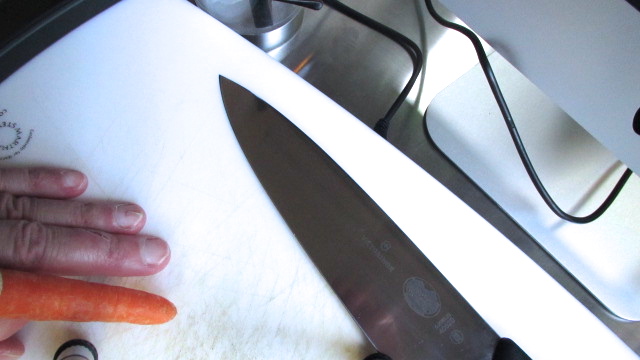
As of late however, Left has really taken a beating.  My new found interest in cooking and woodworking has led to a number of instances in which digits on my left hand can’t retreat fast enough and feel the razor-sharp edge of a chef’s knife (or bread knife, or lock-back knife, or 3/8″ wood chisel) slicing, stabbing or chopping.  And Right just keeps slicing in total abandon utterly unconscious of Brain’s danger alerts.  So Left wanted to try an experiment to gauge Right’s ability to distinguish Left’s forefinger from a carrot.  The picture above was taken a few moments ago.  We’ll keep you apprised of the outcome.

Chicago Tribune Feature – Published Sun., Aug. 26

No rhetoric; no sublime style; no lexicons or etymology.  Pure and simple disclosure of disquieting issues.

Please, REPOST THIS ON YOUR BLOG.  Personally, I prefer privacy over publicity; I exposed my life in the hope that the stigmas of mental illness, obesity, and homosexuality might be reconsidered to be human conditions worthy of respect and empathy.

http://www.chicagotribune.com/health/ct-met-bipolar-20120824,0,3948031.story

Bipolar II disorder: Another Chicagoan’s story

Like Jesse Jackson Jr., Harlan Didrickson has the illness and has had weight-loss surgery

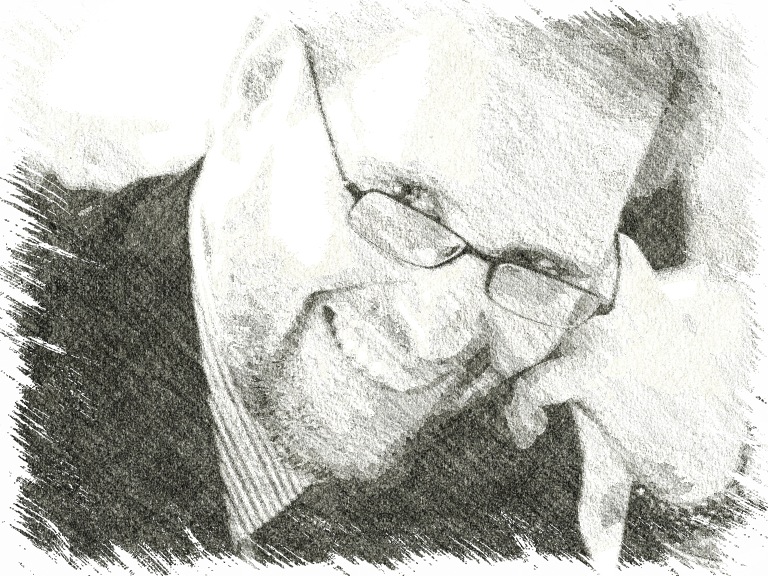
 Harlan Didrickson poses outside his Rogers Park home. (Chris Walker, Tribune photo / August 17, 2012)
By Barbara Brotman, Chicago Tribune reporter, August 26, 2012
Harlan Didrickson was a model of middle-class stability.He lived with his partner of more than two decades in a handsome Victorian on a leafy North Side street. He worked as manager of executive and administrative services for a high-powered architectural firm, where he made hospitality and travel arrangements for large meetings and oversaw budgets that ran into millions of dollars.He was not the kind of person who would go to lunch with friends and come home having spent $4,500 on a puppy and a month of obedience training.

Or who would get up at 2 a.m., go to Dunkin’ Donuts, then drive to Indiana and back, snacking on Munchkins.

But that’s who he became.

Four years ago, his life was upended by bipolar II disorder, the same illness recently diagnosed in U.S. Rep. Jesse Jackson Jr.

This is not Jackson’s story. People with the disorder — nearly 6 million in the U.S. — have unique experiences with the illness, which cycles between moods of manic energy and deep depression.

“The symptoms of bipolar disorder can be very different from one person compared to another,” said Dr. John Zajecka, a psychiatrist with Rush University Medical Center who specializes in mood disorders.

Manic states leave some people euphoric, others irritable. “There are people who can function their whole lives in these hypomanic states,” though they may lose marriages, jobs and money, Zajecka said.

Depression, too, can appear in a variety of ways. Some sufferers stay in either mania or depression for decades; others cycle between them many times a day. And people respond differently to treatment.

But Didrickson’s struggle provides one look at how bipolar II disorder and its treatment can affect a life.

And he does have one key factor in common with Jackson. Like the congressman, Didrickson, 54, had weight-loss surgery before being diagnosed with bipolar. He had a gastric bypass procedure; Jackson had a duodenal switch.

It became a serious complication in his treatment. The weight-loss procedure, which causes the body to absorb fewer calories, prevented him from absorbing the full dose of his antidepressant medication.

Didrickson’s illness began when he started feeling extremely stressed at work. He considered himself skilled at his job but felt beleaguered by office politics.

“I felt as though I was fighting a lot of fights on different fronts in my life, and that I didn’t have the wherewithal, the energy,” he said. “I was profoundly unhappy.”

He changed jobs, twice. He still felt miserable. And he also felt trapped, having to do work he now found unbearably stressful.

More than 60 percent of people with bipolar engage in substance abuse as they try to self-medicate their inner pain. Didrickson was among them. At night he would wash down some hydrocodone, an opiate he had been prescribed for a back injury, with beer. He would stay up till 4 a.m. watching TV, then take Ambien to fall asleep.

“At 6 o’clock I woke up, got dressed and went to work. I was probably still high,” he said. “Then somewhere around noon, I would crash. I would go to the men’s bathroom, go sit on the toilet and fall asleep.”

His partner, Nick Harkin, a publicist with an entertainment and lifestyle marketing firm, had no idea how deeply troubled Didrickson had become.

But then Didrickson didn’t show up on time for a planned out-of-town getaway. When he arrived the next day, he was morose, secretive and exhausted. “It was a very abrupt shift,” Harkin said. “It was quite obvious that something was very seriously wrong.”

Didrickson was thinking of ending their relationship, he told Harkin. And he wanted to move to California’s Death Valley. He wanted to start a new life.

“I was falling apart,” Didrickson said. “It was this desperate: I will do anything to get out from under this pressure.’ It was like having a heart attack, and if you don’t get out from under it, it will kill you.”

Back home, he called a friend who had once been his therapist. She asked if he was suicidal.

“I was, like, ‘Of course I am. I think about it all the time,'” he said. “‘It’s the only comfort I have.'”

She told him to see a psychiatrist. He did, and was told he had depression — a common initial diagnosis for people with bipolar, who generally seek treatment during a depressed phase of the illness.

The antidepressant the doctor prescribed didn’t work. Didrickson developed memory problems, to the point where he forgot how to do simple tasks like using a phone.

“I could not take a shower, because I couldn’t recall the sequence of activities … turning on the water, stepping into the spray, getting wet, washing,” he said.

He lost 40 pounds and neglected bathing and grooming. And yet there were also times when Didrickson felt powerful, energetic, nearly like a superhero. He could do anything he wanted, no matter how dangerous or destructive, with no consequences.

He ran red lights. He drove the wrong way down one-way streets. “I felt like I was back to being in charge, like I was back to saying, ‘It’s going to go like this because I said so,'” Didrickson said. “I felt kind of emancipated.

“I thought, Wow, this (antidepressant) Paxil is really working.'”

But it wasn’t. A psychopharmacologist gave him a new diagnosis: bipolar II disorder, a form of bipolar disorder with less extreme mood swings.

His new doctor told him to stop self-medicating — Didrickson said he hasn’t had a drink or abused a drug since — and put him on a mood stabilizer. And then began the painstaking process of trying to find the right antidepressant: six weeks getting to a therapeutic amount of a drug, then six weeks being weaned off when it didn’t work, again and again.

“My symptoms came back. I just felt terrible,” he said.

He was still manic, once getting up at 4 a.m. to drive to Lake Shore Drive to look at newly fixed potholes. He spent money recklessly. He spent hours obsessing over the paper stock to use for custom stationery.

The manic states always turned dark, ending with him lashing out at people — usually Harkin.

“When I begin my mania, it’s a great party,” he said. “But when it gets to be months into it, it gets uglier and uglier and uglier, to the point where you really are a monster.

“Mania isn’t happy; mania is crazy,” he said.

No antidepressant worked. Then a friend with bipolar recommended Adderall, the stimulant often prescribed for attention deficit disorder.

His doctor prescribed a standard amount. It did nothing.

So Didrickson took another dose. And he felt a little better.

“I started to feel buoyant,” he said. “I always talk about feeling underwater. I felt like I was finally breaking the surface.”

He didn’t know why he needed a higher dose. But then he came upon online message board postings by people who had undergone gastric bypass surgery and then found that their antidepressant medicines stopped working.

The gastric bypass surgery he had undergone years earlier to lose weight, he concluded, was keeping his body from absorbing the medicine.

Indeed, Zajecka said, gastric bypass surgery can change how people absorb medicines given for bipolar disorder.

The Mayo Clinic statement announcing Jackson’s diagnosis also noted that the weight-loss surgery he had “can change how the body absorbs food, liquids, vitamins, nutrients and medications.”

Didrickson’s doctor would only marginally increase his dosage of the notoriously abused amphetamine. It wasn’t until he switched doctors because of a change in his health care coverage that he got what he found to be an effective dose.

His longtime internist, Dr. Eric Christoff, assistant professor of clinical medicine at Northwestern University’s Feinberg School of Medicine, gradually increased Didrickson’s dosage, with weekly appointments to check his blood pressure.

The depression lifted. He has been on the higher dosage for a year and a half.

“We have never seen any evidence of drug toxicity or high blood pressure,” Christoff said. “He’s really not absorbing much of any dose he’s taking.”

Many people with bipolar disorder are able to resume their previous lives.

“It’s one of the most treatable illnesses we have in medicine,” Zajecka said. “If it’s diagnosed properly and treated appropriately, there’s no reason they can’t get back to resuming a normal lifestyle and their normal goals in life.”

But Didrickson has been unable to go back to work and still has periods of depression and mania, though much milder ones. He manages the house, cooks and has taken up woodworking.

“Going out in the evening can be very, very, challenging for him,” Harkin said. “If we go to a concert or a dance performance and it’s too noisy, he’ll have to leave. If … there’s someone in a film who’s violent or cruel, that’s very upsetting to him too.”

“It’s nothing like I thought my life would be,” Didrickson said.

“The good thing, I guess, is that I don’t hold on to yesterdays,” he said. “That’s a blessing, I think, frankly. But I also don’t have tomorrow. My life isn’t about tomorrow.”

He has gone back to writing, which he did in college. He writes a blog about his experiences with bipolar, under the name T.M. Mulligan. The moniker stands for “Taking My Mulligan.”

“I’m having my do-over,” he said. “I’m taking the second chance.”

Copyright © 2012, Chicago Tribune

Chicago Tribune Feature – Set to Appear This Week

Early last week I was contacted by a staff reporter from the Chicago Tribune newspaper asking if I’d be willing to share Life With Bipolar II.

I’m a private person by nature, but also an author rummaging through his past looking for experiences which, when written in my style will leap from me and land on you resulting in some degree of change expressed through your thought or action.  I don’t write for the sake of writing.  I write with purpose; with hope that my style captures your attention; and with honesty so that a kinship occurs as you read and when finished actually feel something whether it be acknowledgement, empathy, entertained, or moved.  If you don’t experience any shift then I have failed you as a writer.

So many people know so little about mental illness generally, and Bipolar specifically, that to decline the opportunity to be featured in a full-page story in one of the top five newspapers in the country (not too mention their on-line edition) would be foolhardy.  There’s no possible way that I and this blog occupying a little corner of the internet could reach the number of readers that this article will touch.

I have spent ten hours on telephone interviews; two hours of photography here at my home; my partner’s been interviewed, and so has my physician.  The process has been, frankly, unnerving and profoundly confronting and nowhere near as safe as if I’d been writing it.  But I agreed because too many American’s need to understand that mental illness is a disease.  Doctor’s need to understand that a post-gastric by-pass patient won’t respond to medications as expected.  Patients living with mental illness need to believe that sharing themselves with others is the only way to dilute discrimination based on mental health.

Please watch for it!