Initially my focus was poetry: Simile and Metaphor; juxtaposition; possessing the “ear” to hear. That is, to identify words not only by their meaning, but also how they sound when blended with their kin folk in the paragraph. Some call it style: I was taught that it was called my voice.
I attended the only university that accepted me. Good fortune (cousins twice removed to Serendipity and Veracity (both of which I mention in a couple of different posts) eventually led me to the Chancellor’s office, Dr. Warren Carrier, a contemporary poet, and my mentor for three years. Through Warren I met esteemed poets such as William Stafford, Richard Hugo, Madeline DeFrees and Robert Bly. I asked Warren, upon completion of my first publishable poem, “Do I have my voice now?” With a quiet chuckle he replied, “Voice? You’ve just begun to whisper.”
When I tired of poetry’s whittling, I turned to a genre which permitted a certain degree of gluttony: Playwriting. Since then I’ve written over a dozen full-length plays. The following excerpts come from my latest play, “Afterward.”
A little about “Afterward:” it’s based on the premise that everything happens because of something else. In this case Joe is uncertain whether he loves Rene enough in order to continue their relationship; and Jeffrey, having recently dissolved a male menage trois is seeking desperately for a new relationship. It’s a play of parallels: Joe’s uncertainty of his long term relationship and Jeffrey’s uncertainty of his freedom. Yet both men’s angst often cross paths when they articulate that what each of them has is indeed what the other is seeking. And therein lies the conflict. How does someone argue his point free of his own emotion; or rather, can someone advise a close friend to stay where they are if, indeed, that is where they wish to be? I haven’t been able to write its conclusion because I haven’t quite lived the conclusion. There are a few elements which I have yet to introduce: Joe’s testosterone therapy which has increased his sexuality, and in turn, has brought his desire for men to the forefront. How does he explain this uncovered desire to Rene who has known him only as heterosexual? One would think that it would be simple: tell her. But what if Joe has met someone with whom he wishes to bed? With low testosterone your sex drive decreases and, harshly put, Rene was enough for him. Now that the testosterone is normal his sexual appetite has increased unleashing desires which Joe is unused to communicating. And more recently my experience with depression will undoubtably wind its way into the action. Perhaps Joe is on the verge of collapse? And like me, the perfect storm is brewing. Perhaps I should re-title the play “Convergence”.
Aristotle, the father of drama wrote about three unities: Time, Place and Action. He argued that a well made play should embrace these three unities. Time means all action takes place in real time: If the action starts at 8:00 pm and the action lasts 90 minutes, then the play should end at 9:30 pm; Place means all action occurs at the same location; Action means all characters involved in the play are seen on-stage. I don’t need to tell you that abiding by these three unities is no easy task. Action is the easiest to draft; Place is a bit more difficult; but Time! That is by far the most difficult. No ones life is so dramatic that you’d want to watch it, non-stop for 90 minutes. Except some good porn, I suppose. So the inherent problem with “Afterward” is that it MUST be overwritten in order to edit down to 90 minutes of solid drama. The beauty of Aristotle’s unities is that the life of the play lies squarely in the hand of the playwright. It is my responsibility to build, breakdown, build, breakdown, build, crescendo and conclude the most horrific or funny 90 minutes of the characters life. Which again, is no small feat.

JOE
I love Rene. I really, truly do. I love being with her. Touching her. I enjoy her smell. I enjoy her taste. It just seems as though it’s all become expected. Like you expect the door to open when you turn the handle. Like you expect
the light to go on when you throw the switch. It’s all become. . .routine. It’s become a routine. Expected. Except she’s not expecting. Not much anymore. I try all the same old tricks: stroking the inside of her arms, the lingering,
trailing kiss down her neck, the old, common jokes; rubbing her feet, drawing her bath; meeting her for lunch; glasses of wine in the garden; jewelry. We sit and too much time passes between us, too much silence.
JEFF
Silence is comfortable.
JOE
Is that what life becomes? Silent and comfortable? Silent and comfortable aren’t passionate. I remember years ago. . .maybe not even that long ago. . .when fights flared up between us like brush fires. . .hot, screaming, saying things we’d regret. . .painful, hurtful things. . .emotional jabs and punches. . .and then we’d lock each other up like exhausted boxers and throw sexual upper-cuts that landed us both on the floor. . .and all there was was brutality. . .clothes became obstacles, then torn, ripped. . .and we were coupling like animals and the same jabs and punches were thrown lower, thighs pushed open, panting and sweating and screaming. . .until we. . .together. . .at the same time…like trapeze artists flying through the air reaching, grabbing, clutching. . .and freshly embarrassed laughter tripped from our mouths and we both felt madly, deliciously, one, even though by then we had disengaged and fell next to each other and quiet washed over us like a crisp cotton sheet. That quiet was different than this silence. That quiet was a respite, an earned pause. This silence is deafening. This silence is stifling, full of humidity. The silence I hear now is the result of twenty years of conversation. As though we’ve heard it all before. As though we’ve already read this page, this chapter, this novel. Almost as though, predictably, we know how this will end. How can we know the ending? How can a love affair like ours have a predictable denouement? How in the world did we get here? Here has always been where I’ve always wanted to go, but now that I’m there I keep wondering. . .
JEFF
Wondering what’s over there? I can tell you what’s over there. I’m over there. Over there is lonely. You try to shore up the desperation you feel by humping strangers. . .ten different men in a week. . .but there’s no union. There’s the gaze, the dance, the drinks, the touch and rub and grope and zip and grind and suck and come. And it’s all madly, deliciously sexual. But there’s no investment. There’s no pain. There’s longing, but not the longing for what once was. There’s no memory. There’s not even hope. It’s started and ended in ten brief minutes and you’re now more of a stranger than when you walked in the door of the bar because you gave something so familiar to someone so unfamiliar.
JOE
So what’s a guy to do? How come once we get to where we thought we wanted to go the place looks strikingly different than the brochure? Where’s everything we’ve always been dreaming about? Where’s the cottage and the lake and the loons and the pine trees and the two-person row boat and the big fluffy bed and the sunset? How come I don’t see that? Christ, I love Rene. And isn’t love enough?
JEFF
Maybe you’ve gone away. Have you thought about that? Maybe you’ve gone away. It doesn’t sound to me like Rene has gone anywhere. It sounds to me like you have. Have you? Have you, Joe? Have you gone away?
JOE
I don’t know. Maybe. Maybe I have. Maybe. Maybe I should just masturbate more. Maybe that’s what I should do. Masturbate more. And don’t dare reduce this to the whole mid-life crisis thing. I’m past the mid-life crisis thing. My mid-life crisis is parked in the garage: Midnight blue, six cylinder six-speed, satellite radio equipped convertible. It turns heads. I smile on its behalf. That’s done.
0.000000
0.000000
 The thoughts washed over me like a warm dishcloth in the hands of my mother, softly scrubbing the days grime and grit away. The thoughts brought comfort and tenderness. The thoughts eased my anxiety. The thoughts allowed deep breaths out of shallow breathing. The thoughts had me wonder, “would anyone care?” The thoughts came to me through cupped ears, uncertain of the message and always certain of the sound. The thoughts came to me in hushed tones, as though they were being spoken in a pew in church, or a movie theatre, or a play. The thoughts popped into my head like bread from a toaster, but with less fanfare. The thoughts came to me like a piccolo in the distance or the bark of a dog through a curtained open window in summer, somewhere far away, present and avoiding distance. The thoughts always came to me as I was thinking of nothing else, crept in like an intruder or a rapist. But the thoughts were always the same, “it would be better if you were gone.”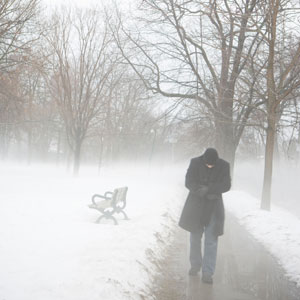



 HARLAN DIDRICKSON