“Go Ahead,” they urged, “See If It Fits.”

According to results recently delivered to scientists at an annual meeting of the Categorize, Classify, and Typify Society that more than 92% of the American workforce can be identified as bearing the common traits associated with one of only two populations: unaffectedly round or affectedly round.  Of the 92% of American workers, 97.639% fall into the unaffectedly round while the remaining 2.361% not only self-identify with the characteristics associated with affectedly roundism, but maintain those characteristics no matter the consequence or makeover.  But the most surprising statistic was satisfaction: Nearly 100% of both populations felt little job satisfaction.  And as an addendum, most professionals believe that the hole which they currently occupy doesn’t accurately represent them,

It had been six months since the crash and like so many accidents turned a normal life into a new normal life; I’m not saying that the normal was better than the new normal; I’m simply using pre-crash as a point of reference of which to compare. My normal life had all the normal things: A life partner of 23 years named Nick, a beautiful Victorian home, a cute little MINI convertible, lovely gardens, custom clothing, Rolex watch, retirement accounts, money in the bank; all the trappings. But as the old adage goes “nothing in life is free” and I never knew the cost of having all the normal things until June 28, 2008 when I was not one of the normal things; as a matter of fact, I was one of those new normalists substituting for the normal team.

How many of us continue to force a round peg into a square hole only to find it frustrating, angering and eventually impossible? Some of us can manage to get a corner in, some of us trim the excess by dummying down or taking jobs beneath of us, some of us simply place the round peg atop of the square hole hoping one day one of them will change enough to fit.

On June 28, 2008 I finally realized that I would never fit into one of their holes. My roundness wouldn’t even fit into their round hole because much like metric versus english, a wrench which looks like a close fit isn’t a fit at all and simply won’t work.

Do I Look Like A Pigeon?

There’s a basic tenet of parental behavior to which many ascribe:  Whatever you don’t like, don’t understand, or frightens you about your child, you’ll try to ignore it, or threaten it, or eliminate it under the guise of childhood protection.

If you had known me as a child you would never describe me as: bashful, shy, inhibited, reserved, demure, or innocent.  Especially innocent!  I blame my lack of innocence on a creative incarceration complete with shackles, pillory, and thumbscrews (metaphorically speaking) as the adult-authority’s recommended protocol for youngsters that emigrate to the shores of their imaginations.  My crime?  Being entertained by my imagination’s liberty to dream of things or experiences which landed far beyond the limits of our lower-middle-class capabilities, and of which I insisted were possible despite our depressed economic status.  Not that I asked for things that we couldn’t afford.  I asked for things which required creativity or compromise or cunning.  I only asked for things which were possible but perplexing; things which, if I were taller or older or motorized I could procure.  But I was a short, plump, uncoordinated child that wrestled with an unbridled imagination and raw creativity which everyone described as teetering between adaptation (the positive, yet painful struggle of change: unyielding animosity between divorced parents, recent move to the south side) and abdication (an attempt to cope by disengaging himself from his misery by displacing reality with imagination).  I had just begun implementing a plan which might conquer both my hells (before/after move).  Using creativity and imagination I might be able to map my way free of their self-centered, ego-inflamed romantic ideals and out from under the shitty and selfish mess the adults-in-charge created, then forced down my gullet like corn down the throat of the holiday goose.

So authority figures convened to develop a strategy designed to lower the volume of my imagination and increase interest in my new-world order.  By discouraging escape and encouraging capitulation they hypothesized that I would slowly build a positive (and comfortable) reality without careening into fantasy, imagination, or creativity.  In other words, we’ve tested him and he ain’t no Einstein, scored dead-center 50th percentile, and, thank God, kind, dull, unambitious, and docile: he’s simply avoiding change by daydreaming.  So the adults broke their huddle and walked to the line of scrimmage; a defense full of adulthood, authority, corporal punishment, and varying degrees of coercion designed to obliterate the supply bridge between me and my creativity and imagination.  But I was on the offensive and understood that in a matter of seconds my pulverization would commence; I mustered some resistance, usually a subtle mockery of mumbled affirmations.

Their boundless resources, their freshly recruited therapists (secretly screened in the convent) hammered my resistance and during a nighttime raid caused a debilitating breach, a nightmare, which cast doubt on imaginations allegiance.  Creativity wasn’t strong enough to deflect their incessant whittling away at my corners, sanding down my resolve in order to spit me out at eighth grade graduation: a shining example of what to do with a square peg when the world offers only round holes.  The nuns, lay-people, and counselors believed that by distracting my distractions, by motivating and redirecting and sympathetic yet tyrannical concern and instruction, they could successfully extinguish what, at the time, was thought to be simple imagination.  And I would take my place among my fellow eighth grade graduates poised for the adventure of public middle-school, then high school, and finally be added to the third-shift at some manufacturing or assembly plant as one more blue-collar-assembly-line-lifer with low expectations and very little hope.  

Tragically, these nuns and educators were in pursuit of an example, a trophy, proof that plucking me from a sea of personal trauma and forcing me to face the reality to which I was born.

How nearsighted they were to think they eliminated my problem.  It was much worse than that.  They confirmed, even back then, that it was real and I wasn’t just imagining things.

“You Brought This On Yourself,”

momwashingdishes
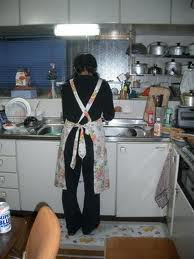
My mother’s back: her way of avoiding conflict.

That’s what my mother used to say, her back to me, and her hands wrist deep in dishwater.  I needn’t see her hands to know she was wringing them upon hearing my news; I could tell by the way the muscles in her forearms were flexing.  There were several of these confessions at the kitchen table over the years, and I always found her reaction astonishing.  She was incapable of ever helping me solve whatever dilemma I disclosed.  The scope of my problems were well beyond the dimensions of her upper-flat apartment and any collateral influence her small circle of single-mothers might discover.  No, my mother lived a small, tightly wound existence, and like those gated-communities with elaborate, electronic gates and guard-posts manned by ex-militia, she’d honed the art of deflection, quickly interrupting my admission like a towering volley ball player blocking an opponents spike, by conjuring up the standard retort to unwelcome news, “You brought this on yourself.”

Which in many instances was both honest and obvious.  Most people don’t find themselves in a pickle by being an innocent bystander.  Most pickles are borne of poor planning and even poorer execution.  But not all admissions warrant my mother’s standard suppression.  For instance, the admission that you suffer from a mental illness in which you slide from a manic state to a depressive state as easily as Ferrari’s change lanes on the Autobahn. And that stress is a definite trigger, especially if that stress is a direct response to particular issues, situations, or circumstances.

What I’d like to know is whether other bipolar patients are accused of mania by a friend or relative when attempting to communicate important (and potentially volatile issues), and if so, does your intensity escalate in direct response to their continued defensiveness about the issues you are attempting to discuss?  And if the discussion derails and car after car of well-intentioned-but poorly-stated-examples jump track and pile atop each other deeply burying your initial point, does the person with whom you are now arguing with pull out the trump card, the ace-in-the-hole, the Coup de Grace and draw the conclusion that your passionate (implication: ridiculous) and persevering (implication: absurd) diatribe is characteristically manic, therefore you are literally, ranting like a lunatic, what do you do?  Back off as proof of your sanity (thereby recusing your accusations)?  Or stand firm and mad which guts the rationality of your point-of-view?

I recently cautioned a close friend that, out of desperation, played that card, and immediately quelled my interrogation.  But later, when civility returned, I quietly cautioned him of setting this precedent: “If I’m defenseless or simply tired of fighting, and he is intent at satisfying his blood lust, I’ll shut him up by asserting he’s Manic.”  Because most likely I’m not manic and accusing me of being manic in the context of an argument is cowardly and insensitive.

And lest you’ve forgotten, my mental illness is a disease not a strategy; it’s not my power play.

I’m out of control and therefore, by the very nature of the disease, am incapable of rational thought or reason; and the last thing an irrational person wants to hear is he’s behaving irrationally.  Talk about a dog chasing its tail!

Any thoughts?


Recovery: A Saw Blade and Alpine Climbing (Journal: July, 2008)

I had thought that an increase in medication would signal a decrease in depression. But my psychiatrist corrected my logic and chose two separate metaphors to describe my recovery: 1) A hand saw; and, 2) Alpine Climbing.

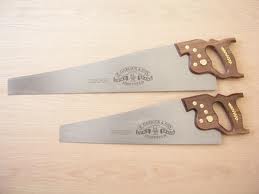
Picture a well-made 26″ cross-cut hand saw with its blade facing upwards.  Don’t look at the teeth but look at the blades carefully honed angle-of-rise as its surface broadens to eventually equal the width of the handle.  And the teeth are hand-shaped on a grinder causing the familiar serrated edge which means there are several contact points (peaks and valleys) along the saws blade.  My mind when in major depression is like a serrated cross-cut hand saw blade. There’s a consistent up hill climb but in order to achieve the handle one needs to live through a number of peaks and valleys.

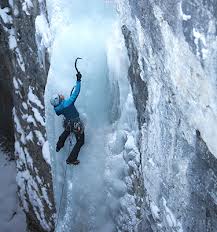
Similarly, the Alpine Climbing endeavor is peaks and valleys to which I am ignorant: I am not a mountaineer, having lived for 50+ years at or slightly above sea level.  But something odd occurred recently: my sea level suddenly rose skyward and I, lacking any previous experience went tumbling like poor Jill after Jack tripped showboating his coronet.  And then there it was, sea level, way up there, beyond tree canopies, even higher than some clouds.  It wasn’t until my psychiatrist explained that sea level remained fixed; it was I who had tumbled downward, spiraling like bath water down the drain.

From its approach I studied the aspect or face which I would climb to reach my first base camp.  The first leg I climbed alone (except for talk therapy and psychiatric medications) and joined my psychiatrist/sherpa at base camp where he was waiting with our racks.  We left the dark despair and feelings of hopelessness at base camp in mid-July, 2008.  We lightened our load by leaving behind my feelings of worthlessness and the idea that my life has collapsed, I am invisible in my own life and I would be better off dead. We both agreed that we didn’t need to drag those thoughts with us to the summit. We shouldered our racks and tightened the harnesses, checked and rechecked; thus began my apprehensive and cautious attempt to the distant summit of Peak Recovery.  The trek had been an exhaustive challenge across an unfamiliar landscape filled with dark crevasses of suicide and treacherous, newly fallen snow provided a dense foothold for our crampons, but which also hid the setbacks of insufficient dosages. But the activity of climbing and breathing the thin, cold air provided a sense of refreshment and newfound challenge.

Friends of mine and especially Nick have asked why I would’ve been so lucid for so long, then after meeting my psychiatrist it seemed as though my bottom gave out. It wasn’t until this afternoon as I write this entry that the reason occurred to me: I had spent the better part of two years in an utter state of unhappiness; unhappiness in my job, unhappiness in my relationship and unhappiness in my life. Yet, everyone in my life thought everything was swell and marvelous and happy! I had tried everything I knew how, from changing jobs, to self-medicating, to alcohol abuse, but nothing would erase that consistent gnawing pain I felt in my heart, or quiet those scratching, irritating noises in my head. Right up to the end I tried desperately to hold on, to simply hold on to the last end of rope, my fingers bleeding and numb. Until I saw my psychiatrist for the first time and he said, “there’s nothing to be ashamed of when you ask for help. You cannot possibly do this alone.”

It was then, right then, that I knew the futility of my fight; it was right then that my heart recognized kindness and a serene noiselessness smothered the incessant clamor filling my head.  This epiphany of surrender brought an end to my life as desperation.  When I released my hold my consciousness experienced a forced power-off; a reboot in safe-mode.  When I eventually opened my eyes there stood my psychiatrist who helped me to my feet and said “Now we can start at the beginning rather than the end.  The end which you fought valiantly to avoid never would’ve been avoided. Life starts when labor ends.  We all start on the heels of the end.”

My recovery continues to be slow with delays and disappointments along the way.  And yet, as we stop to rest I tell him of the anger and disappointments in my life. My psychiatrist/sherpa listened intently and then offered the most important advice of all: “Climb this mountain as though your life depends on it, because it does.”

Whew! 15 Minutes Is A Long Time!

Being the subject in a feature article which appeared in the first section of the Sunday edition of a US major newspaper like the Chicago Tribune was wholly a great experience, but also one in which I am relieved is diminishing in attention.  Like a child standing abreast the Sundae Buffet Bar at a local eatery piling one bizarre topping atop the last, the news cycle here in Chicago has a short attention span, especially when the subject (me) is an unknown (me).

It was the condition (bipolar); its manifestations before diagnosis; the odd behaviors preceding a mental breakdown; the swath of tawdry details, hateful accusations, and trust-damaging honesty laid bare which piqued their interest. The reporter who, with an eye focused on sensitivity, remained intent to anatomize sequential events like they were the identifiable behavioral ingredients required to produce a blue-ribbon breakdown pie.  She often returned to the timeline which, like a mooring buoy, guides a diver safely to the wreck.  However, my timeline represented a fall from grace, a clawing desperation numbed by opiates, acts of treason undermining my relationships; and finally, any semblance of sanity or allegiance to life was pitched like an unwanted circular.  The drilling for details only struck bedrock when trivial yet salacious activities, freely offered as context, had to be included in the article to highlight the stakes of my all in bet.

Absolutely not!  I would not be drawn-and-quartered on page 8, section 1, the entrails of my privacy displayed like human anomalies hawked at second-class side-shows!

I made it very clear: I’m not ashamed nor am I proud of my behavior, the pain it caused others, my professional devastation, the annihilation of trust, or the surrender of an identity.  But there’s a difference between honesty and privacy when it involves my life and the lives of those dearest to me.  I have been candid and explicit and straightforward.  But if your newspaper can’t respect what I say is private, then they must not respect what I’ve determined to be public.  In which case they can’t have any of it!

And that stand on my own behalf was my take-away.  Before 2008 I always felt like I had too keep going, had to get promoted, had to make six figures, because there was always somewhere to go, a place just beyond my reach that would be better, easier, calmer.  And on I went, like so many of my friends, pursuing. . .something. . .

After 2008 that place which had been so important to get to disappeared along with the constant gnawing I heard, and the “coveted by others” baubles bought to fill an expanding void where truth-to-self and character once resided, and year after year after year of acrimonious evaluations designed to hobble my self-worth.

I find great joy and comfort and silence knowing there really is nowhere else than right where I am.