Election 2012: Forget the Gays! Let’s Kill the Middle-Class!

SCENE:

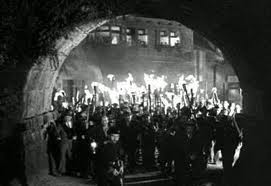
A mob of men and women sporting haute couture ensembles are followed by domestic staff brandishing fiery torches, weed-wackers, and gilded “breaking ground” shovels move at an accelerated pace (note: they are not running; they never run; they simply walk with tremendous determination) between the craggy, overhanging cliffs somewhere near Malibu or the tall, dense sand dunes near the Hampton’s.  They scream hateful epithets like “And you thought Polo was just an after-shave,” or “Only a monster prepares his own taxes,” or “Even a hunchback is beholden to religion for its servile and miserable life.”

CUT TO:

A group of men and women run up narrow, rocky paths or stumble through swallowing, deep sand.  They’re absolutely terrified, and yet they clutch one or two possessions (laptop, picture frames, deed to a house) even though their requires two hands.  You get the sense that they’re clutching all that remains of their life.  Suddenly a heavyset, winded man loses his balance and though others try to grab his free hand, they yell things like, “Let go of the picture,” or “It’s only a college degree!”
But suddenly he holds the framed diploma tightly against his chest as he teeters over the edge and everyone watches as he falls into the abyss tightly holding his most precious possession.

Welcome to December, 2012 if the Republican machine takes hold of the White House.

I think that it’s perfectly normal to ignore distracting noise, especially campaign noise, when 120% of your attention to personal-matters-at-hand is parsed and you’re really not interested in cockfighting.

That is until your private AGI (adjusted gross income) permits political campaigns to assign you a specific economic class moniker. The herding of same AGI’s should get your attention.  Once you’ve been economically branded you begin to recognize topics related to your self-proclaimed monikers (or, sub-classifications) which label behaviors and values, your distinguishing parts, (which you once defended, affirmed, and proudly paraded). These distinguishing parts have been diminished by time into a complex, amalgamated you much less the “youthfully combative sum of your parts” and much more like your mother or father (with very distinctive differences).

Until the amalgamated you becomes campaign fodder, a cadaver dissected in public by wielding derisive displays of contempt and hatred resurrecting foregone battles to right history’s wrongs and to spread fear like an airborne toxin.  How on earth, you think to yourself, have I been put on the ballot?

Because the run for leader of the free world has nothing to do with leading.  It’s become a referendum prosecuting or defending the future of the middle-class.  The American middle-class: devoted family, work ethics, values, respect, you get what you can afford, hard-working, proud, stable, honest, neighborly, caught. . .in the middle. . .of change.

But greed changed all that.  First bankers got greedy, then brokers got greedy, the home owners got greedy, and then. . .lower to lower-middle class were qualified for mortgages on real estate which was falsely inflated to satisfy everyone’s greed.  Families that simply couldn’t afford to buy a home found themselves underwater (owing more that the home is really worth.  In other words sellers, brokers and lenders all told varying degrees of lies and the poor schmuck wanting his piece of the American Dream ended up being the real sucker in the scheme.  But not one banking executive has gone to jail or forced to pay for those lousy mortgages out of their skyrocketing profits.

Do I Look Like A Pigeon?

There’s a basic tenet of parental behavior to which many ascribe:  Whatever you don’t like, don’t understand, or frightens you about your child, you’ll try to ignore it, or threaten it, or eliminate it under the guise of childhood protection.

If you had known me as a child you would never describe me as: bashful, shy, inhibited, reserved, demure, or innocent.  Especially innocent!  I blame my lack of innocence on a creative incarceration complete with shackles, pillory, and thumbscrews (metaphorically speaking) as the adult-authority’s recommended protocol for youngsters that emigrate to the shores of their imaginations.  My crime?  Being entertained by my imagination’s liberty to dream of things or experiences which landed far beyond the limits of our lower-middle-class capabilities, and of which I insisted were possible despite our depressed economic status.  Not that I asked for things that we couldn’t afford.  I asked for things which required creativity or compromise or cunning.  I only asked for things which were possible but perplexing; things which, if I were taller or older or motorized I could procure.  But I was a short, plump, uncoordinated child that wrestled with an unbridled imagination and raw creativity which everyone described as teetering between adaptation (the positive, yet painful struggle of change: unyielding animosity between divorced parents, recent move to the south side) and abdication (an attempt to cope by disengaging himself from his misery by displacing reality with imagination).  I had just begun implementing a plan which might conquer both my hells (before/after move).  Using creativity and imagination I might be able to map my way free of their self-centered, ego-inflamed romantic ideals and out from under the shitty and selfish mess the adults-in-charge created, then forced down my gullet like corn down the throat of the holiday goose.

So authority figures convened to develop a strategy designed to lower the volume of my imagination and increase interest in my new-world order.  By discouraging escape and encouraging capitulation they hypothesized that I would slowly build a positive (and comfortable) reality without careening into fantasy, imagination, or creativity.  In other words, we’ve tested him and he ain’t no Einstein, scored dead-center 50th percentile, and, thank God, kind, dull, unambitious, and docile: he’s simply avoiding change by daydreaming.  So the adults broke their huddle and walked to the line of scrimmage; a defense full of adulthood, authority, corporal punishment, and varying degrees of coercion designed to obliterate the supply bridge between me and my creativity and imagination.  But I was on the offensive and understood that in a matter of seconds my pulverization would commence; I mustered some resistance, usually a subtle mockery of mumbled affirmations.

Their boundless resources, their freshly recruited therapists (secretly screened in the convent) hammered my resistance and during a nighttime raid caused a debilitating breach, a nightmare, which cast doubt on imaginations allegiance.  Creativity wasn’t strong enough to deflect their incessant whittling away at my corners, sanding down my resolve in order to spit me out at eighth grade graduation: a shining example of what to do with a square peg when the world offers only round holes.  The nuns, lay-people, and counselors believed that by distracting my distractions, by motivating and redirecting and sympathetic yet tyrannical concern and instruction, they could successfully extinguish what, at the time, was thought to be simple imagination.  And I would take my place among my fellow eighth grade graduates poised for the adventure of public middle-school, then high school, and finally be added to the third-shift at some manufacturing or assembly plant as one more blue-collar-assembly-line-lifer with low expectations and very little hope.  

Tragically, these nuns and educators were in pursuit of an example, a trophy, proof that plucking me from a sea of personal trauma and forcing me to face the reality to which I was born.

How nearsighted they were to think they eliminated my problem.  It was much worse than that.  They confirmed, even back then, that it was real and I wasn’t just imagining things.

Recovery: A Saw Blade and Alpine Climbing (Journal: July, 2008)

I had thought that an increase in medication would signal a decrease in depression. But my psychiatrist corrected my logic and chose two separate metaphors to describe my recovery: 1) A hand saw; and, 2) Alpine Climbing.

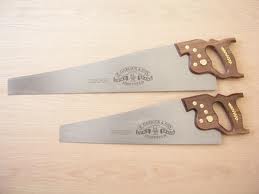
Picture a well-made 26″ cross-cut hand saw with its blade facing upwards.  Don’t look at the teeth but look at the blades carefully honed angle-of-rise as its surface broadens to eventually equal the width of the handle.  And the teeth are hand-shaped on a grinder causing the familiar serrated edge which means there are several contact points (peaks and valleys) along the saws blade.  My mind when in major depression is like a serrated cross-cut hand saw blade. There’s a consistent up hill climb but in order to achieve the handle one needs to live through a number of peaks and valleys.

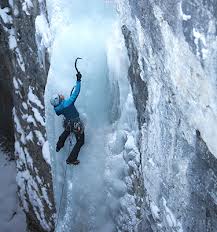
Similarly, the Alpine Climbing endeavor is peaks and valleys to which I am ignorant: I am not a mountaineer, having lived for 50+ years at or slightly above sea level.  But something odd occurred recently: my sea level suddenly rose skyward and I, lacking any previous experience went tumbling like poor Jill after Jack tripped showboating his coronet.  And then there it was, sea level, way up there, beyond tree canopies, even higher than some clouds.  It wasn’t until my psychiatrist explained that sea level remained fixed; it was I who had tumbled downward, spiraling like bath water down the drain.

From its approach I studied the aspect or face which I would climb to reach my first base camp.  The first leg I climbed alone (except for talk therapy and psychiatric medications) and joined my psychiatrist/sherpa at base camp where he was waiting with our racks.  We left the dark despair and feelings of hopelessness at base camp in mid-July, 2008.  We lightened our load by leaving behind my feelings of worthlessness and the idea that my life has collapsed, I am invisible in my own life and I would be better off dead. We both agreed that we didn’t need to drag those thoughts with us to the summit. We shouldered our racks and tightened the harnesses, checked and rechecked; thus began my apprehensive and cautious attempt to the distant summit of Peak Recovery.  The trek had been an exhaustive challenge across an unfamiliar landscape filled with dark crevasses of suicide and treacherous, newly fallen snow provided a dense foothold for our crampons, but which also hid the setbacks of insufficient dosages. But the activity of climbing and breathing the thin, cold air provided a sense of refreshment and newfound challenge.

Friends of mine and especially Nick have asked why I would’ve been so lucid for so long, then after meeting my psychiatrist it seemed as though my bottom gave out. It wasn’t until this afternoon as I write this entry that the reason occurred to me: I had spent the better part of two years in an utter state of unhappiness; unhappiness in my job, unhappiness in my relationship and unhappiness in my life. Yet, everyone in my life thought everything was swell and marvelous and happy! I had tried everything I knew how, from changing jobs, to self-medicating, to alcohol abuse, but nothing would erase that consistent gnawing pain I felt in my heart, or quiet those scratching, irritating noises in my head. Right up to the end I tried desperately to hold on, to simply hold on to the last end of rope, my fingers bleeding and numb. Until I saw my psychiatrist for the first time and he said, “there’s nothing to be ashamed of when you ask for help. You cannot possibly do this alone.”

It was then, right then, that I knew the futility of my fight; it was right then that my heart recognized kindness and a serene noiselessness smothered the incessant clamor filling my head.  This epiphany of surrender brought an end to my life as desperation.  When I released my hold my consciousness experienced a forced power-off; a reboot in safe-mode.  When I eventually opened my eyes there stood my psychiatrist who helped me to my feet and said “Now we can start at the beginning rather than the end.  The end which you fought valiantly to avoid never would’ve been avoided. Life starts when labor ends.  We all start on the heels of the end.”

My recovery continues to be slow with delays and disappointments along the way.  And yet, as we stop to rest I tell him of the anger and disappointments in my life. My psychiatrist/sherpa listened intently and then offered the most important advice of all: “Climb this mountain as though your life depends on it, because it does.”

Is My Left Index Finger A Carrot?

Prior to all this mental illness mumbo-jumbo, my hands Left and Right, fraternal twins with Right seconds older (Left, it is said, grabbed anything within reach to avoid birth).  They’ve developed a symbiotic relationship on the one hand, while on the other they’ve taken completely diverging paths and developed distinctly disparate identities.  As Left was once quoted as saying, “we’re not two of one thing; we’re one of two things.”  Which is an important distinction in their world, a world where two things are commonly referred to as “one thing:”  The oft pedestrian reference: A Pair.

The human body is classical in terms of design styles.  It is proportional, balanced, and harmonious.  Its design style highlights the importance of parity, especially object parts divisible by 2.  Parity is reduced in importance only by singularity.  However, singularity is an expression of a Prime Object.  Unlike Parity Objects which if divided by two would result in one (not one-half), Prime Objects cannot be divided which results in an increased degree of importance.  Further, for many Prime Objects, the statistical probability of locating a perfect replacement is less than one percent.  A few Prime Objects are impossible to replace thereby aggrandizing their importance and diminishing the importance of two Parity Objects.  It’s because of the human body’s classical design style and a common belief that a human body can exist with one-half of a pair of Parity Objects that Parity Objects often develop the kind of relationship that honors longevity, but also promotes independence.

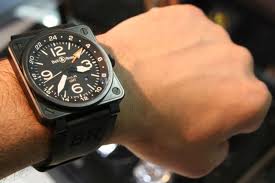
Left and Right have been inseparable for as long as I can remember.  Left is the quiet, ostentatious one when it comes to pretentious accessories (watches, bracelets); but Left is also the bearer of an object of significant proportion: the wedding ring.  Meanwhile Right is clearly the winner when it comes to handedness and the Brain’s division of labor.  Right was the first to learn that 90% of humans prefer to use his side as the “heavy lifter.”  As such, it’s Right who reaches out for a handshake, gives a panhandler a quarter, hails a taxi, scolds a child, dials a phone number, beckons a suitor to approach.  Unless the activity requires both the left and right hands, for instance playing the piano, forming a snowball, applause, typing this post, Left will wander off by himself, and routinely ends up in a jacket or trouser pocket catching a cat nap.  Right couldn’t care less.  He sees himself as invaluable, impossible to live without, the go-to-guy; deputized to effectuate distinguished gestures including devotional, patriotic, insulting, and vulgar (the latter is used so often it hardly qualifies as “distinguished”).  As a matter of fact, Right’s not entirely sure if Left has the ability to execute the oft practiced and drilled Ambidextrous Transmutation which Right first discussed with Left the night immediately after first grade when Right snatched the yellow stick from Left and began to trace the alphabet.  Right said, “Now Left, you should pay attention too; I know your holding the paper, but you’ve got to practice in case. . .”  Left reached across to Right, alarmed, “In case of what?  What?”  Right patted the top of Left, “In case I get hurt, wrapped like a mummy; you need to be ready to jump in!” And Right made it his duty to train Left in skills like handwriting, key-turning, locker-combinations, can openers, hairbrush, toothbrush, razor, utensils, and the secret one, the never-discussed-one, the door-locked-under-cover-personal-exhaustive-and-bemoaning-ritual.  Almost every night for fifteen years; sometimes more than once; then later in life strangers appeared and Right simply followed orders.  Left has seen action in 3rd grade (broken wrist), 6th grade (broken arm), and 11th grade (dislocated elbow).  Right beamed with pride when Left took ahold of the reins. 

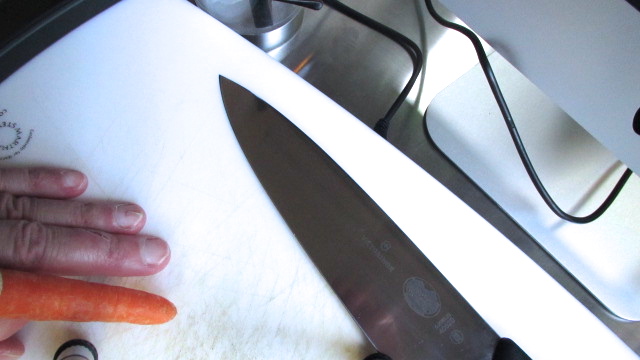
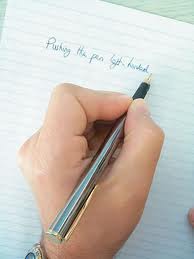
As of late however, Left has really taken a beating.  My new found interest in cooking and woodworking has led to a number of instances in which digits on my left hand can’t retreat fast enough and feel the razor-sharp edge of a chef’s knife (or bread knife, or lock-back knife, or 3/8″ wood chisel) slicing, stabbing or chopping.  And Right just keeps slicing in total abandon utterly unconscious of Brain’s danger alerts.  So Left wanted to try an experiment to gauge Right’s ability to distinguish Left’s forefinger from a carrot.  The picture above was taken a few moments ago.  We’ll keep you apprised of the outcome.

Whew! 15 Minutes Is A Long Time!

Being the subject in a feature article which appeared in the first section of the Sunday edition of a US major newspaper like the Chicago Tribune was wholly a great experience, but also one in which I am relieved is diminishing in attention.  Like a child standing abreast the Sundae Buffet Bar at a local eatery piling one bizarre topping atop the last, the news cycle here in Chicago has a short attention span, especially when the subject (me) is an unknown (me).

It was the condition (bipolar); its manifestations before diagnosis; the odd behaviors preceding a mental breakdown; the swath of tawdry details, hateful accusations, and trust-damaging honesty laid bare which piqued their interest. The reporter who, with an eye focused on sensitivity, remained intent to anatomize sequential events like they were the identifiable behavioral ingredients required to produce a blue-ribbon breakdown pie.  She often returned to the timeline which, like a mooring buoy, guides a diver safely to the wreck.  However, my timeline represented a fall from grace, a clawing desperation numbed by opiates, acts of treason undermining my relationships; and finally, any semblance of sanity or allegiance to life was pitched like an unwanted circular.  The drilling for details only struck bedrock when trivial yet salacious activities, freely offered as context, had to be included in the article to highlight the stakes of my all in bet.

Absolutely not!  I would not be drawn-and-quartered on page 8, section 1, the entrails of my privacy displayed like human anomalies hawked at second-class side-shows!

I made it very clear: I’m not ashamed nor am I proud of my behavior, the pain it caused others, my professional devastation, the annihilation of trust, or the surrender of an identity.  But there’s a difference between honesty and privacy when it involves my life and the lives of those dearest to me.  I have been candid and explicit and straightforward.  But if your newspaper can’t respect what I say is private, then they must not respect what I’ve determined to be public.  In which case they can’t have any of it!

And that stand on my own behalf was my take-away.  Before 2008 I always felt like I had too keep going, had to get promoted, had to make six figures, because there was always somewhere to go, a place just beyond my reach that would be better, easier, calmer.  And on I went, like so many of my friends, pursuing. . .something. . .

After 2008 that place which had been so important to get to disappeared along with the constant gnawing I heard, and the “coveted by others” baubles bought to fill an expanding void where truth-to-self and character once resided, and year after year after year of acrimonious evaluations designed to hobble my self-worth.

I find great joy and comfort and silence knowing there really is nowhere else than right where I am.