Time To Grow Up (Part 1 of “Career, What Career?”)

Even though I hold an advanced degree from a prestigious university known for its performing arts alumni, when I arrived in Chicago in 1987 my one skill which could be directly applied to working was typing.  Aside from the awards, the accolades, and the New York literary agent, I was essentially unskilled labor with a penchant for writing.

So what happens when serendipity is redefined, from inevitability to dumb luck; what happens when destiny becomes balls that bounce, cookies that crumble, and no matter how long or how hard I stare, there’s nothing in those damned cards!  On top of which the two of us (that beat the odds (especially “gay odds”) and weathered the turbulent tests of fidelity and loneliness to survive a three-year, trans-atlantic, long-distance relationship) will finally step to the front of the line and impart on one small corner of our American Dream.  We’ll rent our first apartment, gladly accept hand-me-down furniture from in-laws, establish bank accounts so that the perfunctory bi-weekly paychecks will magically appear, one after another ad infinitum  all building to an orchestral crescendo heralding every couple’s ultimate goal: a future of happily-ever-afters!

After a dozen interviews I heard the same inane reasoning:  “I can’t hire someone as educated as you for a job like that!”  So I rewrote (and removed) my post-graduate degree and within two weeks I was hired by a local messenger company answering telephones for $5.29 per hour (1987).  It took four months to develop into a caged maniac; promoted to A/R to photocopy microfiche eight hours a day – it took two months before the facial tics started; traded to Customer Service (at a messenger company, Customer Service is akin to W.C. Field’s dog: we got kicked a lot) where I survived thirteen days shy of one year until a brutal and prematurely cold and sleet-slickened Friday afternoon in early November hammered bike messengers and my phone lines were blinking “Mayday!  Mayday!” when, from the other side of dispatch, some moron kept calling my name like an impatient car horn stuck in gridlock. I actually can recall hearing that last straw snap as I bellowed to the moron a string of expletives which crackled loudly like firecrackers.  Problem was, the moron happened to be Mrs. Moron Owners-Young Second Wife.  Precariously riding the subway while holding a wet box filled with desk items, a pink slip and final check was crappy enough: I was an easy target for the pick-pocket whose style was anything but subtle.

There’s got to be a better way than this, I thought as I walked home from the subway station.  There’s got to be something or somewhere I can apply my skills as a playwright.  Within four months Serendipity and her cousin Veracity knocked on our apartment door with an idea. . .

The Run For President Is A Bully’s Pulpit

Me?  I deplore competition.  I have hated competition since I was very young because, I assert, I was a fat child (that was before it was sassy, vogue and fattering – my modern form of flattering, as in “are these jeans fattering?”) and competition was synonymous with failure and embarrassment and yet another reminder that I was one of the periphery boys.

Although I joined seasonal teams through high school, I was never competitive, i.e. an athletic threat, to any opponent.  I weathered all those losses because it was smarter to belong to and be a loser, than to be a loner and a loser.  Loner losers were to high school what a duck that clangs is to a shooting gallery: irresistable to insecure men that accumulate trophies as proof of their asserted dominion.

Haven’t we witnessed too many examples of the tragic consequences when potent, tightly-wound, explosive or obstinate pack leaders torment the dissimilar, solitary and contradictory by exhaustive humiliation, unyielding fear, and physical harassment to an exasperated degree of hatred and revenge expressed externally as murder or the lowest depths of hopelessness that the victim’s acrimony and contempt is so great and that their thirst for retribution will never be quenched, so they turn inward to find their self-inflicted exoneration and release from misery.  When did we, as a nation, agree that in order to succeed we’ve got to hit the disenfranchised with such a degree of “shock and awe” that they’ll eventually submit to extinction?  When did we, as a nation, adopt bullying as our de facto reaction to threats and danger?  It’s the exact moment that the practice of instilling fear into the minds of the voting public by egregious negative attack campaigning accusing the opposing party or candidate of misfortunes, errors in judgement, or personal infractions so dubious or diabolical, that if the opponent won the election America would resemble the wasteland once known as Cherynobl.

When bullying is permitted, incited, or rewarded as a rite of passage or a strategy in a competition, it reinforces a recent and troubling change in our idea of sportsmanship.  Competition used to be the identification of “winner” as one that was better at <whatever> than his/her opponent(s) and was able to prove his/her superiority by way of fair, impartial, and equal sportsmanship.  Competition has become the identification of “winner” as one that was better at pointing out weaknesses, instilling doubt through repetitive and escalating degrees of fear, taking advantage of the recent breakdown in civility and propriety by deliberate and calculated unearthing, followed by wanton pillaging and inference, leading up to the zenith: a quiet, little leak to cable news outlets which, within a few pre-dawn hours hits all the major wires and airs as the lead story on every morning news program and goes viral in time for most voters coffee break.

Teasing Isn’t Equal Parts Humor/Love: It’s the Bully’s Opening Act

During my previous career there were objects which I craved to such a degree that one might say I was obsessive about them.  In hindsight I understand that it wasn’t the item or its purpose as the correct tool for the task, it was the representation I craved.  By selecting this particular briefcase (never mind the cost) conjecture begins: The object goes first and followed by me. Those that scoffed were ignorant of classic style; those that recognized both the object and its “place on the style scale” applauded my devotion despite the price and subsequently elevated my degree of style from “studied” to “au courant.”

The most important opinion I sought was one I should never hear.  If heard, or worse, tipped-off to that opinion by another that my coveted object became a subject, it and its notoriety, no matter my admiration or its usefulness, or despite the degree of impudence of cheeky sales people aghast by my shameless reconsideration of the transaction and eagerness to “hand it over” (“it’s Bally, not a puppy for Christ’s sake!”), the object I taught myself to covet and which, to me, represented a piece of the Big League uniform, would be returned immediately via courier in order to derail further heckling.

Sacrificing the object was a lesser price to pay than to have it become the subject of insignificant but derisive chit-chat employed by uncomfortable executives to desperately pad the awkward silence that descends among supposedly well-mannered and well-groomed executives who have an adversarial relationship with their colleagues.  Better to criticize underlings than to have their own activities or choices be reduced to fodder  for teasing. This is the opportunity an executive bully (or cadre of bullies) can’t resist.

A significant part of my previous career demanded that I be available at all times to any partner or partner’s client.  And these partners were notorious for the outrageous stresses they placed upon their minions.  When asked why they managed their staff with such contempt, they’d answer, without pause, almost by rote, “it’s how I cut my teeth. . .” and the story would trail off point like a sleepy motorist struggling to remain alert, but who predictably drifts to the unpaved shoulder rattling the chassis, quickly over-correcting. . .and the partner, finally cognizant of his detour, arrived at the same conclusion as every partner when asked, “. . .and I’m a softy; when I was coming up the atmosphere around this place was brutal, toxic, practically inhumane; but I made it and so will others, those willing to do what it takes.”

And there lies the evolution of a corporate culture whose purpose is to bully staff, in order to strengthen devotion and eliminate chaff, until those few that accepted, expected, and survived the harshest, unyielding, and indulgent bullying by the partners, understood that success wasn’t measured solely on talent, or survival, but mostly on eliminating threats from within by systematically teasing, then embarrassing, and eventually bullying them out of the firm.

Since I spent the majority of my time in close proximity to the partners, I witnessed weekly smack-downs.  At first I was repulsed by the duplicity; then I wondered why I was witness; and as time went on I saw a pattern emerge: the harshest bullying happened to employees that caught the partners attention.  In order to avoid bullying, it was imperative that I disappear until summoned and I must never do, say, or have anything which might draw attention or raise a question.

At the time I thought my method of survival was very creative: appear only when summoned; deliver beyond their expectations; avoid pretentiousness or the appearance of any form of treatment reserved for them; and above all, never, never, ever give them the slightest reason or smallest idea that I think I’m one of them.  If my behavior ever stepped across these lines, alienation would be immediate swiftly followed by a quiet escort off the partner floor, a silent elevator ride to the lobby when at last my escort, a chief of something or other would inform me of my dismissal and remind me of my agreement of confidentiality.

My elimination would’ve been well-mannered, respectful, and final.  I would experience their finest bullying, reserved for those that commit any degree of suspected corporate treason.  I would be ignored, failure to exist or ever had existed, never mentioned or contacted; to them I was never there and therefore never saw or heard or read or witnessed anything.

A bully bullies people perceived as different; bullies are selective, unrelenting and unforgiving; bullies rarely forget and never forgive; but there is one caveat: almost all bullies are deathly afraid of exposure, the identification of their own perceived shortcomings (usually any degree off of normal).

Even these partners, leaders in world-class architecture, are hiding their fears (or weaknesses).  To be privy to them is an immensely heavy burden, not too mention loaded gun, both of which I never wanted and both of which I continue to carry.  My saving grace?  I never wanted to be one of them.  My job was to be there unconditionally, which I held as an honor and today is one of those things I have tried so hard to hide: the ugliness of working for professional bullies.

Mastering Mirroring


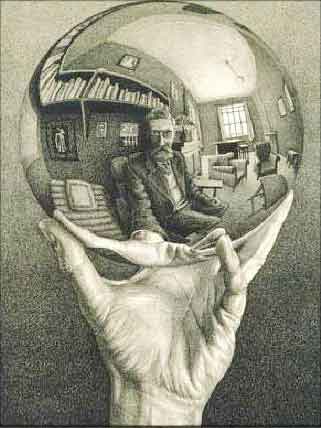
I’d spent the better part of twenty-five years manufacturing a character whose aspiration was to stand with notable leaders in architecture, medicine, law, insurance, and private equity.  Standing with in the parlance of my vocation meant eighteen inches on the diagonal of the left shoulder; within ear shot; close at hand; keenly aware and anticipating; a shadow whose purpose was to occupy an easement of personal space notable world leaders create, and which could not be trespassed.  If one stumbled into this area their redirection was immediate; hands attached to dark sleeves brusquely appeared and the interloper was discreetly absorbed by a well-tailored thicket of broad-shouldered Loro Piana suits; I, being the breakwater, homogenized the incident, and if the charge took notice, my steadfast demeanor quickly quelled any concern.  We are everywhere and paradoxically invisible: Certainly the glare of notoriety disquieted onlookers, but we’re there, eighteen inches on the diagonal, hidden by the mastery of the discipline of mirroring which is the greatest degree of self-compromise.

Getting What You Want

I remember  switching immediately to daydreaming after a major disappointment or a failed expectation or the lowest depth of disappointment while staring, unblinking at the antithesis of the oft-hinted-at gift squatting in that precisely weighted and hopefully shaped box about what I would do if I was able to achieve the singular impossible opportunity presently reserved for the dead and unattainable to those breathing, of actually getting a second chance.  Not a singular one-off; not a chance to re-do a regret; not the reliving of that one, absolutely perfect, unquestionably spectacular twenty-four hours with whomever-it-was as bodies twisted, limbs entwined like climbing vines or prostrate, like fallen trees whose crisscrossed collapse balanced their different dimensions, relieving the lighter from the crushing heft of the larger.  But a real, comprehensive, empty second chance at life, at getting what you want, at becoming rather than became.