“Defend The Rich: Attack The Poor!” That’s America?

middleclassadvantage
ENTITLEMENT PROGRAMS: (noun), 1) A government program guaranteeing certain benefits to a segment of the population; 2) The right to benefits offered by a government.

QUESTION:  Why does the Republican leadership denounce raising taxes on the wealthy unless the Democratic leadership reduces its spending on ENTITLEMENT programs like Social Security, Medicare, and Medicaid?

In this post I will argue that Republican bias against the middle-class and their enrollment in Entitlement Programs is peanuts when compared to the wealthy’s routine use of their own Entitlement Programs.  Let’s get started:

Can you name the congressman or senator that represents the millions of disenfranchised Americans whose voice is never heard in Washington?

When will the top 1% step from behind Republican stonewalling and admit their greed is immoral and burdens the other 99% who can ill afford additional taxation?

Is Social Security Disability Income really an entitlement when over 70% of initial applications are denied; the application and subsequent supporting medical records takes an applicant months to collect; the process is so convoluted that it’s sired a cottage industry of attorneys that charge 30% or more of the applicants back-pay (back-pay is the aggregate monthly benefit beginning on the date of disability to the present day, minus the 6 month waiting period; e.g. number of months of disability benefits = 24, multiplied by the monthly benefit of $1,500 = $36,000 tax-free); so an attorney representing a client who’s approved for benefits would earn $12,000.  What kind of entitlement takes two years to process and costs the disabled 1/3 of their rightful benefit?  Why not streamline the application process and return the 30% to the SSA as a one-time contribution “To Bolster Solvency.”

ENTITLEMENT PROGRAMS FOR THE WEALTHY (AND APPROVED BY THE IRS)

The wealthiest Americans most likely have a financial firm like Atlanta Trust that manages a total of $17.6 billion for 2,200 families to develop a customized “capital-preservation” strategy.  In other words Atlanta Trust’s responsibility is to grow wealth or limit lost wealth by appropriating investments to historically safer instruments.  Wealthy American‘s treat their money like a business and receive categorized spending reports to keep their eye on what’s coming in and what’s going out.  Further, many wealthy American’s hire accounting firms or tax attorneys to prepare their income taxes by ferreting out every possible deduction (from more than 200 Federally approved deductions) and to advise of off-shore wealth and its tax liabilities (if any).  A team of financial professionals, tax attorneys, and their own consistent oversight reinforces the adage: The Rich Get Richer and The Poor Get Poorer.

Let’s look at Mitt Romney‘s tax situation in 2011 (as a readily available tax return and as an example of Entitlements reserved for the wealthiest American’s).

1) NET WORTH: $300 million +/-;
2) Money invested in American companies who’ve established their headquarters off-shore to avoid standard taxation;
3) Wealthy enough to hire firms to manage his assets and to uncover as many deductions as possible, which will in turn reduce his gross income tax liability to an adjusted gross income tax liability.  Remember, income tax is based on your annual income and not your net worth.

Mr. Romney didn’t disclose his gross income for 2011.  However, this is what he did disclose:

  1. His 2011 tax return was 379 pages long (a ream of paper is 500 pages);cash
  2. $13,696,951.00 (His adjusted gross income (taxable income minus allowable deductions)
  3. $1,950,000.00 (tax liability)
  4. 13.9% (final tax bracket)

If we look at the graph below, we’ll see that a person in the 13.9% tax bracket earns approximately $25,000 annually.  How on earth can someone whose gross income likely exceeded $20 million annually wind up in the same tax bracket as someone earning $25,000? (Put away your calculators, I’ve already done the math: $25,000 is 0.18252% of Romney’s adjusted gross income).

Tax Year:  2012
Filing Status:   Single
If your taxable income is between… your tax bracket is:
 $0  and  $8,750  10%
$8,700  and  $35,350  15%
 $35,350  and  $85,650  25%
 $85,650  and  $178,650  28%
 $178,650  and  $388,350  33%
 $388,350  and  ABOVE  35%

Yet, they’re in the same tax bracket?  Wondering how Mr. Romney achieves it?

  1. Great Tax Attorney’s;
  2. Preferential taxation (15% tax rate) return on investments in company’s headquartered off-shore as capital gains rather than income (35% tax rate);
  3. Crazy loophole called carried interest allowing financial managers like those working at Bain Capital (equity, hedge funds, venture capitalists) to declare their fees as capital gains (15%) rather than income (35%);
  4. Savvy and sickening at the same time.

So, back to my initial question:  Why does the Republican leadership denounce raising taxes on the wealthy unless the Democratic leadership reduces its spending on ENTITLEMENT programs like Social Security, Medicare, and Medicaid?

fiscalcliff

It would appear that this vitriolic soap-box-posturing about middle-class abuse of Entitlement Programs (which every employee contributes by way of a federal mandate requiring employers to withhold a specific percentage from every paycheck) which allegedly will be insolvent within a decade, should also include the Wealthy American’s Entitlement Programs which are routinely used in order to reduce their adjusted gross income and subsequently lower their tax liability by millions, if not billions of dollars every year.  The Federal Government loses an enormous amount of money which might be used to rescue Social Security, Medicare, and Medicaid from collapse.  But that would require closing loopholes, limiting deductions, taxing ALL income at their current tax bracket (35%); in other words forcing the wealthiest 1% to pay an income tax based on income, rather than a greatly reduced income tax based on adjusting their income by as many as 200 deductions and loop holes.  Or, simply be an American and pay your fair share.

Our current situation It’s disgraceful, embarrassing for all American’s on the world stage, and further separates the bourgeoise from the proletariat (which, historically speaking, has never been a sustainable advantage for the ruling party).  The direction we’re headed, best illustrated by the stalemate in Washington, historically ends when a few have most of the wealth and the most have the fewest.  It’s not a divide, it’s a gorge, or maybe a cliff which stubbornness or back-room politics causes a financial implosion which could have been avoided if the good of the American people was paramount, not some school yard tough-guy bullying and double-dares.

I’m embarrassed to admit I’m an American.

Love Is Blind. Until Your Dumped.

BOXING1

It is universally agreed by trainers and corner-men that the most crushing and heartbreaking punch to survive isn’t the surprise of a cross, or the speed of a combination, or the immensely powerful and liver-targeted straight-right; and it is definitely not the pit-a-pat punches like upper cuts, hooks, or haymakers.  The Go-To, KO-certified, and Sunday-punch promised blow to land is the suckerBOXING2 punch connecting to your exposed soft-spot: that irritated and aching bridge between your blindsided disbelief and your simmering pity turned rolling boil of anger and self-declared vengeance at A) Being dumped; B) Being dumped by him; and C) Being dumped by him in your family’s dining room next to his empty chair via text message while he is using your family’s first floor powder room!

HERE ARE EXAMPLES OF THE MOST INSENSITIVE DUMPING EXPERIENCES:

carrieandbig


  1. Carrie Bradshaw (Sex in the City) got dumped by a hastily scribbled post-it note stuck crookedly on the front of her refrigerator.
  2. Carrie Bradshaw (Sex in the City) got dumped by a no-show groom (Mr. Big) on her wedding day. (Ouch!)
  3. An acquaintance came home after a fourteen hour day, opened the door to their “Dwell-Inspired” upper-floor condo only to see that everything was gone.  Everything!  Except for a hand-inscribed letterpress envelope addressed using the unusually etymological distancing term “Mr.” followed by his “maiden surname” lying on the kitchen counter as if it had been tossed like a hasty afterthought and skidded across the marble, bumping into the backsplash which, six years later, remains unopened and near in approximation to where it ended his seventeen year. . .whatever it wasn’t.
  4. One of my high school classmates got dumped while watching ESPN.  Her long-term boyfriend was caught on camera and the Jumbo-Tron proposing to a very close friend of hers at halftime of a Charlotte Bobcat’s basketball game.
  5. A graduate school colleague was divorcing her husband over the holidays.  On a quiet and snowy Christmas Eve her spouse stormed through the front door, bee-lined to the eight-foot Frasier Fir Christmas tree, and halfxmastreewithout uttering a single word proceeded to produce a handsaw and cut the tree in half.  He lifted the top half from the bottom and dragged it through the Great Room, and the den/office, parlor, foyer, leaving a trail of shattered ornaments, strings of icicles, and the thirty-seven years old Trumpeting Angel Gabriel tree-topper (an extravagant purchase, yet heralding their first Christmas together) lay dismembered, his trumpet reduced to an unrecognizable piece of gilded tin, as though Paul Bunyan‘s very heel heavy with hate repeatedly stomped the delicate trumpet until all sentiment and recognition was extricated. As Maggie sat stunned staring at the mesa-shaped evergreen, his voice bellowed from beyond the threshold, “Half of everything is mine!  You hear?  And I’ll take it when I want it!”

6.  At the height of a very popular annual Beaux Arts Ball in which guests donned extravagant and capricious masquerades, one gay wallflower wore an astonishing and eccentric mask and headdress which concealed a disproportioned and blemish-scarred countenance.  To compensate for his displeasing features, he doggedly pursued his studies and created a personality which was very bright, articulate, quick-witted, and genuinely entertaining.  The analytical mathematics major drew immediate attention upon entering the ball and even, to our astonishment, charmed the ambrosial, rapturous and celestial Calvin (heavenly homosexual bar none) whom, it is rumored, delights in the cruel art of teasing amour’s with no intention of sharing his passion fruit.  And as bewitching as he was, he was equally malevolent and behaved abominably to any unsuitable wannabe ignoble to his bloodline by acting notoriously destructive and unabashedly callous in the public rejection of hapless paramour.  I turned to Dane and said this spectacle isn’t going to end on a happy note to which Dane replied that bitch Calvin is going dismantle Michael like boning a chicken!  Michael’s repartee was a well-rehearsed and exquisitely played obstacle like a moat or a citadel or an arm’s length, banning any intimacy from suspicious admirers.  Dane and I kept vigil from a distance should Michael require help.  But to our utter astonishment Calvin and Michael were seen leaving the ball, together, swallowed by the new moon’s saturating darkness.  How long before Calvin tires of Michael’s stonewalling and pulls it off Michael’s head, I asked. Dane replied quickly, Hopefully long enough for Michael to find the fuse box!  It was said a few weeks later that, indeed, Michael had been beheaddressed and Calvin kissed Michael softly, saying he’d wanted to kiss him all night (but ostrich feathers and rotting fruit cocktail kept him at bay).  It was also said that Michael did indeed get dumped, there wasn’t a public spectacle.  Instead Calvin admitted his Park and 96th Street breeding left him inflated and oblivious to most everyone, yet Michael’s charm and witty abandon caught Calvin by surprise.  And with that he kissed Michael’s cheek and trotted across the Common.  Michael never, ever, ever talked about his week in heaven.

And me?  I got dumped by a toe-headed, short, bronzed waif after two indulgent weeks for a cartoon character who, oddly enough, trailed us the entire afternoon (except when posing for pictures).  Who was he?

bugsbunnyBugs Bunny, of course!

  1. And boy, did I feel Goofy.


Tomorrow, and Tomorrow, and Tomorrow. . .

“Seize the day, and put the least possible trust in tomorrow.”  – Horace

When the cease-fire had been successfully negotiated between my bombarded sanity and the merciless encroachment by mania across my poorly fortified borders, I had some time to exit the bunker of my psychiatrists office and assess the destruction caused by my determination to stave off lunacy.  The bipolar assault started with quiet discussions between my moral compass and my livelihood; I deplored my employment and the sanctions forced upon me; I despised their leadership; I spoke out against unfair wage practices.  But surrender wasn’t discussed as I was shouldering the burden of lifestyle and there was a tremendous expectation to avoid austerity measures at all costs.

“No one can confidently say that he will be living tomorrow.”  – Euripides

But as negotiations between sanity and lunacy stalled, my need for stability extinguished every extraneous characteristic strategically in order to sustain a devoted and appeased veneer.  My daily performances of a stable and sanguine employee collapsed the moment I closed my office door.  Obviously, I used to say to myself, you built your house on stilts on a steep slope overlooking a rain forest.  It’s already started to happen, the slipping, the subtle shifting of supports witnessed by numerous cracks, and one day the view will swallow your self-inflated invincibility.  I knew it was on the march, my insight gained by a nightly ritual of alcohol, opiates, and barbiturates; stilts if you will; I tried to shore them up by ingesting higher dosages knowing that an overdose was more likely than a possibility.  But then, at least, the conflict would end, not by a victor, but by a dual annihilation.

“You cannot escape the responsibility of tomorrow by evading it today.”  – Abraham Lincoln

It took less than a month before all negotiations broke down; compromise was impossible; mania demanded that sanity unconditionally surrender immediately.  If sanity stonewalled mania would easily breach the helpless border of sanity and annihilate any vestige of reality.  Mania would speedily dispatch all disenfranchised defiance and finally overthrow sanity’s ruling party.  The occupation by an uncontrolled mania took its toll; defy authority; recent stronghold of relationships humiliated then abandoned in an irreconcilable ruin; mania marched through memory, abducting the defenseless past and drained its meaning as a form of promiscuous entertainment.  Mania’s presence transfigured my identity into a mutation; my anatomy remained intact; it was my mental state which sustained permanent damage.

“The crisis of yesterday is the joke of tomorrow.”  – H.G. Wells

Eventually mania’s corruption, lawlessness, and influential overlords devolved into civil war, fracturing mania’s resistance to the significant bombardment of sanity’s allies.  Continued sorties by way of medications, therapy, and education combined with mania’s faltering infrastructure caused their retreat.  Sanity returned and started the intense clean-up, but some things were destroyed beyond repair; some relationships were so disfigured that it was impossible to identify the missing parties; the financial sector had been sacked, sucked bone dry, leaving sanity buried under a mountain of unsecured debt which was nearly impossible to pay.  But the most significant consequence of mania’s occupation was the destruction of sanity’s history; it’s legends, it’s memories, it’s priceless, irreplaceable moments of time’s memory known as the past.  And tomorrow simply vanished along with hope, their whereabouts unknown, disassociated fragments remain, but I’ve decided that tomorrow and hope were victims of mania’s collateral damage.

“What is not started today is never finished tomorrow.”  – Goethe

It’s been four years since the siege.  I’m hardly the vibrant, entertaining, and social personality I was before the conflict.  I’m anxious at the slightest hint of crowds; I can’t tolerate aggression or hurtful behaviors (from people, dogs, television) and must remove myself immediately; my pharmaceutical therapy is a misnomer and leaves me as focused as a puppy on his first day of obedience training.  And I’ve had to forget that today will become yesterday because for me there is no yesterday; in an abstract sense, yes, I understand that there is yesterday but it and most of what it contained is lost to me.  So I practice forgetting that yesterday holds any value.  And tomorrow?  For me there is no tomorrow.  Again in an abstract sense, yes, I understand, but now I’m driven to finish everything today because I can’t think about tomorrow.

Living in the present is a spiritual lesson and if practiced can lead to enlightenment.  But that only applies to those fortunate enough to enjoy the freedom of choice.

My living in the present is just one more day absent of the bookends of time. Every day is always today.

“Tomorrow is always fresh with no mistakes in it.”  – Lucy Maud Montgomery


Romanticizing Madness

I’ve noticed recently a spate of blogs and websites declaring which famous people are bipolar (please visit: (http://pinterest.com/bipolarbandit/famous-people-with-bipolar-disorder/).  This identification of plausible personalities is a definite indication of social change.  To see familiar faces, icons, sport legends, entertainment moguls, and just plain “they’ve-got-it-too” types provides a sense of belonging to a community-at-large which includes not just me, or members of my support groups, but people whose face is undeniably recognizable and never dreamed that they, too, face the same challenges I face.  And there’s a degree of comfort in that.  Secondly, it begins to slowly tear apart the prejudice and educate the ignorant not necessarily about mental illness, but that anyone, their favorite hockey player, their dreamboat actor or actress, their business executive role model, can and do live with mental illness.

This identification is the initial crack in the shell of shame and stigma.  And we (people living with mental illness) didn’t invent the tactic.  For instance, a similar identification of the famous and powerful occurred during the homosexual march toward acceptance and respect.  The exposure of the public’s least likely to be or to have is one step closer to the day when ordinary patients living with a mental illness can disclose their disorder free from the fear of isolation, castigation, or retaliation by pointing to the recently exposed successful, popular, and famous comrades-in-madness.  This identification of recognizable personalities borders on the romanticizing of madness which isn’t that dissimilar to the mid 90’s trend to have a gay friend.

I can testify to the similarities because I’m gay and I’m bipolar and I voluntarily disclose these two details with the same degree of importance as when I confess that I microwave my ice-cream or that I prefer medium starch on my dress shirts.

In the homosexual world your voluntary disclosure is commonly referred to as “coming out (of the closet).” The expression “coming out” was introduced to the gay lexicon first in the 20th century and has permeated the American lexicon during the late 21st century.  “Coming out” was seen as an introduction into the clandestine gay subculture and compared to a débutante’s coming out party.  Today “coming out” is less likely a party and more likely an uncomfortable incident, like soiling your pants in public or getting arrested for peddling questionable pornography.  Their concern is how the homosexual lifestyle will impact them (that is, the collective “them”) and are notorious for their absence of empathy or support.  Some abandon; some think its a phase; some deny; some cover their ears; and some (like my mother) invoked the bigotry of my dead father and wept when she looked at me.  And then there are others — embracing and supportive listeners; honored to have been told; and a few see the courage and witness the honesty and reverse their ill-informed ideas that homosexuality is Satan’s playground.

In 1952 the American Psychiatric Association listed homosexuality as a sociopathic personality disorder in the DSM (Diagnostic and Statistical Manual) .  In 1969 a week-long gay uprising in New York City started by a police raid in a Mafia owned bar called The Stonewall Inn started the gay movement toward equality.  In 1973 homosexuality was officially removed from the DSM and was no longer considered a psychiatric disorder.


Remaining quiet, covert, dishonest, and shameful simply reinforced the commonly held belief that there was something wrong with homosexuality.  As early as the mid-19th century German’s were advocating the public admission by men and women of their homosexuality as a form of emancipation.  It took another century and countless victims of bigotry, hatred, and ignorance before homosexuals coalesced into a unified voice demanding that the social stigma of being a homosexual be eliminated.  It’s taken another 40 years before more than fifty percent of all American’s believe that gays and lesbians should have the same right to marry as heterosexuals.

I believe that there are great similarities between the long and painful trailblazing required to achieve acceptance of homosexuality as a legitimate lifestyle and the eradication of the social stigma people living with mental illness experience on a daily basis.  Both groups perpetuated their own discrimination by remaining silent as society tortured, oppressed, and determined that it (homosexuality or mental illness) was an abomination which must be isolated, subjected to brutal and inhumane treatments, or permanently removed.  The gay rights movement was sparked by one drag queen who was determined that she would not tolerate brutality at the hands of the police simply because she was homosexual.  Her defiance was her voice and her protest was her high-heeled shoe parried in the face of her tormentors.

Will it be your voice that’s louder than the others?  Will it be your courage that’s Tweeted around the world?  Will you be the one that’s still mentioned fifty years later as the voice which shouted, “this is the last straw!”

Which it was.

All thanks to you.

Smack Dab In The Middle Of Nowhere: Ah, Perfect!

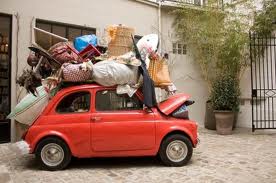
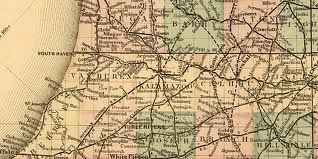
Last weekend we packed practically half of our possessions (well, it sure felt that way) and went out-of-town for a two-day furlough from life’s daily grind.  We travelled south from Chicago and around the tail end of Lake Michigan to the eastern shore and small, polka-dot-like towns of Southwest Michigan known as Harbor Country.  These bucolic villages sprung to life during the mid-eighteen hundreds as either orchard or timber towns.  After Chicago (due west across Lake Michigan) was destroyed by fire, it was petitioning timber companies from Wisconsin, Indiana, and Michigan to deliver as much timber as fast as they could to rebuild Chicago.  A number of towns from this region answered the call.

(On a side note: Much of what is today Chicago’s Grant Park (to the south of our world-class Millennium Park (completed 4 years late (2004) and (hoo-boy) $325 million over-budget)) is built on debris from the fire.  Local officials opted to dump the relatively small amount of rubble into convenient Lake Michigan).

Southwestern Michigan saw Stevensville and Benton Harbor being settled as orchard towns and still retain prominence for their peaches, blueberries, and wine-grapes; Union Pier and Three Oaks hit their stride as major logging centers for Chicago’s restoration.  However, once the forests were dismembered Union Pier relied on a small but consistent tourist industry for Chicago residents while Three Oaks turned to agriculture (mainly fruit orchards).  Other small whistle-stops took hold along miles of unobstructed beaches and sand dunes as summer retreats.  Union Pier was affectionately known as the Catskills of the Midwest and, like many of its nearby towns enjoyed an annual easterly migration of Chicagoans desperately seeking the serenity of rural retreats less than ninety minutes from the city.

That is until the 1950’s when tourism began to wane as Chicagoans discovered their northerly neighbor, Wisconsin was flecked by inland lakes upon which one could raise simple three-season cottages, retirement retreats, even mansions.  And a mere seven-hour drive from Chicago is Wisconsin’s famous peninsula known as Door County.  Comprised of small towns and hamlets dotting both the eastern shore abutting Lake Michigan and the western shore adjoining Green Bay, it compares easily to Delaware’s Rehoboth Beach, Boston’s Martha’s Vineyard, and New York’s Fire Island.

For thirty years visual artists slowly discovered Southwestern Michigan’s slow pace, abundant properties, and speedy access to Chicago.  Over the years the area has become an established center of professional artists and independently owned road-side galleries offering a variegated degree of original art.  But then, in the mid-eighties, gentrification began its blight on these drowsy little towns as over-stressed and over-worked professionals sought a destination closer to home than Wisconsin’s offerings; a location with an aging and troubled economy; a place where you could buy a house, some land, and a night sky chock-full of stars for a fraction of what you’d pay in Illinois or Wisconsin.  And what made these Harbor Country towns so appealing?  Poor economic conditions: They looked and felt pretty much the way they did in the fifties when they’d been abandoned by Chicagoans the first time.

And so they came, prosperous couples with new families gobbled up properties like Romans marching across Europe.  The lakefront corridor was by far most desirable, especially the west (lake) side where modest stone bungalows with beach rights might fetch as much as seven figures.  The march continued both north toward Benton Harbor and west, leap-frogging the Red Arrow Highway, and slowing its pace at the eastern most fringe of Three Oaks.  By 2000 the narrow lanes, over-built lots, and idyllic, provincial, and simple character of these sleepy hometowns were scuttled by the import of urbanized behaviors and expectations.  Rather than fleeing the unyielding stress of city life for a long-weekend of birdsong, hammock-naps, and tall tales around a blazing fire, these transplants smuggled stress, brash voices, and booming stereos across state lines, and piled their city lives one-on-top-the-other, until their retreat disappeared, and their urban maladies doubled because now, not only were they experiencing the exact situations from which they fled, they were stuck in a tiny, Hicksville town, that oh m’god! couldn’t draw a shot of espresso, much less support a Starbuck’s!

Except for Frank’s.  Our longtime friend found a small, modest home built of cinder block overlooking a field of corn and backed-up against a steep ravine hidden by a dense thicket and impassable brambles.  It had been home to a family of four until the kids left and, luckily for Frank, so did the parents.  The small and unassuming house and garage was overcast by Hemlock and Juniper pines which splayed out in all directions like the bloom of a peacock’s tail.  Frank has an uncanny creative quirk: he can look at a common object and by deconstructing it in his mind, he imagines its parts which he then assembles into a completely new object.  In this bashful home which dutifully sheltered a self-effacing and respectable generation Frank saw a discreet refuge, and a distanced and disconnected property a few inland miles due west of the shore communities whose infrastructure narrowly supports the torrent of weekenders and the subsequent bottlenecks (roads, shops, restaurants).  Frank prudently purchased the property and created a master plan which included landscaping: pruning the pines, planting native fruit trees, installing a 2,500 gallon koi pond and waterfall, indigenous gardens, fire pit, and outdoor sculpture; upgrading the utilities in the house; and the most innovative change: repurposing the two-car garage into a modern three-bedroom guest house complete with a full kitchen, fireplace, vaulted ceilings and scores of windows which flood the rooms with sunlight and the achievement of privacy, serenity, and timelessness; the very qualities desperately sought by other Chicagoans who impulsively bought homes in the favored townships on the popular lanes only to discover that their little resort town had overdeveloped into the Lilliputian version of Chicago.

Sans, oh m’god! A half-caf double-foam skinny extra hot latte with three pumps of caramel!  Which, by-the-way, Frank concocts (simply espresso, sugar cube, and twist of lemon) using an original, aluminum-bodied, Bialetti stove-top espresso maker.

That Frank, he’s simply an innovator and an inspiration to everyone who’s ever really gotten out of the city and into the real Harbor Country, his retreat in the middle of nowhere, which is precisely where we urbanites yearn to be. 

Thanks, Frank.