My One and Only Rolex

Fifteen years ago I developed an obsession for Rolex watches which eclipsed practically every other interest or desire.  Its greatest impact was felt by my spouse: He was hostage to my unyielding resistance to any gift that wasn’t a Rolex.

Eventually Nick’s patience and resolve buckled beneath the burden of my expectation.  One Christmas he handed me an easily overlooked brown paper bag.  As I took it from him I felt a significant heft; I heard a steel bracelet shift at the bottom; I spied a bezel and Oyster case peeking out from an afterthought of concealment.  I slowly lifted the folds of vaguely familiar tissue paper which revealed the indubitable shape and renowned style of the classic stainless steel Rolex.  He said he’d been looking for one (for almost a year) when the week before a dealer called to say that a customer recently presented a used (and much older) Rolex as a trade-in and it’s “as-is” retail price is with-in Nick’s price range.  He purchased a Rolex manufactured in 1958 (the year of my birth) and it wasn’t until this year did I learn the historical significance of this watch.

A month later I found myself overheating in a Puerto Vallarta hot tub.  I dragged my lobster-red body to the swimming pool and jumped in.  Upon surfacing I heard Nick ask for time. While wiping away the stinging chlorinated water I noticed that there was moisture condensing on the inside surface of the watch crystal.

The Rolex watch is often perceived as an extravagant luxury and status symbol outshining its fundamental purpose: telling time.  But Rolex, SA (manufacturer) has played a significant role in the history of the wristwatch.  Rolex, SA can lay claim to being first at: automatically changing date on face; show two time zones at the same time (GMT Master (designed by request of Pan Am pilots); automatically changing day-and-date on face; earning “chronometer” designation (meaning that it’s mechanical movement is extremely accurate and consistent that it can be used to navigate ships.  But the fundamental and most notable characteristic (which it achieved first in 1926 and again in 1953) is being waterproof (1926); not water resistant; waterproof to a depth of 330 feet BSL (1953).

Obviously Nick’s gift had forfeited that foremost characteristic.

I was greatly disappointed that the Rolex Nick had worked so diligently to uncover had been compromised by irony: its fundamental purpose (time keeping) was also its assassin (time passing, i.e. years of use).   I took the infirm watch to the only certified Rolex repair center in North America (at the time) and was saddened by their conclusion: it would cost more to rebuild than the price Nick paid.  A friend gave me the phone number of a reseller in Georgia that represented Rolex watches on consignment.  Overnight I received three brand new stainless steel Rolexes from which to choose.

When I slid on the first, then the second, and finally the third I had exactly the same reaction: These Rolexes had lost their mystique, their meaning, their value; these were simply very expensive watches.  (And frankly, my time isn’t that valuable!) 

The watch given to me by Nick was, in my opinion, the only true Rolex because it was the one he generously gave me.  I wanted that Rolex; and I wanted that Rolex to function like any other Rolex.  So I returned to the Rolex repair center and placed it in their expert hands.  Six months later it was returned to me in pristine condition.  It is now thoroughly serviced every three years to keep it in working order.

So why did I share this with you?

You may get what you ask for in life, and while it may not be exactly what you wanted, you were very fortunate to have received it.  It may be imperfect, or damaged, or used.  But it is less about what you’ve been given, and much more about how you hold it, what it means to you, and how you care for it.

Maybe Bruce Banner, Tony Stark, Logan, Bruce Wayne & Clark Kent Were Bipolar

I’ve identified the significant trigger, which, if pulled, catapults my otherwise sensible, responsible, and respectful self into a derivative of me, but one which possesses out-of-this-world dynamism akin to superhero’s or mutants.  The physical me doesn’t change, just the degree of acumen and acuity I’d refined in furtherance of a twenty-year career playing The Fool to a cadre of Somebody’s.  These heavyweight’s attained their ascendency via marriage; owning an avaricious, pugnacious and predatory law firm; partnership with an iconic architectural firm; ruthless attorney for corporate raiders.  Not one cared about procedure; they simply expected what they’d requested.  Failure was my burden to bear and under which I would suffer.

Only once did I return empty-handed: “I flew to Florida; drove to the grove; oranges are out of season; no juice.”  She pushed her Eames chair away from her desk and stood in front of me, “Do I look like an idiot to you?  I mean, when you think “idiot,” is it this face you see?  Because that’s precisely what you so deftly hand-delivered.  But I didn’t ask for an example of an idiot, did I?  I mean, if I did, which I didn’t, but if I did then you could get a mirror from one of the secretaries.  You wouldn’t simply fire-up the Ol’ Gulf stream and coast to Florida (at $2,350.00 per flight hour plus pilot time, hotel, fuel,, and food).  No, no explanations: I asked for orange juice from “Lily’s Grove,” of which I own by the way: Oh!  Didn’t you know that?  What?  No investigation before you saddle-up and zoom to Miami?  When I’d heard from Jorge that a “chiquito desmandares” demanded that he sell him orange juice for his “gillpollas cacia” the only conclusion I could draw was, “Mulligan must think I’m an idiot!”  Since you’re absolutely certain there’s no orange juice from Lily’s Grove, just for fun, let’s see if I might know someone who could help. . .Buenos dias, Jorge. . .”

That lesson (failure) provided an essential insight: if a heavyweight asks for something that has the appearance of impossibility, they already know where and how to get it.  They simply aren’t interested in doing it for themselves.  Self-effacing, tenacious, and propriety could be helpful behaviors in discovering a source for this item.

Only when forethought (plan B, escape route) is absent and I discover that I’m in a wholly defensive position with no options does this derivative of self appear.  This derivative is my super-hero or, as I now recognize, my manic-self (who I will name “Heartless”).  “Heartless” has a single purpose: self-preservation amidst unyielding stress, confusion, and fatigue, the by-products of an extremely complicated problem or series of problems which causes inescapable mental burden and my organic belief that failure cannot be considered because of its dire consequences and the real-life ramifications to everyone involved.

“Heartless‘s” appearance goes unnoticed and the logjam that promoted his incantation begins to loosen and the stalled efforts discover renewed vigor, and less and less sleep is needed, and more and more and more organization and meticulous paperwork are demanded.  “Heartless” remains present for varying lengths of time: Sometimes 3 months, sometimes a year.  But his denunciation follows the same pattern: “Heartless” turns his attention away from the situation of which he was borne, and on to me, which he sees as the real victim of the entire circumstance.  And then he uses every weapon in his arsenal to create as much collateral damage as possible: spending huge amounts of money on items which I’ve wanted, yet dare not buy (dog, tattoo, Rolex GMT II, 55″ TV, fully outfitted wood shop, custom-made Japanese fountain pen); ingesting too little or too much of my medication; abhorrent social behavior; and the worst and most pointed, vehement, and hateful: accusations and ceaseless arguments with my spouse.

The moment someone, anyone really, recognizes that I’m in the midst of a manic crisis, “Heartless” disappears.  And all that’s left behind is a meandering trail of damage, some salvageable, some not.  Destruction is definitely his foot print.  But I’ve considered too, that perhaps “Heartless”buys and says and behaves in ways some tightly-tucked-away part of me wants to behave or say or buy.  But I, like so many of us, have toed the civil line and buried our uncensored selves in a nook no one will find.  Wouldn’t it be tragic if we’ve been taught that decorum dictates that superhero’s remain in comic books and not shopping at Prada.


Quality Counts

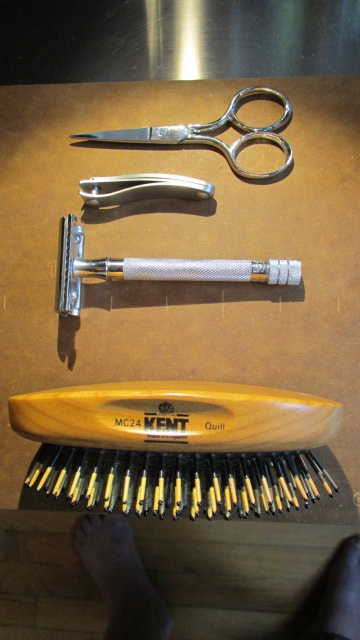
I recall favorably the first night I spent in my spouse’s garret twenty years ago.  Naturally, I maintain this memory carefully, doting on it like a delicate photograph that’s aging, edges first, a creeping brown border and satellite-like spots threaten my recollection.  There are certain details which remain as crisp as a carrot because their impact struck me with tremendous velocity: his lingering fragrance hidden in the cotton of yesterday’s white shirt, the organization of his morning rituals: washcloth, cream shave, razor, brush.  I remember these sneak-peaks into his privacy because they played important roles in who he was daily.  All men have similar morning rituals but what impressed me, even back then, was his carefully selected instruments.  Many men could care less, but for him it was important to have the precise razor or brush or after-shave balm.

Another time we’d been invited to a business colleague’s home for dinner.  He orchestrated a wonderful meal which reflected skill, passion, and pride in what he presented to his guests.  But most amazing was the absence of commotion, replaced instead by ease and fluidity and sufficiency produced by efficient use of very few utensils.  I never ask for a recipe, but I did ask the secret to his efficiency.  His reply?  Limit yourself to four knives, but buy the very best knives: spend the extra money in the beginning, rather than repeatedly replacing them.

I allow myself the luxury of paying close attention to my private rituals and the tools by which I perform them.  Personal details or items (whether tool, accessory or peculiarity) does someone select?  These very personal choices provide a glimpse of who they really are, who they are and how they behave in private, when no one is watching or evaluating.  These details are the intimacies of an individual.  They’re not declarations or pronouncements or bravado; they’re not obvious, are often found in private rooms (bedroom, bathroom), are easily overlooked as an insignificant article or one of propriety’s niceties.  But I have found them to contain much more passion than everyday items.

Personal details are often sought out or surreptitiously discovered or introduced by way of kindred spirits.  They’re rarely received as gifts because their personal significance is concealed for fear of ridicule by friends for their dandiness.  Cost is rarely a deterrent; if a person has selected a specific item their determination to acquire it is very strong; they’ll scour the marketplace; they’ll participate in auctions; they’ll keep abreast of discounts; and if all else fails they will happily exchange money for the possession or, if it is simply beyond their reach, they’ll step away and always admire the item with the hope of a giddy teenager meeting her teen idol.

It’s possible to obtain objects which are more than capable of performing the same tasks.  For example fountain pens and ball-point pens; Bulova and Breitling watches; thermograph and letterpress stationery.  It’s not the price that assigns value.  Workmanship, materials, design, style, function and longevity all play important roles in my decisions.

A word of caution if the item is categorized as luxury: the old adage you get what you pay for is very important.  A replica of an item is not an inexpensive version of the item.  A replica is, at its basest, a forgery, misrepresenting itself as authentic at a 75% mark down.  If you find a deal too good to be true, it is too good to be true!  If you’re really in the market for luxury items do a lot of homework first; learn everything you can about the item; understand the difference between worth and value; and don’t buy as an investment unless you’re an aficionado.

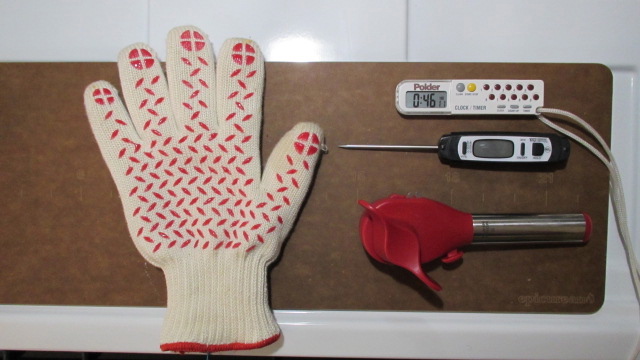
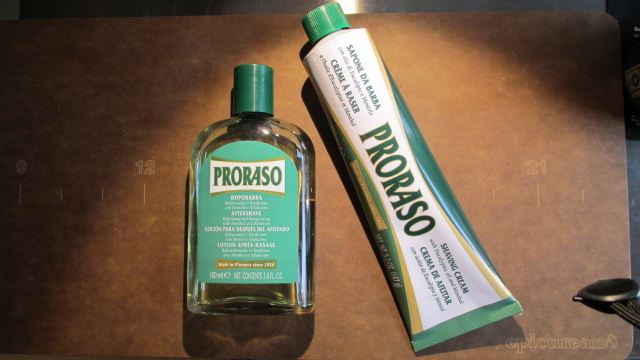
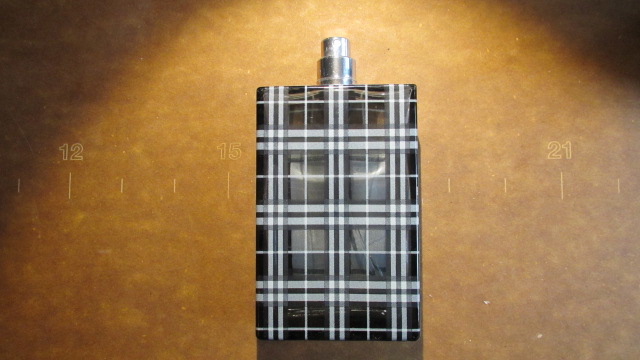
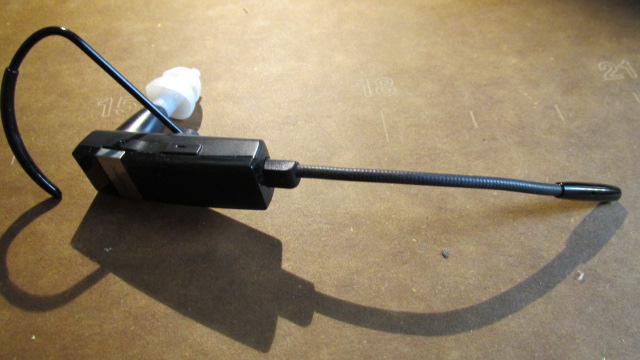
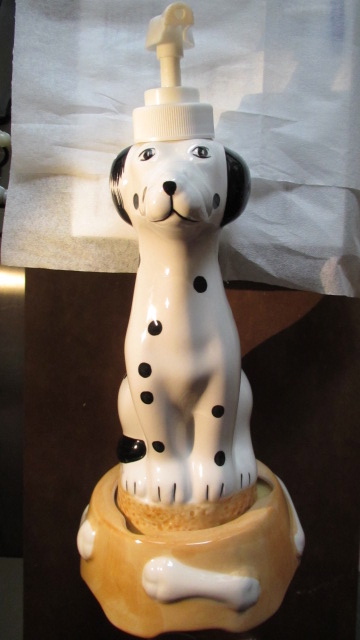
These are my personal details: Grooming: Merkur safety razor, Niegeloh Topinox nail trimmer, Erbe scissors (Solingen, Germany); Kent hair brush (UK); Proraso shave cream and after-shave; Burberry Brit Eau de Toilette; Stationery: Letterpress monarch paper and envelopes, fold-over note card and envelopes, calling card, and return address label; Nakaya Urushi-Lacqured Long Writer fountain pen; Kitchen: Victorinox 10-inch Chef’s knife, 3-1/4-inch Paring knife, 12-inch Granton Edge Slicing knife; ARY Hot Gloves with red silicone grip; Polder Digital timer; Kuhn Rikon can opener; Audio: Etymotic Research HF5 in-ear earphones; Etymotic Research High-Fidelity ear plugs; Etymotic Research er89-2 Bluetooth cell phone headset; General: Fenix LED flashlights; Boker Solingen pocket knives; Barking Dalmatian Soap Dispenser.

The Bay Window With A New Outlook

The previous owners of our little Queen Anne Victorian house renovated the back porch into an extension of the kitchen.

Architecturally speaking, the renovated back porch is the antithesis of design style compared to the rest of the house.  The renovation didn’t stop at the load bearing central wall and chimney stack.  It carried on for six more feet thus absorbing one of the three bay windows of the dining room (which are mirrored at the front of the house (the living room).  They omitted lighting fixtures and HVAC ducts; installed one 2-gang outlet and a very narrow skylight; and failed to insulate the floor or remove that one bay window and convert the opening to a doorway or seal it with drywall.

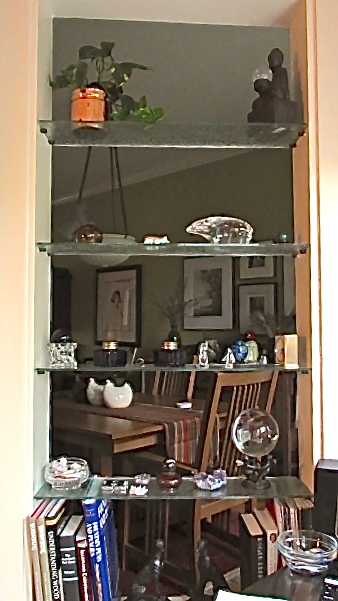
Well, after 12 years of living with an interior, vinyl-clad double-hung window which opens into the enclosed back porch, I had the idea to demo the window and modify the opening with antique glass and the velvety alabaster color of poplar into a double-sided book-case.

And I must say it turned out beautiful; but more — unique.

Sometimes, I’ve discovered, that people see the obvious as the only answer.  Obvious things tend to be common, expected things.

What if a window were a book-case or a picture frame or a Gemini Clock?

As a Playwright: Notes & Excerpt from “Afterward”

Initially my focus was poetry: Simile and Metaphor; juxtaposition; possessing the “ear” to hear.  That is, to identify words not only by their meaning, but also how they sound when blended with their kin folk in the paragraph.  Some call it style: I was taught that it was called my voice.

I attended the only university that accepted me.  Good fortune (cousins twice removed to Serendipity and Veracity (both of which I mention in a couple of different posts) eventually led me to the Chancellor’s office, Dr. Warren Carrier, a contemporary poet, and my mentor for three years.  Through Warren I met esteemed poets such as William Stafford, Richard Hugo, Madeline DeFrees and Robert Bly.  I asked Warren, upon completion of my first publishable poem, “Do I have my voice now?”  With a quiet chuckle he replied, “Voice?  You’ve just begun to whisper.”

When I tired of poetry’s whittling, I turned to a genre which permitted a certain degree of gluttony:  Playwriting.  Since then I’ve written over a dozen full-length plays.  The following excerpts come from my latest play, “Afterward.”

A little about “Afterward:” it’s based on the premise that everything happens because of something else. In this case Joe is uncertain whether he loves Rene enough in order to continue their relationship; and Jeffrey, having recently dissolved a male menage trois is seeking desperately for a new relationship. It’s a play of parallels: Joe’s uncertainty of his long term relationship and Jeffrey’s uncertainty of his freedom. Yet both men’s angst often cross paths when they articulate that what each of them has is indeed what the other is seeking. And therein lies the conflict. How does someone argue his point free of his own emotion; or rather, can someone advise a close friend to stay where they are if, indeed, that is where they wish to be? I haven’t been able to write its conclusion because I haven’t quite lived the conclusion. There are a few elements which I have yet to introduce: Joe’s testosterone therapy which has increased his sexuality, and in turn, has brought his desire for men to the forefront. How does he explain this uncovered desire to Rene who has known him only as heterosexual? One would think that it would be simple: tell her. But what if Joe has met someone with whom he wishes to bed? With low testosterone your sex drive decreases and, harshly put, Rene was enough for him. Now that the testosterone is normal his sexual appetite has increased unleashing desires which Joe is unused to communicating. And more recently my experience with depression will undoubtably wind its way into the action. Perhaps Joe is on the verge of collapse? And like me, the perfect storm is brewing. Perhaps I should re-title the play “Convergence”.

Aristotle, the father of drama wrote about three unities: Time, Place and Action. He argued that a well made play should embrace these three unities. Time means all action takes place in real time: If the action starts at 8:00 pm and the action lasts 90 minutes, then the play should end at 9:30 pm; Place means all action occurs at the same location; Action means all characters involved in the play are seen on-stage. I don’t need to tell you that abiding by these three unities is no easy task. Action is the easiest to draft; Place is a bit more difficult; but Time! That is by far the most difficult. No ones life is so dramatic that you’d want to watch it, non-stop for 90 minutes. Except some good porn, I suppose. So the inherent problem with “Afterward” is that it MUST be overwritten in order to edit down to 90 minutes of solid drama. The beauty of Aristotle’s unities is that the life of the play lies squarely in the hand of the playwright. It is my responsibility to build, breakdown, build, breakdown, build, crescendo and conclude the most horrific or funny 90 minutes of the characters life. Which again, is no small feat.

JOE

I love Rene. I really, truly do. I love being with her. Touching her. I enjoy her smell. I enjoy her taste. It just seems as though it’s all become expected. Like you expect the door to open when you turn the handle. Like you expect
the light to go on when you throw the switch. It’s all become. . .routine. It’s become a routine. Expected. Except she’s not expecting. Not much anymore. I try all the same old tricks: stroking the inside of her arms, the lingering,
trailing kiss down her neck, the old, common jokes; rubbing her feet, drawing her bath; meeting her for lunch; glasses of wine in the garden; jewelry. We sit and too much time passes between us, too much silence.

JEFF

Silence is comfortable.

JOE

Is that what life becomes? Silent and comfortable? Silent and comfortable aren’t passionate. I remember years ago. . .maybe not even that long ago. . .when fights flared up between us like brush fires. . .hot, screaming, saying things we’d regret. . .painful, hurtful things. . .emotional jabs and punches. . .and then we’d lock each other up like exhausted boxers and throw sexual upper-cuts that landed us both on the floor. . .and all there was was brutality. . .clothes became obstacles, then torn, ripped. . .and we were coupling like animals and the same jabs and punches were thrown lower, thighs pushed open, panting and sweating and screaming. . .until we. . .together. . .at the same time…like trapeze artists flying through the air reaching, grabbing, clutching. . .and freshly embarrassed laughter tripped from our mouths and we both felt madly, deliciously, one, even though by then we had disengaged and fell next to each other and quiet washed over us like a crisp cotton sheet. That quiet was different than this silence. That quiet was a respite, an earned pause. This silence is deafening. This silence is stifling, full of humidity. The silence I hear now is the result of twenty years of conversation. As though we’ve heard it all before. As though we’ve already read this page, this chapter, this novel. Almost as though, predictably, we know how this will end. How can we know the ending? How can a love affair like ours have a predictable denouement? How in the world did we get here? Here has always been where I’ve always wanted to go, but now that I’m there I keep wondering. . .

JEFF

Wondering what’s over there? I can tell you what’s over there. I’m over there. Over there is lonely. You try to shore up the desperation you feel by humping strangers. . .ten different men in a week. . .but there’s no union. There’s the gaze, the dance, the drinks, the touch and rub and grope and zip and grind and suck and come. And it’s all madly, deliciously sexual. But there’s no investment. There’s no pain. There’s longing, but not the longing for what once was. There’s no memory. There’s not even hope. It’s started and ended in ten brief minutes and you’re now more of a stranger than when you walked in the door of the bar because you gave something so familiar to someone so unfamiliar.

JOE

So what’s a guy to do? How come once we get to where we thought we wanted to go the place looks strikingly different than the brochure? Where’s everything we’ve always been dreaming about? Where’s the cottage and the lake and the loons and the pine trees and the two-person row boat and the big fluffy bed and the sunset? How come I don’t see that? Christ, I love Rene. And isn’t love enough?

JEFF

Maybe you’ve gone away. Have you thought about that? Maybe you’ve gone away. It doesn’t sound to me like Rene has gone anywhere. It sounds to me like you have. Have you? Have you, Joe? Have you gone away?

JOE

I don’t know. Maybe. Maybe I have. Maybe. Maybe I should just masturbate more. Maybe that’s what I should do. Masturbate more. And don’t dare reduce this to the whole mid-life crisis thing. I’m past the mid-life crisis thing. My mid-life crisis is parked in the garage: Midnight blue, six cylinder six-speed, satellite radio equipped convertible. It turns heads. I smile on its behalf. That’s done.