I Had a Car Like Me Once

QUESTION:
If you were a car, what kind of car would you be?

An old classic?
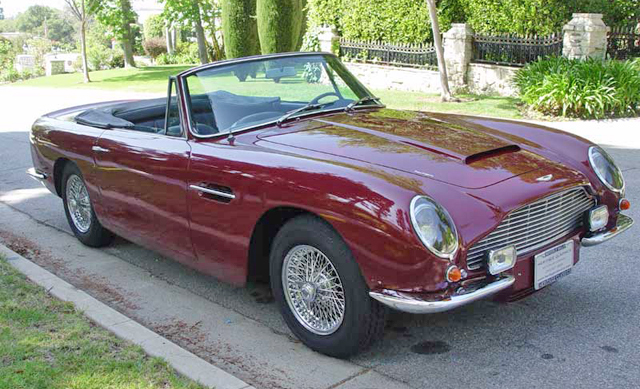
Something like the 1967 Aston Martin convertible?

Maybe the 1968 Mustang GT Fastback?

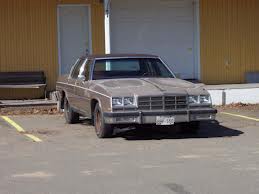
The car most resembling how I’ve been feeling recently happened to be our third car, the car like me.  We’d bought it used from some co-worker whose face (much less his name) has breached my mind’s curved horizon.  Used is a benevolent description: a couple of common idioms would aptly depict its constitution: . . .On its last legs or has one foot in the grave.  Desperation left little choice: I needed any car that worked to travel the 40 miles daily to a necessary yet useless and under paying job that freed me from beneath the spiked heel of a former employer who was a notoriously brutal, hateful, and infamously outspoken attorney that beguiled jurists to award her clients the largest financial settlements in state history.  Charm was never wasted on me, though.  Neither was persuasion.  She wasn’t the boss, she was the owner: I wasn’t her assistant, I was her indentured servant.  It was I who felt the eviscerating pressure from the pointy toe of her blah-blah collection of blah-blah-blah’s high-heeled shoe.  So I grabbed at the first job even though they’d lowball me and I’d need to buy any car.

The car, a foster child of sorts, had been purchased then passed on, then sold and sold and sold until the gravely agitated owner whispered the auto’s immediate availability for cash only.  And so I became the hastily orphaned auto’s benefactor.  Until that one day arrived (the last bead threaded onto the string), when, as no surprise, another function failed and the pertinent idioms came to mind like eerie messages in the Magic Eight Ball: Are you throwing good money after bad or Are you pouring money down the drain?  It all boiled down to a decision which I couldn’t face, so just like I did in the sixth grade when I was up to bat and had to face the gawky southpaw with a screaming heater which always caught the inside corner, or the lower back of a cowering batter, I fainted on my way to the plate.  I was removed from the game and poor Gerry Schmidt took a fastball in the kidneys. Procrastination is a conundrum best dealt with tomorrow.

But while I’m not a car, I’m spending more time in the shop and starting to string beads.  Unimaginable maladies have begun to appear (besides hum-drum mental illnesses): Edema of the lower extremities; rare forms of heart failure; pulmonary compromise; and rare to boot!  My conditions occur in less than one percent of patients!  Rare is a good thing, right?  Not in medicine.  Rare means few, few means no research, no research means no remedy.

I’ve been feeling lately like a mid-year 1983 Buick which runs, starts in the coldest Chicago winters, and does what a car should do.  Yet recently I’ve heard more pings, louder knocks, noticed oil spots on the garage floor, and the lighter no longer glows orange.  That’s why I’ve been posting less frequently: I’m fatigued, terribly sad witnessing this decline, and frightened.

But to end on a bright note, here’s the car I’d be: a 1965 Cadillac Eldorado! 


Recovery: A Saw Blade and Alpine Climbing (Journal: July, 2008)

I had thought that an increase in medication would signal a decrease in depression. But my psychiatrist corrected my logic and chose two separate metaphors to describe my recovery: 1) A hand saw; and, 2) Alpine Climbing.

Picture a well-made 26″ cross-cut hand saw with its blade facing upwards.  Don’t look at the teeth but look at the blades carefully honed angle-of-rise as its surface broadens to eventually equal the width of the handle.  And the teeth are hand-shaped on a grinder causing the familiar serrated edge which means there are several contact points (peaks and valleys) along the saws blade.  My mind when in major depression is like a serrated cross-cut hand saw blade. There’s a consistent up hill climb but in order to achieve the handle one needs to live through a number of peaks and valleys.

Similarly, the Alpine Climbing endeavor is peaks and valleys to which I am ignorant: I am not a mountaineer, having lived for 50+ years at or slightly above sea level.  But something odd occurred recently: my sea level suddenly rose skyward and I, lacking any previous experience went tumbling like poor Jill after Jack tripped showboating his coronet.  And then there it was, sea level, way up there, beyond tree canopies, even higher than some clouds.  It wasn’t until my psychiatrist explained that sea level remained fixed; it was I who had tumbled downward, spiraling like bath water down the drain.

From its approach I studied the aspect or face which I would climb to reach my first base camp.  The first leg I climbed alone (except for talk therapy and psychiatric medications) and joined my psychiatrist/sherpa at base camp where he was waiting with our racks.  We left the dark despair and feelings of hopelessness at base camp in mid-July, 2008.  We lightened our load by leaving behind my feelings of worthlessness and the idea that my life has collapsed, I am invisible in my own life and I would be better off dead. We both agreed that we didn’t need to drag those thoughts with us to the summit. We shouldered our racks and tightened the harnesses, checked and rechecked; thus began my apprehensive and cautious attempt to the distant summit of Peak Recovery.  The trek had been an exhaustive challenge across an unfamiliar landscape filled with dark crevasses of suicide and treacherous, newly fallen snow provided a dense foothold for our crampons, but which also hid the setbacks of insufficient dosages. But the activity of climbing and breathing the thin, cold air provided a sense of refreshment and newfound challenge.

Friends of mine and especially Nick have asked why I would’ve been so lucid for so long, then after meeting my psychiatrist it seemed as though my bottom gave out. It wasn’t until this afternoon as I write this entry that the reason occurred to me: I had spent the better part of two years in an utter state of unhappiness; unhappiness in my job, unhappiness in my relationship and unhappiness in my life. Yet, everyone in my life thought everything was swell and marvelous and happy! I had tried everything I knew how, from changing jobs, to self-medicating, to alcohol abuse, but nothing would erase that consistent gnawing pain I felt in my heart, or quiet those scratching, irritating noises in my head. Right up to the end I tried desperately to hold on, to simply hold on to the last end of rope, my fingers bleeding and numb. Until I saw my psychiatrist for the first time and he said, “there’s nothing to be ashamed of when you ask for help. You cannot possibly do this alone.”

It was then, right then, that I knew the futility of my fight; it was right then that my heart recognized kindness and a serene noiselessness smothered the incessant clamor filling my head.  This epiphany of surrender brought an end to my life as desperation.  When I released my hold my consciousness experienced a forced power-off; a reboot in safe-mode.  When I eventually opened my eyes there stood my psychiatrist who helped me to my feet and said “Now we can start at the beginning rather than the end.  The end which you fought valiantly to avoid never would’ve been avoided. Life starts when labor ends.  We all start on the heels of the end.”

My recovery continues to be slow with delays and disappointments along the way.  And yet, as we stop to rest I tell him of the anger and disappointments in my life. My psychiatrist/sherpa listened intently and then offered the most important advice of all: “Climb this mountain as though your life depends on it, because it does.”

Chicago Tribune Feature – Published Sun., Aug. 26

No rhetoric; no sublime style; no lexicons or etymology.  Pure and simple disclosure of disquieting issues.

Please, REPOST THIS ON YOUR BLOG.  Personally, I prefer privacy over publicity; I exposed my life in the hope that the stigmas of mental illness, obesity, and homosexuality might be reconsidered to be human conditions worthy of respect and empathy.

http://www.chicagotribune.com/health/ct-met-bipolar-20120824,0,3948031.story

Bipolar II disorder: Another Chicagoan’s story

Like Jesse Jackson Jr., Harlan Didrickson has the illness and has had weight-loss surgery

 Harlan Didrickson poses outside his Rogers Park home. (Chris Walker, Tribune photo / August 17, 2012)
By Barbara Brotman, Chicago Tribune reporter, August 26, 2012
Harlan Didrickson was a model of middle-class stability.He lived with his partner of more than two decades in a handsome Victorian on a leafy North Side street. He worked as manager of executive and administrative services for a high-powered architectural firm, where he made hospitality and travel arrangements for large meetings and oversaw budgets that ran into millions of dollars.He was not the kind of person who would go to lunch with friends and come home having spent $4,500 on a puppy and a month of obedience training.

Or who would get up at 2 a.m., go to Dunkin’ Donuts, then drive to Indiana and back, snacking on Munchkins.

But that’s who he became.

Four years ago, his life was upended by bipolar II disorder, the same illness recently diagnosed in U.S. Rep. Jesse Jackson Jr.

This is not Jackson’s story. People with the disorder — nearly 6 million in the U.S. — have unique experiences with the illness, which cycles between moods of manic energy and deep depression.

“The symptoms of bipolar disorder can be very different from one person compared to another,” said Dr. John Zajecka, a psychiatrist with Rush University Medical Center who specializes in mood disorders.

Manic states leave some people euphoric, others irritable. “There are people who can function their whole lives in these hypomanic states,” though they may lose marriages, jobs and money, Zajecka said.

Depression, too, can appear in a variety of ways. Some sufferers stay in either mania or depression for decades; others cycle between them many times a day. And people respond differently to treatment.

But Didrickson’s struggle provides one look at how bipolar II disorder and its treatment can affect a life.

And he does have one key factor in common with Jackson. Like the congressman, Didrickson, 54, had weight-loss surgery before being diagnosed with bipolar. He had a gastric bypass procedure; Jackson had a duodenal switch.

It became a serious complication in his treatment. The weight-loss procedure, which causes the body to absorb fewer calories, prevented him from absorbing the full dose of his antidepressant medication.

Didrickson’s illness began when he started feeling extremely stressed at work. He considered himself skilled at his job but felt beleaguered by office politics.

“I felt as though I was fighting a lot of fights on different fronts in my life, and that I didn’t have the wherewithal, the energy,” he said. “I was profoundly unhappy.”

He changed jobs, twice. He still felt miserable. And he also felt trapped, having to do work he now found unbearably stressful.

More than 60 percent of people with bipolar engage in substance abuse as they try to self-medicate their inner pain. Didrickson was among them. At night he would wash down some hydrocodone, an opiate he had been prescribed for a back injury, with beer. He would stay up till 4 a.m. watching TV, then take Ambien to fall asleep.

“At 6 o’clock I woke up, got dressed and went to work. I was probably still high,” he said. “Then somewhere around noon, I would crash. I would go to the men’s bathroom, go sit on the toilet and fall asleep.”

His partner, Nick Harkin, a publicist with an entertainment and lifestyle marketing firm, had no idea how deeply troubled Didrickson had become.

But then Didrickson didn’t show up on time for a planned out-of-town getaway. When he arrived the next day, he was morose, secretive and exhausted. “It was a very abrupt shift,” Harkin said. “It was quite obvious that something was very seriously wrong.”

Didrickson was thinking of ending their relationship, he told Harkin. And he wanted to move to California’s Death Valley. He wanted to start a new life.

“I was falling apart,” Didrickson said. “It was this desperate: I will do anything to get out from under this pressure.’ It was like having a heart attack, and if you don’t get out from under it, it will kill you.”

Back home, he called a friend who had once been his therapist. She asked if he was suicidal.

“I was, like, ‘Of course I am. I think about it all the time,'” he said. “‘It’s the only comfort I have.'”

She told him to see a psychiatrist. He did, and was told he had depression — a common initial diagnosis for people with bipolar, who generally seek treatment during a depressed phase of the illness.

The antidepressant the doctor prescribed didn’t work. Didrickson developed memory problems, to the point where he forgot how to do simple tasks like using a phone.

“I could not take a shower, because I couldn’t recall the sequence of activities … turning on the water, stepping into the spray, getting wet, washing,” he said.

He lost 40 pounds and neglected bathing and grooming. And yet there were also times when Didrickson felt powerful, energetic, nearly like a superhero. He could do anything he wanted, no matter how dangerous or destructive, with no consequences.

He ran red lights. He drove the wrong way down one-way streets. “I felt like I was back to being in charge, like I was back to saying, ‘It’s going to go like this because I said so,'” Didrickson said. “I felt kind of emancipated.

“I thought, Wow, this (antidepressant) Paxil is really working.'”

But it wasn’t. A psychopharmacologist gave him a new diagnosis: bipolar II disorder, a form of bipolar disorder with less extreme mood swings.

His new doctor told him to stop self-medicating — Didrickson said he hasn’t had a drink or abused a drug since — and put him on a mood stabilizer. And then began the painstaking process of trying to find the right antidepressant: six weeks getting to a therapeutic amount of a drug, then six weeks being weaned off when it didn’t work, again and again.

“My symptoms came back. I just felt terrible,” he said.

He was still manic, once getting up at 4 a.m. to drive to Lake Shore Drive to look at newly fixed potholes. He spent money recklessly. He spent hours obsessing over the paper stock to use for custom stationery.

The manic states always turned dark, ending with him lashing out at people — usually Harkin.

“When I begin my mania, it’s a great party,” he said. “But when it gets to be months into it, it gets uglier and uglier and uglier, to the point where you really are a monster.

“Mania isn’t happy; mania is crazy,” he said.

No antidepressant worked. Then a friend with bipolar recommended Adderall, the stimulant often prescribed for attention deficit disorder.

His doctor prescribed a standard amount. It did nothing.

So Didrickson took another dose. And he felt a little better.

“I started to feel buoyant,” he said. “I always talk about feeling underwater. I felt like I was finally breaking the surface.”

He didn’t know why he needed a higher dose. But then he came upon online message board postings by people who had undergone gastric bypass surgery and then found that their antidepressant medicines stopped working.

The gastric bypass surgery he had undergone years earlier to lose weight, he concluded, was keeping his body from absorbing the medicine.

Indeed, Zajecka said, gastric bypass surgery can change how people absorb medicines given for bipolar disorder.

The Mayo Clinic statement announcing Jackson’s diagnosis also noted that the weight-loss surgery he had “can change how the body absorbs food, liquids, vitamins, nutrients and medications.”

Didrickson’s doctor would only marginally increase his dosage of the notoriously abused amphetamine. It wasn’t until he switched doctors because of a change in his health care coverage that he got what he found to be an effective dose.

His longtime internist, Dr. Eric Christoff, assistant professor of clinical medicine at Northwestern University’s Feinberg School of Medicine, gradually increased Didrickson’s dosage, with weekly appointments to check his blood pressure.

The depression lifted. He has been on the higher dosage for a year and a half.

“We have never seen any evidence of drug toxicity or high blood pressure,” Christoff said. “He’s really not absorbing much of any dose he’s taking.”

Many people with bipolar disorder are able to resume their previous lives.

“It’s one of the most treatable illnesses we have in medicine,” Zajecka said. “If it’s diagnosed properly and treated appropriately, there’s no reason they can’t get back to resuming a normal lifestyle and their normal goals in life.”

But Didrickson has been unable to go back to work and still has periods of depression and mania, though much milder ones. He manages the house, cooks and has taken up woodworking.

“Going out in the evening can be very, very, challenging for him,” Harkin said. “If we go to a concert or a dance performance and it’s too noisy, he’ll have to leave. If … there’s someone in a film who’s violent or cruel, that’s very upsetting to him too.”

“It’s nothing like I thought my life would be,” Didrickson said.

“The good thing, I guess, is that I don’t hold on to yesterdays,” he said. “That’s a blessing, I think, frankly. But I also don’t have tomorrow. My life isn’t about tomorrow.”

He has gone back to writing, which he did in college. He writes a blog about his experiences with bipolar, under the name T.M. Mulligan. The moniker stands for “Taking My Mulligan.”

“I’m having my do-over,” he said. “I’m taking the second chance.”
Copyright © 2012, Chicago Tribune

The Night My Liberty Was Nullified (Thursday, July 10, 2008)

Thursday, July 10, 2008 started out normally: cotton had been stuffed between my ears sometime throughout the night; my body had gained an enormous mass as well, its weight pulling me deeper into the feather bed, my heavy legs swinging to the edge like cast iron bells; my feet encased in iron felt ready for the ocean floor; I pushed my body upright using arm strength and sat motionless for five minutes in a kind of stupor; a man with no goal; no alarm; no schedule; no deadline. Simply a man with time. And this time continues to tick, on and on, and in this stupor it doesn’t stop, it simply continues to drum, and I am oblivious to its march. In the mornings time fails to exist; there’s simply the stupor and the weight and me, or what I think is me, trying to read the details of an unfamiliar map in poor lighting and without spectacles.

It took two hours to complete my morning routine which Nick and I have outlined on two cards and placed in the bottom edge corner of my medicine cabinet. The cards remind me of the order of bathing: brush teeth, start shower, hair, body, face, shave, squeegee, towel dry, brush hair, after-shave balm, deodorant, patch, hang towels. If I fail to use the list I forget where I am in the sequence and either stop altogether or restart from the beginning. My inability to concentrate on even the most menial activities is another symptom of my depression. I suppose I’m fortunate though, in this fog I find myself in, I don’t really judge the degree of my disability. It’s not as though yesterday I had two legs and today one. This disease is invasive: it’s a brown-out; not quite a black-out, but enough surge to switch off delicate systems and place them in a suspended mode. Next came dressing. The simple selection of items was daunting. Incapable of processing difficult code, I simply grabbed shorts, shirt and sandals and hoped I wouldn’t look like a clown.

I was exhausted by the time I made it to the garden. Nick was there working on a crossword and presented me with a cup of coffee. I opened my laptop and quickly discovered I was unable to concentrate on even simple navigation. Pulling myself up from my chair I hoisted myself onto the sofa and fell back asleep.

During sleep I began to hear the quiet invitation of the river. “Come to the river,” it asked. “Come to the river, it’s quiet here,” it pleaded.

I heard Nick’s voice far away, in the distance, miles behind me, “Harlan,” he yelled. I awoke, looking longingly for the river but all I saw was Nick, “I heard your yelling outside, about going somewhere; where were you going?” he asked. “To the river,” I said, “It was calling me.”

After a number of telephone calls I found myself in our car speeding to the hospital to be admitted. By this time exhaustion had overtook me. My resolve against the disease, its voices, its demons and magic and trickery had ceased. I was a harm to myself. I was in significant danger and unstable and required hospitalization in order to save my life from itself.

Upon entering the hospital the stark reality of mental illness was immediately evident. Once announced that you require psychiatric care you are moved through a well-oiled machine. I was placed in a triage room and asked a simple question: have you had homicidal or suicidal thoughts? A simple “yes” answer thrust my welfare to the front of the line: papers were shuffled, calls were made, registration was completed, body searches conducted, personal belongings and shoes removed and bagged, a personal security guard assigned, and the single most powerful yet profoundly simple right was revoked: my right to freedom. I had now become a legal liability requiring constant supervision in a small waiting room with other psychiatric patients. And I was incapable of leaving without seeing a doctor. I had been incarcerated by my own volition.

I found it impossible to sit in the holding cell with severely psychotic patients: one yelling someone was stabbing her; another rocking and laughing/crying; a third belching and retching; a fourth pacing like a caged cat. I asked to sit outside, right next to the pen. My guard agreed. About two hours into this episode there was a guard shift-change and I was ordered – ordered to get back into the holding pen. When I flatly refused the guards began to don rubber gloves and said, “Don’t make us lay hands on you, sir! Do not make us lay hands on you!” as though I were a criminal. I said, “I’m simply depressed! Christ, had I known it was going to be like this, I’d have simply killed myself!” and Nick and I walked back into the cell.

Nick and I sat in that holding cell for a total of five hours until at last my name was called and we (Nick, my guard and I) were escorted back to an empty emergency examination room. A nurse threw back the curtain and asked Nick to step out while she interviewed me. She was an angel, I thought, looking at her compassionate eyes and heavenly smile. She inquired as to why I found myself at the ER and I explained the days events. I told her that my language got out of hand, I talked of suicide but had spoken out of turn, and I really just wanted to go home with Nick and did not wish to be admitted.

A platoon of doctors came and went and finally I was discharged honorably into the night. It was determined that I was not a suicide risk and would see my personal psychiatrist the next day and that Nick would have to remain at my side until that time.

This mental illness has kidnapped my sanity; it has revoked my right to free thought and happiness; it has sentenced me to life with a chance for parole only if I continue to absorb Paxil at night before bedtime. But even this mindful incarceration, this disease and its disability pales in comparison to the penal colony operating under the guise of patient safety.  Having willfully turned over my right to freedom was the most eye-opening, chilling, humiliating experience of my life and one in which I will not soon forget.

What Flavor Is Your Mood Disorder?

“What’re you having?” the rakish twenty-something asks.  Still staring into the fluted dish before me, spoon in hand yet inactive, I respond, “I’m not sure exactly.  I asked for a double-scoop of Desire and was handed this.”

The twenty-something turns so his torso, while dissected by the cafe table, is visible to me, “What’s it taste like?”  Turning my head in his direction I realize he’s: 1) That “guy-in-the-tuxedo” from my cousin’s Mystery Date game; and 2) Sans the tux!  I asked myself, why would “Mr.-Mystery-Date-Man” be sitting in a soda fountain, at a table next to mine, wearing only a smile?  My chagrin whips my gaze back to the disappointing confection now taking the shape of a poached egg.  “Well,” I stammer, still shaken by his cheeky immodesty and dismayed by my immediate craving for carnality, carousal, and covetousness, “It hints at Desire, but clearly an inferior attempt; the delicacy of Desire is overwhelmed by the coarse texture and indulgence.”  I decided to shift my chair and face the tempest of his proximity head-on, “What’s that you seem to be enjoying?” I ask, sounding foolish.

“A Raspberry Restraint,” he said as the spoon scraped and clanked against the spotless bowl.  “I have at least one every day.  I could probably eat fifty.  Moderation, that’s what I hear, everything in moderation.  Who’re they trying to kid?  I can spell; and I assure you that there’s no Mania in moderation,” he said as he slid slowly forward in his seat, the heat of his knees gently toasting my flank; “Sounds like they did the switcheroo. . .gave you a two-scooper of Licentious Lingonberry; they do that when they’re out of Desire.”

Flabbergasted, I now understood why I was staring at the freshly filleted fellow, splayed before me like an all-you-can-eat-buffet stocked with preprocessed food.  “But I wanted Desire. . .gentle, demur Desire. . .subtly prurient, hopeful and hungry. . .Desire. . .in general terms!”  Sounding exasperated, I wave my hand indicating his wanton availability, “Licentious Lingonberry?  No wonder it tasted so obviously. . .bitter. . .each spoonful made me thirstier. . .and there you were, the perfect glass of ice-water.”

I pushed my chair back and stood up trying in vain to disguise my arousal, “Sure, you’re lust personified; carnal; and after, I’m right back here; the one place where we can savor those flavors of humanity lost to us; before we go back to our senseless mockery of life,” I said as I began to leave.

“Sounds to me,” Mr.-Mystery-Date-Sans-Tux shouted, “like you ought to have ordered the Passion Fruit!”