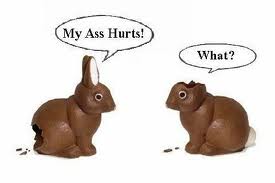
I have come to the conclusion that my blog is dying for an immediate injection of levity! I mean, really, how long can a writer expect to maintain (or, increase) his audience when he expresses (now routine) woe-is-me posts? Many of you probably say to yourself, “Woe-is-he? How about “Woe-is-me?” I promised to myself when I launched this blog that I would write honestly, especially about subjects that were difficult to express in a metaphorical way. My graduate school mentor once said, “Hell, anyone can write a drama! Who isn’t capable of writing personal experience drivel causing readers or audiences to be moved and shed a tear. Christ, just listen: puppy mauled by pit bull; dad in Iraq, won’t be home for Christmas; the homeless offering half of the little they had; and my favorite: someone secretly sells your < input pet name and species here > to save the < insert anything that people can’t do without here >. See how easy it is to write tears-down-the-cheek melodrama’s?
“But comedy? That illustrates one’s talent of 1) Undertanding what’s funny; 2) Understand clearly what’s funny to you most likely isn’t funny to strangers; 3a) Never! Never ever ever! write about Christmas (every reader or audience member is loaded with holiday memories which you’d need to best (which is nearly impossible); 3b) Never! Never ever ever! put a dog, any dog onstage at any time! The audience’s attention and empathy will immediately be drawn to the mongrel show stopper, and Everything you’ve poured over for months or years will be lost to a furry, salivating, and misbehaving clown on four legs! 4) A sense of humor which is an innate ability to see a humorous situation which will relate due to it’s familiarity to the majority of your audience; 5) Timing. It ain’t funny unless they laugh when you want them to laugh. Laughter produces a pause in the action which swallows everything until the laughter ebbs.”
A talented writer knows that he/she must control set-ups and punch lines and laughter or else try their hand at writing historical non-fiction. One comedic device is writing a common comedic situation (and the audience is in on the gag) where broad and stereo-typical characters
 develop hair-brained schemes which the audience knows will fail. The audience’s or reader’s premonition is validated when our sympathetic buffoons and sad sack’s muddle past menial obstacles to find themselves nose-to-nose with the impossible-of-impossible obstacles requiring our “down-and-out” characters to change (catharsis) in order to successfully beat the odds. At long last the characters arrive at the end of the book or play changed for the better, admired by the audience for being obstinate and tenacious in their pursuit, and, most likely, will have the dubious honor of water-cooler and happy-hour conversations. An actors job is to bring a third dimension to what you’ve written. Actors can’t improve a poorly structured play, just as an editor can’t proof read draft after draft of a premature novel. It’s been said, “Good actors can make a good play great; but not even great actors can make a poorly written play mediocre.” Judicious editing and the full understanding that as a writer you produce a product (play, novel, article essay, or fiction) just like a cow produces milk. No where in the thousand upon thousand upon thousand of words you’ve laid to paper is a Sacred Cow. Absolutely everything you hand over to a critical public may be arrogantly ignored, or it may be read, or after reading it coldly tossing it in the vicinity of the recycle can. It’s then picked up by a vain and autocratic mailroom grunt with champagne dreams of big corner offices, hot hot hot secretary’s, and a humidor stuffed with Davidoff cigars writes you a letter highlighting the scripts weaknesses, and then, provides a colossal pile of his rewritten scenes for you to add to the script post-haste. The talent to create a play or book which, night after night and joke after joke and laughter after laughter takes mechanical training and the unusual vision to see funny behavior in colloquial and mediocre situations. And try as you might to write comedy without that Godgiven sixth sense of identifying humor in commonplace situations and change the menial to the amusing just might develop into a book or play that draws the attention, curiosity, and chit-chat of the general population to buy the book or see the play. But if your degree of creativity resembles that of a stenographer and you plow through or inflate or discover that the situation you thought was funny isn’t as plentiful as first thought you simply shorten the product in whichever genre you write, you might be the author of a funny play, or a funny story, or or a funny book.
But you won’t have a comedy.

0.000000
0.000000