. . . we acclimated ourselves to the $350/hour shrug by complacent psychiatrists seesaw of Bipolar life, Medical Doctors proudly (by way of tests) declare weighty physical diagnosis like heart failure, severe edema (not endamame), osteoarthritis, Spinal Stenosis and an unconscionable number of my life hours enduring the shotgun pellet spray of “these should help” pain reducer until the tide of physical illnesses recedes. I’ve lost the moniker “difficult to diagnose” to the “everything bagel” patient. When did MD’s quit being curious and courageous?
Category: Recollections
“The Looking Glass:” A Modern Answer Besides Your Nose
It is with great satisfaction that I’d like to present to you my latest woodworking project aptly titled The Looking Glass. 

The Looking Glass is borne from an on-going dilemma: Eyeglasses should be on hand yet out of the way and yet still be part of something grander. The Looking Glass hopes to eliminate the second most asked question “Where are my glasses?” by placing an elegant, modern and inconspicuous composition of glass and wood during daylight hours; and at night, an elegant, modern and conspicuous lighted from within composition of glass and wood. In the evening the polished glass and plexiglass quietly glow;  no sound, no movement, no promises. What began as a search to stop the irritating question about eyeglasses evolved into a simple and translucent construction of glass, plexiglass, hardwood, and LED lights. I’ve researched current options for eyeglass stands and discovered an abysmal selection. The Looking Glass has hundreds of variations using simple construction. It is, in a word, radiant.
(Note: Please excuse my elementary photographic skills).

Related articles
- Google Glass wearers talk about their new device (phonearena.com)
- Celebs in Specs: Get their Look with Fab Fake Eyeglasses (thebudgetfashionista.com)
- What brand of glasses is Zooey wearing in New Girl? (brandsandfilms.com)
My Penned Invention of the Pen Invention (repost)
 It would prove to be one of the most remarkable events to fall into the lap of England in the 1930’s. Even Sir Thomas Cartridge, the infamous historian, essayist, and reputed hawker of odious innuendo was aghast when he said, “Everyone familiar with this tragic and despicable crime certainly expected him to be found guilty. But even judicial scholars were non plus: no one had an inkling that an incidental consequence caused by an accidentally stowed and unfortunately uncapped fountain pen which predictably bleeds if it touches any absorbent material, would influence the most harrowing murder trial in fifty years. The Daily Telegraph and The Guardian immediately blamed the pen makers asserting through editorials that the fountain pen design had remained literally unchanged since Nicolas Bion first described them in 1807. The pen makers quickly accused ink firms of altering their inks’ characteristic by employing diluted formulas that produced inks lacking gelatinous properties. If needed, pen makers would blame their customers, insisting that a consistent discharge of ink by a nib pushed absent-mindedly into textile is an accepted (if destructive) characteristic which sensible owners attempt to avoid. Therefore, it is my opinion that the barrister’s distraction caused by the importance of his closing argument overshadowed his gentleman’s grooming, without malevolence pocketed the fountain pen which immediately enjoyed a degree of notoriety (and sales) normally bestowed upon articles belonging to aristocracy. It’s as if he’d dropped a jet plane into his pocket!”
To what was Sir Cartridge referring? An extravagant and utterly preposterous event of the 1930’s: The common ink pen was borne on the heels of a legal decree: The Royal Courts of Justice abolished the use of fountain pens in every courtroom in Great Britain. Parliament added that the newly invented practical and leak-proof pen would be the only writing instrument sanctioned for official use in every governmental building of Great Britain.
The calamity started just after the lunch recess of an infamous murder trial and the sudden appearance of an embarrassing stain which continued its growth like an algae bloom beneath the front pocket of an expensively tailored white cotton shirt belonging to and draped upon a notorious barrister from London. The barrister who, it is told (in hushed tones lest you be accused of slander), that the verdict of guilt had nothing to do with his impressive (and lengthy) closing argument which meticulously and repeatedly outlined the precise order of events. The barrister’s timeline was so thorough that whatever doubt lingered in the far corners of the courtroom had been swept away like cobwebs.
The shameful guilt could almost be seen atop the plump, rounded shoulders of the torturous, adulterous, and maniacal MP who, it was alleged, kidnapped a prominent debutante from a society ball, trussed her up like a common farm animal ready for slaughter, bludgeoned her to unconsciousness, then drove her to a vermin-infested garret atop a saloon on the East End. She remained imprisoned for a fortnight and each afternoon the MP would appear in the pub and with gluttonous abandon, he ate and drank himself into a repulsive and monstrous stupor, and dragged himself up the back alley stairs, unlocked the bolt, and repeatedly forced the delicate young woman to participate with or perform for him heinous, bestial, and inhumane acts which included demonic rituals, chanting, and minutes before he strangled her with the sash from his MP gown, he branded the young woman’s breast with a mark which closely, was almost identical to the stain on the barrister’s front pocket.
Jury members were quoted after the trials conclusion that the increasing stain resembled an apparition of the brand suffered by the victim, and that it was impossible to ignore, for even a brief time, or explain its appearance as a leaky fountain pen, when the leak didn’t appear until the very moment the barrister mentioned the brutality, causing the MP to leap from his chair. As police subdued and removed the wailing MP, the barrister turned back to the jury who, at the same time, uttered an audible gasp, followed by a scream, then a shout as a dozen arms flew into the air and pointed at the haunting image displayed upon the barrister’s shirt. The courtroom quickly dissolved into utter chaos as jurors ran from the courtroom and some incredulous men leapt over the railing and attempted to strip the barrister of his shirt, optimistic that it would fetch a tidy sum from someone indulgent in such macabre items.
From that day fountain pens were banned from courtrooms across England and the first stationer able to manufacture a pen whose ink was safely sealed in a chamber and distributed in incremental volume only when in use, was sure to win the patent and the incredible wealth which would quickly follow.
As the anniversary of the fountain pen’s exodus approached, rumors began to circulate that the Judiciary acted beyond its dominion when it issued the restriction, and continues to defend its authority successfully whenever a challenge is brought before the High Court. England’s De La Rue and Conway-Stewart pen companies, as well as France’s Cartier and ST Du Pont, Germany’s Pelikan and Montblanc, and Italy’s Omas and Visconti all concluded that the solution required a combination of distinct and precise components: a cartridge, ink, and a system by which the ink could be laid upon the writing surface at the exact volume to ensure a consistent line. These accomplished, fastidious and resplendent pen manufacturers were perplexed: never before in the history of handwriting were the makers of pens required to reconsider the importance of ink and its transference to the paper as their conundrum. Ink had always been considered declasse, pedestrian and hackneyed. Suddenly they’ve acquired relevance and attention and thusly required the world’s greatest maker’s of pens to invite them to participate in this befuddled exercise.
The common and convenient ballpoint pen emerged from an unlikely location, a small town on Cornwall’s North Coast that hugged the jagged cliffs carved by the Celtic Sea. Citizens of Bawhl Point (between Boscastle and St. Gennys) were stout, good-humored, and straightforward Englishmen. Hardened by their generational resolve to survive the harrowing conditions of England’s southern tip, an isolated peninsula which stretches three hundred kilometers out to sea, and constantly exposed to the full force of the Atlantic’s prevailing winds.
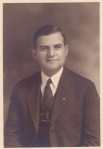
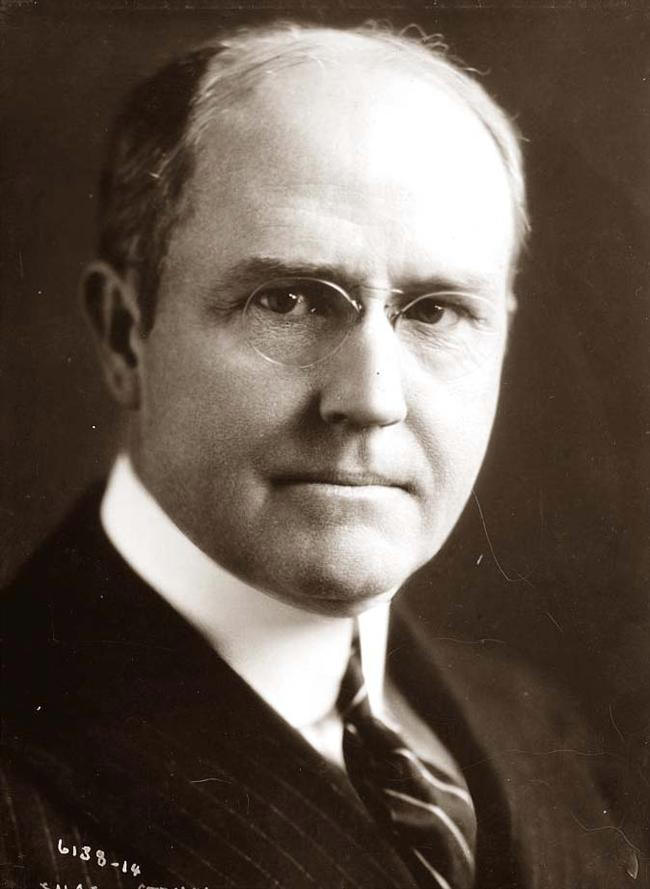
John Gahter IV, the eldest of five brothers and sisters, and assumed heir to the Gahter and Sons Ball, Valve and Pipe Manufacturing Company had recently been contacted by a local chemist, F.H. Inkes. While conducting his business, Dr. Inkes used a technology which required small, spherical particles to be integrated into an easily replaceable plastic ball-check valve which, while under incredible pressure, would release a steady and predictable volume of fluid onto a row of glass slides placed on a rotating table which turned clockwise every six seconds. Dr. Inkes wanted to know if Mr. Gahter and his manufacturing company could develop such a valve, and if so, could they manufacture a consistent quantity per month? Mr. Gahter was intrigued and would discuss its possibility with his engineers and plant manager. He promised to contact Dr. Inkes within a few days to inform him of his company’s decision. If Mr. Gahter and his employees were absolutely sure they could manufacture the valve then he and Dr. Inkes could further discuss all the business particulars.
Dr. Inkes was an analytical chemist whose expertise was well-known throughout England’s small number of chemists who utilized an uncommon technology, High Performance Liquid Chromatography (HPLC) to separate and identify compounds suspended in common liquids. The information discovered during these tests were extremely useful to chemists, especially those conducting research involving complex and indistinguishable compounds. Until recently when high-ranking officials at Scotland Yard and a few football executives learned that urine samples subjected to HPLC would separate and identify individual elements (of which may or may not interest them).
It took Mr. Gahter and his company two months to perfect the valve which Dr. Inkes requested. But in the process, the two men made a startling discovery: fluid can be distributed at a consistent rate when pressure is applied, and the margin between the sphere and outlet must be perfectly calibrated to the viscosity of the ink. Mr. Gahter and Dr. Inkes were awarded the patent for the steel ink pen and, of course, shocked most of Europe, and as Parliament promised, their ink pen was quickly distributed to all governmental buildings throughout the Empire.
A reporter from The Guardian reputedly asked Mr. Gahter and Dr. Inkes what name was given to their invention? Mr. Gahter replied, “It’s called the Bahwl Point Pen,” and Dr. Inkes quickly added, “And the first model is named after my good friend, John Gahter; “the Gahter” pronounced J-A-H-T-E-R.”
Related articles
- Searching for nice fountain pens. (helloelliot.wordpress.com)
- #Buy# : Fountain Pens of Japan (cut58fbs.wordpress.com)
- Cross Pens: Fahrney’s Introduces the 2013 Year of the Snake Collection by Cross (prweb.com)
Percolating Happiness

What is Happiness?
Are we aware of its presence or absence?
Is it organic? Meaning it percolates within us, bubbling to the surface, and expressed through facial expression? Or is it environmental? Meaning it is outside of us, an experience we find pleasing and therefore are happy?
Is Happiness found in things? The greater the thing, the greater the Happiness. Where can Happiness be found?
Many great thinkers hypothesize that Happiness is an emotional state.
From 1958-2008 I’d always had a fairly good idea of what would/could/should make/keep/prolong my idea of Happiness.
And yet its achievement was surely impossible: my Happiness hung inches out of reach like that carrot on a stick, the absence of it’s possession was goading, taunting, irritating; what was at first a quest for joy, soon curdled, and its promise soured.
The greek philosopher Epicurus emphasized that Happiness meant being untroubled and absent of pain.
Aristotle, the father of modern drama said of Happiness, “Happiness depends upon ourselves.
The German philosopher Arthur Schopenhauer “The two enemies of human Happiness are pain and boredom.” He also said that humans have high expectations. Man should lower his expectations and remember to aim low.”
If Schopenhauer is correct, then depression is percolating cup after cup of Happiness! 
Related articles
- Schopenhauer’s pessimism (severalfourmany.wordpress.com)
- What is Happiness? (coca-cola.com)
- Happiness. (lovexcess.wordpress.com)
Life By Living
Life, as we know much too well, is plump with memories; old jokes but new laughter.

An eternity of firsts: love, kiss, bike, pirouette, strike out, airline, stitches, lipstick, heartbreak, failure, beer, hangover,
diamond ring, varsity letter, loss, win, marriage, house, flat tire, hook line and sinker, kids, grand kids.

And yet, it is precisely these moments that quietly fashioned us like a sculptor casts his marble.
These serendipitous moments pop up like toast and reminds us that
life is really what we’ve learned by living.
Related articles
- Joy Without the Hangover (kmhubersblog.com)
- A Little of Me to You (wordramblerweekly.wordpress.com)
- The Secret of Luck (mcaislegit.wordpress.com)

