Is My Left Index Finger A Carrot?

Prior to all this mental illness mumbo-jumbo, my hands Left and Right, fraternal twins with Right seconds older (Left, it is said, grabbed anything within reach to avoid birth).  They’ve developed a symbiotic relationship on the one hand, while on the other they’ve taken completely diverging paths and developed distinctly disparate identities.  As Left was once quoted as saying, “we’re not two of one thing; we’re one of two things.”  Which is an important distinction in their world, a world where two things are commonly referred to as “one thing:”  The oft pedestrian reference: A Pair.

The human body is classical in terms of design styles.  It is proportional, balanced, and harmonious.  Its design style highlights the importance of parity, especially object parts divisible by 2.  Parity is reduced in importance only by singularity.  However, singularity is an expression of a Prime Object.  Unlike Parity Objects which if divided by two would result in one (not one-half), Prime Objects cannot be divided which results in an increased degree of importance.  Further, for many Prime Objects, the statistical probability of locating a perfect replacement is less than one percent.  A few Prime Objects are impossible to replace thereby aggrandizing their importance and diminishing the importance of two Parity Objects.  It’s because of the human body’s classical design style and a common belief that a human body can exist with one-half of a pair of Parity Objects that Parity Objects often develop the kind of relationship that honors longevity, but also promotes independence.

Left and Right have been inseparable for as long as I can remember.  Left is the quiet, ostentatious one when it comes to pretentious accessories (watches, bracelets); but Left is also the bearer of an object of significant proportion: the wedding ring.  Meanwhile Right is clearly the winner when it comes to handedness and the Brain’s division of labor.  Right was the first to learn that 90% of humans prefer to use his side as the “heavy lifter.”  As such, it’s Right who reaches out for a handshake, gives a panhandler a quarter, hails a taxi, scolds a child, dials a phone number, beckons a suitor to approach.  Unless the activity requires both the left and right hands, for instance playing the piano, forming a snowball, applause, typing this post, Left will wander off by himself, and routinely ends up in a jacket or trouser pocket catching a cat nap.  Right couldn’t care less.  He sees himself as invaluable, impossible to live without, the go-to-guy; deputized to effectuate distinguished gestures including devotional, patriotic, insulting, and vulgar (the latter is used so often it hardly qualifies as “distinguished”).  As a matter of fact, Right’s not entirely sure if Left has the ability to execute the oft practiced and drilled Ambidextrous Transmutation which Right first discussed with Left the night immediately after first grade when Right snatched the yellow stick from Left and began to trace the alphabet.  Right said, “Now Left, you should pay attention too; I know your holding the paper, but you’ve got to practice in case. . .”  Left reached across to Right, alarmed, “In case of what?  What?”  Right patted the top of Left, “In case I get hurt, wrapped like a mummy; you need to be ready to jump in!” And Right made it his duty to train Left in skills like handwriting, key-turning, locker-combinations, can openers, hairbrush, toothbrush, razor, utensils, and the secret one, the never-discussed-one, the door-locked-under-cover-personal-exhaustive-and-bemoaning-ritual.  Almost every night for fifteen years; sometimes more than once; then later in life strangers appeared and Right simply followed orders.  Left has seen action in 3rd grade (broken wrist), 6th grade (broken arm), and 11th grade (dislocated elbow).  Right beamed with pride when Left took ahold of the reins. 
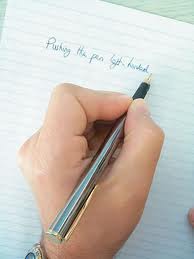
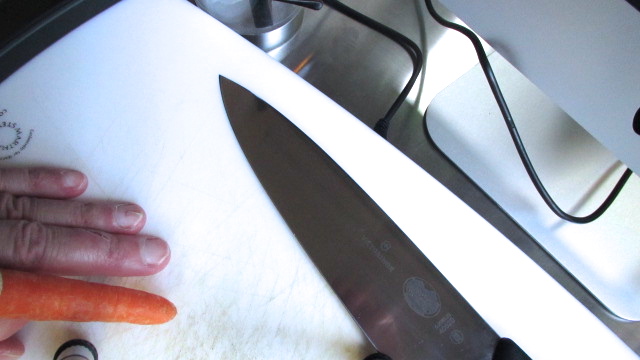
As of late however, Left has really taken a beating.  My new found interest in cooking and woodworking has led to a number of instances in which digits on my left hand can’t retreat fast enough and feel the razor-sharp edge of a chef’s knife (or bread knife, or lock-back knife, or 3/8″ wood chisel) slicing, stabbing or chopping.  And Right just keeps slicing in total abandon utterly unconscious of Brain’s danger alerts.  So Left wanted to try an experiment to gauge Right’s ability to distinguish Left’s forefinger from a carrot.  The picture above was taken a few moments ago.  We’ll keep you apprised of the outcome.
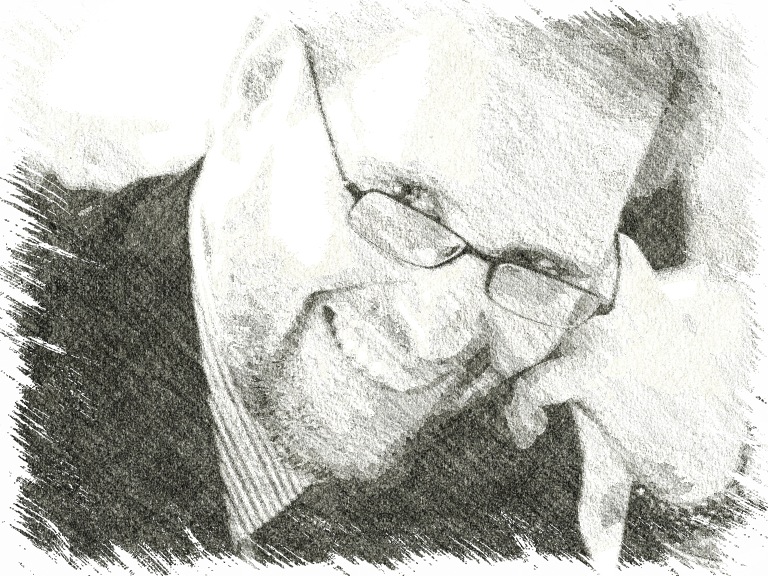
Chicago Tribune Feature – Set to Appear This Week

Early last week I was contacted by a staff reporter from the Chicago Tribune newspaper asking if I’d be willing to share Life With Bipolar II.

I’m a private person by nature, but also an author rummaging through his past looking for experiences which, when written in my style will leap from me and land on you resulting in some degree of change expressed through your thought or action.  I don’t write for the sake of writing.  I write with purpose; with hope that my style captures your attention; and with honesty so that a kinship occurs as you read and when finished actually feel something whether it be acknowledgement, empathy, entertained, or moved.  If you don’t experience any shift then I have failed you as a writer.

So many people know so little about mental illness generally, and Bipolar specifically, that to decline the opportunity to be featured in a full-page story in one of the top five newspapers in the country (not too mention their on-line edition) would be foolhardy.  There’s no possible way that I and this blog occupying a little corner of the internet could reach the number of readers that this article will touch.

I have spent ten hours on telephone interviews; two hours of photography here at my home; my partner’s been interviewed, and so has my physician.  The process has been, frankly, unnerving and profoundly confronting and nowhere near as safe as if I’d been writing it.  But I agreed because too many American’s need to understand that mental illness is a disease.  Doctor’s need to understand that a post-gastric by-pass patient won’t respond to medications as expected.  Patients living with mental illness need to believe that sharing themselves with others is the only way to dilute discrimination based on mental health.

Please watch for it!

Maybe We’re Just Like Ducks

It’s called imprinting, the rapid learning process by which a newborn or very young animal establishes a behavior pattern of recognition and attraction to another animal of its own kind or to a substitute or an object identified as the parent.  Ducks must be given full credit for bringing this natural attraction to the world’s attention.

We’ve all heard of some unusual attractions that ducklings have developed: humans, dogs, even beach balls.  So, if a duckling can blame nature for his predisposition for beach balls, perhaps our sexual proclivities are the combination of imprinting and sexual awakening: Love Potion No. 1.

My Duck Day coincided with the appearance of the concrete caravan and my budding sexual identity.

It happened during the dog days of summer, near the end of a blistering July, 1966 that the concrete caravan first appeared at the top of the hill on National Avenue and slowly made its way past Lapham Street, past the Roebuck house, skipped the alley, patched Elmer’s front walk and finally stopped to repair the crumbling curb in front of my house.

Most of the cement-men were career contract-labor: exceptionally efficient at chain-gang-hard-labor; blood-orange skin from the unrelenting sun, hints of aging hair poked from beneath hats, enormous bellies born from beer, and exhausted cigar stubs deeply wedged at the side of their mouths.  And then there was this one guy, unlike the others, this one guy resembled the older brother of everyone’s best friend; this one guy was the guy that came to pick up your sister, bewitched your mother, and worried your father; this guy, handsome in a blue-blood kind-of-way but absent of the sophisticated grooming; his countenance was basic, organic, and naturally simple; his body was whittled by the repetitious pounding of pick-axes; his age was disguised and  purposefully vague evoking my curiosity; he was a pioneer, trailblazing through his indecisive twenties.

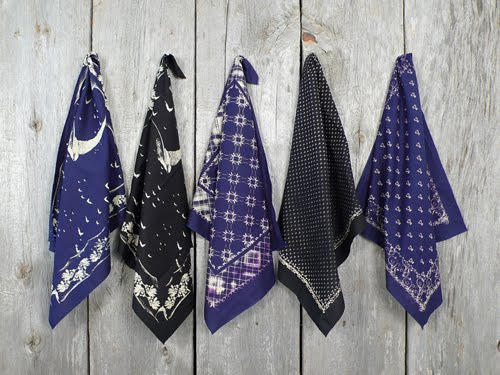
He wore identical clothing each day: A clean, sleeveless white T-shirt absent of any distracting graphics; tattered by abrasions, the frayed front pockets of his torn 501’s gave witness to his desperate deep-hand searching for loose change to feed the pop machine; a thick, brown belt wormed its way through the faded-to-white belt loops and cinched the denim preventing its avalanche; a navy blue bandana was tied tightly across his forehead to restrain a chalky cowlick; and concealing safety glasses which rationed the gleam of his lapis colored eyes.  Draped yet suggestive, his broad shoulders were easily double the width of his narrow hips which plunged into the deeply concave impressions of his hindquarters which were kept aloft by fleshy legs challenging the denim’s restraint.

Each morning he would arrive fresh like today’s baked bread.  As the toil took its toll his sweat marked then saturated his T-shirt prompting its removal which resembled pulling peel from fleshy fruit.  From my perch on Mrs. Bower’s front steps I mapped the pathway of his perspiration, its headwater found near his neck where it gathered then overflowed and trickled south swallowing isolated beads of sweat and tributaries which first appeared on his capped shoulders and added volume and speed which breached the sinewy levee of his spine and flooded the darkening waistband of his 501 ‘s as well as the white cotton banding which sat low on his hips.

I watched him for more than a week when my mother took notice and opportunity of my afternoon routine of sitting on the front porch.  It was her idea that I take the hose and water Mrs. Bower’s flowers and front lawn.  Perfect, I reasoned, an alibi should allay any suspicion caused by my daily observations.   On Tuesday of the second week of their construction I walked through the gangway with the spitting hose and began to shower Mrs. Bower’s flowers.  By the time I started to water the parkway (grass between the street and the sidewalk) the man in the blue bandana ambled cautiously over to me like a slow, curious cow to a farmer holding a bucket of feed. I stood on the sidewalk and thumb sprayed the grass when he asked, “Mind if I have a drink from there?”

I stood dumbfounded and handed him the hose, his wide, thickly calloused hands reaching across the freshly poured concrete for Mrs. Bower’s  Craftsman “Kinkless Guaranteed” one hundred foot garden hose, and moved the bubbling water to his mouth, drinking quietly, his lips pursed into a muscled “O”.  I watched with a great deal of curiosity as his Adam’s apple moved up and down with each quenching swallow, the dimples in his cheeks mirrored the rhythm of his bobbing Adam’s apple.  When sated he returned Mrs. Bower’s hose to my care and said, “Thanks; I’ve seen you watching us for a couple of days; thinking of a career in concrete?  What’s your name?”

“T.M.,” I said quietly.

“Thanks for the drink, T.M.” he said with a wink, then turned and rejoined his crew.

July, 1966 became known as The Summer of Eye-High Marigolds and Mrs. Bower’s Famous Flowers as reported in one local paper.  That July day in 1966 when Bandana Man put his lips to Mrs. Bower’s Craftsman “Kinkless Guaranteed” one hundred foot hose and quenched his thirst, I, instantly developed an unfamiliar thirst rising from deep within, a thirst temporarily doused by Bandana Man’s proximity, but which would reignite moments after I switched off my bedroom light later that night; by morning I longed to be near Bandana Man.  My disquieting need to putter around the front yard required a significant diversion, an understandable reason why I needed to be there.  Which is why my camouflage became an avid interest in gardening.  I think Mrs. Bower’s was exceptionally proud, and I’m happy that she took all the credit.  It was her front yard of course which received my best intentions while I continued to catch furtive glances through the gardens towering stems.

It took the concrete caravan an unprecedented three weeks to complete its concrete repair from the Roebuck house on the north end of the block to the Nichols’ house at the south end.  It was a Friday, I think, that the inevitable happened: I ran out of hose.  The crew had just turned the corner and was heading west on Mitchell Street. I stood there, water pouring from the stretched hose, acknowledging yet not understanding life’s cruelty: Why were we both at the same crossroad at the same time, if all it meant was fame for Mrs. Bower’s flowers?  As Bandana Man turned the corner he stopped, looked back at me, dropped his pick-ax and trotted in my direction, his tanned torso rippling like sheets on a clothesline.

He untied his bandana and held it beneath the cold water, wrung it out, then wiped his face and neck, returned it to the cold water and said, “You look kind of hot.  You hot, T.M.?”

“Yes,” I answered while nodding my head.

He took the hose from me letting it drop to the ground, turned me around, and wrapped the navy blue damp bandana around my head and tied it snuggly in back.  He spun me around, studied me for a moment, then said, “Cool man, you’re one of us now!”  And with a tousle of my hair he turned and ran to catch up with the crew which from afar resembled a motley gang of vagabonds.  I remained at that spot and allowed the water to drip down my face, catching a few droplets with my tongue, detecting a hint of salt which I knew was my first real taste of men.

My One and Only Rolex

Fifteen years ago I developed an obsession for Rolex watches which eclipsed practically every other interest or desire.  Its greatest impact was felt by my spouse: He was hostage to my unyielding resistance to any gift that wasn’t a Rolex.

Eventually Nick’s patience and resolve buckled beneath the burden of my expectation.  One Christmas he handed me an easily overlooked brown paper bag.  As I took it from him I felt a significant heft; I heard a steel bracelet shift at the bottom; I spied a bezel and Oyster case peeking out from an afterthought of concealment.  I slowly lifted the folds of vaguely familiar tissue paper which revealed the indubitable shape and renowned style of the classic stainless steel Rolex.  He said he’d been looking for one (for almost a year) when the week before a dealer called to say that a customer recently presented a used (and much older) Rolex as a trade-in and it’s “as-is” retail price is with-in Nick’s price range.  He purchased a Rolex manufactured in 1958 (the year of my birth) and it wasn’t until this year did I learn the historical significance of this watch.

A month later I found myself overheating in a Puerto Vallarta hot tub.  I dragged my lobster-red body to the swimming pool and jumped in.  Upon surfacing I heard Nick ask for time. While wiping away the stinging chlorinated water I noticed that there was moisture condensing on the inside surface of the watch crystal.

The Rolex watch is often perceived as an extravagant luxury and status symbol outshining its fundamental purpose: telling time.  But Rolex, SA (manufacturer) has played a significant role in the history of the wristwatch.  Rolex, SA can lay claim to being first at: automatically changing date on face; show two time zones at the same time (GMT Master (designed by request of Pan Am pilots); automatically changing day-and-date on face; earning “chronometer” designation (meaning that it’s mechanical movement is extremely accurate and consistent that it can be used to navigate ships.  But the fundamental and most notable characteristic (which it achieved first in 1926 and again in 1953) is being waterproof (1926); not water resistant; waterproof to a depth of 330 feet BSL (1953).

Obviously Nick’s gift had forfeited that foremost characteristic.

I was greatly disappointed that the Rolex Nick had worked so diligently to uncover had been compromised by irony: its fundamental purpose (time keeping) was also its assassin (time passing, i.e. years of use).   I took the infirm watch to the only certified Rolex repair center in North America (at the time) and was saddened by their conclusion: it would cost more to rebuild than the price Nick paid.  A friend gave me the phone number of a reseller in Georgia that represented Rolex watches on consignment.  Overnight I received three brand new stainless steel Rolexes from which to choose.

When I slid on the first, then the second, and finally the third I had exactly the same reaction: These Rolexes had lost their mystique, their meaning, their value; these were simply very expensive watches.  (And frankly, my time isn’t that valuable!) 

The watch given to me by Nick was, in my opinion, the only true Rolex because it was the one he generously gave me.  I wanted that Rolex; and I wanted that Rolex to function like any other Rolex.  So I returned to the Rolex repair center and placed it in their expert hands.  Six months later it was returned to me in pristine condition.  It is now thoroughly serviced every three years to keep it in working order.

So why did I share this with you?

You may get what you ask for in life, and while it may not be exactly what you wanted, you were very fortunate to have received it.  It may be imperfect, or damaged, or used.  But it is less about what you’ve been given, and much more about how you hold it, what it means to you, and how you care for it.

Quality Counts

I recall favorably the first night I spent in my spouse’s garret twenty years ago.  Naturally, I maintain this memory carefully, doting on it like a delicate photograph that’s aging, edges first, a creeping brown border and satellite-like spots threaten my recollection.  There are certain details which remain as crisp as a carrot because their impact struck me with tremendous velocity: his lingering fragrance hidden in the cotton of yesterday’s white shirt, the organization of his morning rituals: washcloth, cream shave, razor, brush.  I remember these sneak-peaks into his privacy because they played important roles in who he was daily.  All men have similar morning rituals but what impressed me, even back then, was his carefully selected instruments.  Many men could care less, but for him it was important to have the precise razor or brush or after-shave balm.

Another time we’d been invited to a business colleague’s home for dinner.  He orchestrated a wonderful meal which reflected skill, passion, and pride in what he presented to his guests.  But most amazing was the absence of commotion, replaced instead by ease and fluidity and sufficiency produced by efficient use of very few utensils.  I never ask for a recipe, but I did ask the secret to his efficiency.  His reply?  Limit yourself to four knives, but buy the very best knives: spend the extra money in the beginning, rather than repeatedly replacing them.

I allow myself the luxury of paying close attention to my private rituals and the tools by which I perform them.  Personal details or items (whether tool, accessory or peculiarity) does someone select?  These very personal choices provide a glimpse of who they really are, who they are and how they behave in private, when no one is watching or evaluating.  These details are the intimacies of an individual.  They’re not declarations or pronouncements or bravado; they’re not obvious, are often found in private rooms (bedroom, bathroom), are easily overlooked as an insignificant article or one of propriety’s niceties.  But I have found them to contain much more passion than everyday items.

Personal details are often sought out or surreptitiously discovered or introduced by way of kindred spirits.  They’re rarely received as gifts because their personal significance is concealed for fear of ridicule by friends for their dandiness.  Cost is rarely a deterrent; if a person has selected a specific item their determination to acquire it is very strong; they’ll scour the marketplace; they’ll participate in auctions; they’ll keep abreast of discounts; and if all else fails they will happily exchange money for the possession or, if it is simply beyond their reach, they’ll step away and always admire the item with the hope of a giddy teenager meeting her teen idol.

It’s possible to obtain objects which are more than capable of performing the same tasks.  For example fountain pens and ball-point pens; Bulova and Breitling watches; thermograph and letterpress stationery.  It’s not the price that assigns value.  Workmanship, materials, design, style, function and longevity all play important roles in my decisions.

A word of caution if the item is categorized as luxury: the old adage you get what you pay for is very important.  A replica of an item is not an inexpensive version of the item.  A replica is, at its basest, a forgery, misrepresenting itself as authentic at a 75% mark down.  If you find a deal too good to be true, it is too good to be true!  If you’re really in the market for luxury items do a lot of homework first; learn everything you can about the item; understand the difference between worth and value; and don’t buy as an investment unless you’re an aficionado.

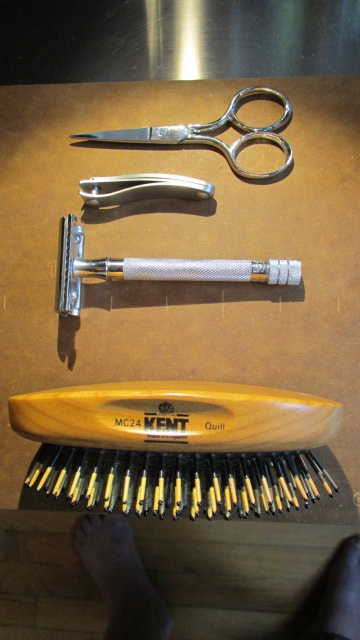
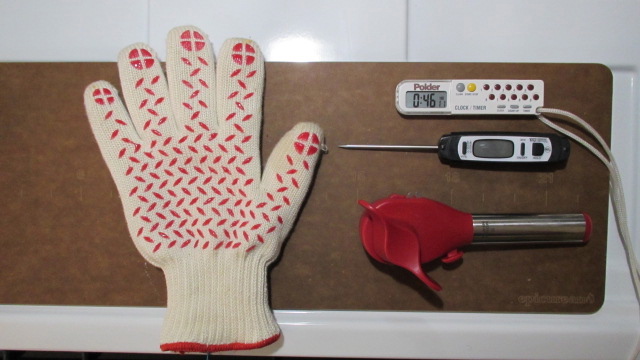
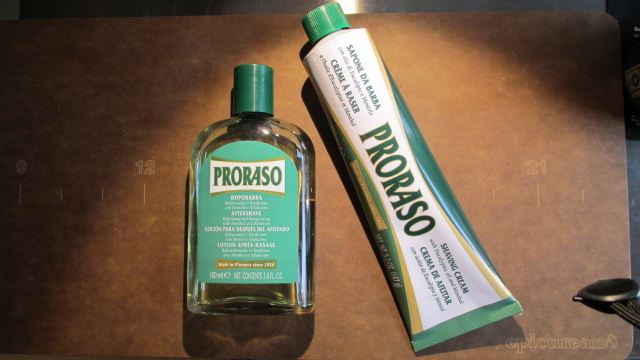
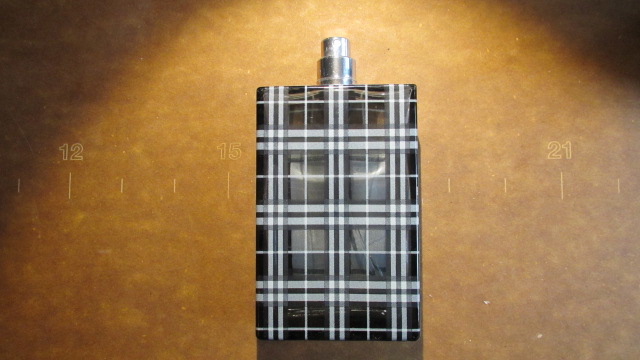
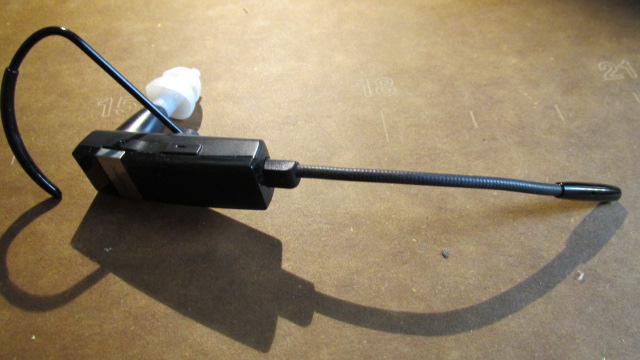
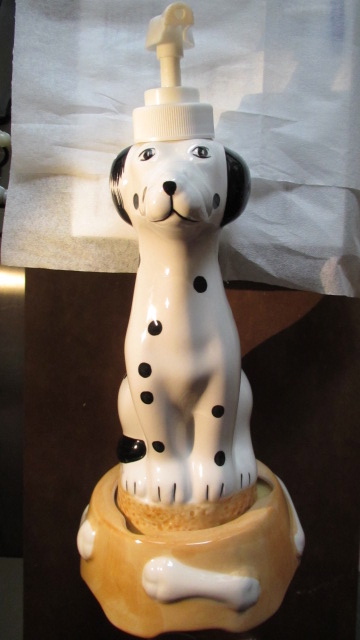
These are my personal details: Grooming: Merkur safety razor, Niegeloh Topinox nail trimmer, Erbe scissors (Solingen, Germany); Kent hair brush (UK); Proraso shave cream and after-shave; Burberry Brit Eau de Toilette; Stationery: Letterpress monarch paper and envelopes, fold-over note card and envelopes, calling card, and return address label; Nakaya Urushi-Lacqured Long Writer fountain pen; Kitchen: Victorinox 10-inch Chef’s knife, 3-1/4-inch Paring knife, 12-inch Granton Edge Slicing knife; ARY Hot Gloves with red silicone grip; Polder Digital timer; Kuhn Rikon can opener; Audio: Etymotic Research HF5 in-ear earphones; Etymotic Research High-Fidelity ear plugs; Etymotic Research er89-2 Bluetooth cell phone headset; General: Fenix LED flashlights; Boker Solingen pocket knives; Barking Dalmatian Soap Dispenser.