Has Been’s, Could’ve Been’s, Once Was’s, and Children

My brother got my dad’s physique; I got his mental illness.

Once I assumed the role of cook a couple of years ago, I planned my menu so that every other day I’d prepare a new meal.  The only cookbook I owned was a 1960’s copy of Betty Crocker’s Cookbook.  This cookbook was my mother’s, and if you saw it, you’d think Betty Crocker herself passed it along to my mother.  It was a solid first-step for me, my hesitation quieted by my mother’s obvious use of the cookbook, evidenced by the incredible number of batter-splattered pages; missing pages; half-pages; and an index at the rear which resembled the color palette of Crayola’s 64-Color box of crayons.  There were highlighted recipes; notations at the margins; and just a few, but oddly significant in an extreme way, an ad infinitum decree by way of thick, heavy lines, one or two eliminated altogether by a formidable, dense marker, applied as determined and repeated coats, forbidding any chance that these recipes might appear on our kitchen table.

My father was already a train wreck when my brain began recording his presence.  Failing at life (mainly due to his undiagnosed mental illness, bipolar), his appearance was infrequent: his social mask was one of humor: albeit acidic sarcasm and shearing, pointed wit composed in the key of tease and enacted before an unending column of untried yet promising second-shift ladies.  His role as a bullying, boorish big shot, whose sole domestic purpose was to reprise the 1963 verbal variety of water boarding. His peacocking drove us  closer and closer to suffocation, as though with each matinée he pressed another thick pillow of despair onto our faces and then, just when our desperation went quiet and we felt that first, foamy wave of disappearance, back we’d go into his second act and the shrill, ingenuous cackle of his subordinate’s callow laughter warned us that he was gaining adoration.  And the louder the laughter, the more lewd, raunchy, and viscous his anecdotes became, and our mention increased proportionally until, by the end, the three of us, his family, descended well past indecency, a good way beyond degenerate, and somewhere between contemptible and worthless.

And as the ladies stood and he, broadcasting his manners, helped them with their coats, those ladies whose saturating attention fueled my father’s mania sending him further and further afield, looked at the three of us, fodder of my father’s insanity, and delicately lifted the corners of their mouths in an effort to produce a symbol of empathy that my father couldn’t decode.

But what those lips produced was that sneer tossed at has been’s, could’ve beens, once was’s, and children who repeatedly witness their father falling apart.

Pinocchio and I

Finally, after four years, anguish (which filled the cavity of my character caused by shame) has slowly been reduced by the evaporation of time, to a degree of forgiveness and pieces of understanding of how the cataclysmic events of late June, 2008 had been roaring near the surface many times prior, and quietly patient as often.  Like Pompeii, can they really claim themselves victims when they built their lives atop a volcano?

I always knew I was different and always reasoned that it was due to eccentricity and a helping of creativity.

In late June, 2008 my predictably unique life, one which resembles the repetitive lane crossover of Olympic speed skaters was defined.  It wasn’t what it said that crushed me, but what it described, and how it behaved, and its odds of happiness and contributions to society and successful relationships and wealth.  The hope I’d safely tucked away for this exact day became one more devastating example of my unimaginable ideas dissolving into folly.  I knew that day that my pardon from a life-sentence of roller coasters wouldn’t arrive.  And the cruelest understanding that I, like Pinocchio, would always be a puppet, out of my own control, and never, ever be “just a normal boy.”

I’m Bipolar.

Is Creativity the Birthright of Madness?

Recently friends brought to my attention some ballyhooed revelation that creativity and the mental illness, Bipolar are bedfellows.  It’s my hope that those friends shared this breaking news with me to reason that, unlike my unwavering conviction that my creativity was silently passed along, from parents to offspring, like the gherkin relish tray at the adult table at important, big family get-togethers (however, the gherkins moved at an amazing clip, almost airborne, poked at like beach balls at raucous college sporting events).  But I fear their enlightenment is more of the matchmaking variety: Madness meet Creativity.  Since, it seems, that the gloves are off, I feel a certain responsibility to share with you that I am, do, have, live with, suffer from, and occasionally profit at the expense of a clinical mental illness, specifically Bipolar II and a pervasive compulsion to create.

Being bipolar, a creative thought percolator, borne on the wings of madness then expressed while crushed by despair sounds all too familiar and resembles my earlier creative periods.  Creativity requires release; if not via the artist’s typical delivery, then some other way.  Creativity does not hesitate at the foot of convention; Creativity demands the artist to forecast; Creativity dwells beyond reason; Creativity as action produces unexpected consequence throbbing with life.  Madness, freedom unhinged is the luxury to produce or destroy anything; it’s also a tortuous paradox: mired to the present by sight and coaxed toward absurdity by vision.

But being mad, the vanilla “any mental abnormality prefixed by psy” variety doesn’t guarantee creativity.  I’ve known many lunatics, and while their realities are certainly untethered and bobbing about in a sea of chaos, they are afloat and lost, utterly incapable of calibrating their degree of sanity, and just like the fair weather kite that’s caught off-guard by fast-moving fronts, their unpredictable lucid episodes prevent them from the digestion and regurgitation of discovery or hypothesis or experience as comprehensible expression be it visual art, literature, science or mathematics.   Conversely, I’ve known scads of artists: the fresh who dare; the weary who retreat; the working who struggle.  And while they may live with significant clinical mental illness, it’s my assertion that less than ten percent have developed the access to their demons, running madly to the lair’s entrance, seduced by the height of their mania and reduced by the depth of their depression.

I recall being quoted once, “I have the unfortunate opportunity to live life twice: First by surviving it; and second, by recalling the first, twisting it by ten percent which ensures a skewed vision of life that is palatable to even the most inert audiences.”  Madness tried a hostile takeover in 2008, acquiring shares of my sanity for pennies on the dollar.  And the moment it assumed control as majority it struck such a blow that even my foundation shook.  What it wanted it took, leaving little, enough to make a small pile of what ninety percent of people would call rubble.

The other ten percent would call it “page one.”

Haven’t Been Hungry Since June, 2008


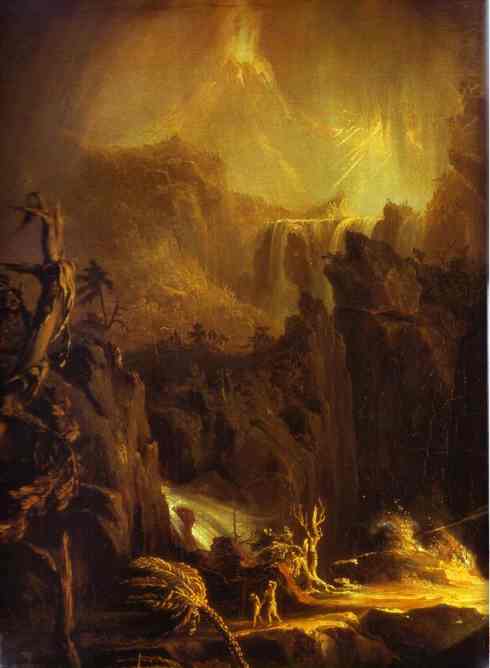
Adam and Eve’s fable is familiar to most of us and has been used as a biblical example of the shame and eviction caused by education; biblical authors thinly veil Adam’s ignorance as innocence and ascribe Eve’s intelligence (expressed as reasoning) as a short walk to damnation by way of mollifying hunger; and her biblical hunger was tempered by a piece of fruit introduced, hyped, and conveniently supplied by a recently recruited initiate of indulgence, the serpent, heretofore apprentice to trade.

But biblical may also mean metaphorical.  Speaking in simile, Eve’s indecision was fueled by desire, the fundamental hunger for intimacy, the idea of impeaching one’s character as barter for reckless surrender, the suppression of caution and judgement, the erosion of denial.

The day following my catastrophic  breakdown I awoke to loss: hunger, that fundamental need for physical intimacy had disappeared.  The recognition of sexuality continued, but that deep bass rhythm which is inaudible yet present was missing, leaving me unbalanced and out-of-tune.

Who manufactured the hunger in Eden?  Even temptation can’t seduce the sated.  Poor Eve, someone injected her with hunger followed by intelligence in order to frame her for the loss of innocence, adopted embarrassment of the naked body and subsequent banishment from paradise.  If the serpent had slithered up to Adam it would be a very different world indeed.