I Had a Car Like Me Once

QUESTION:
If you were a car, what kind of car would you be?

An old classic?
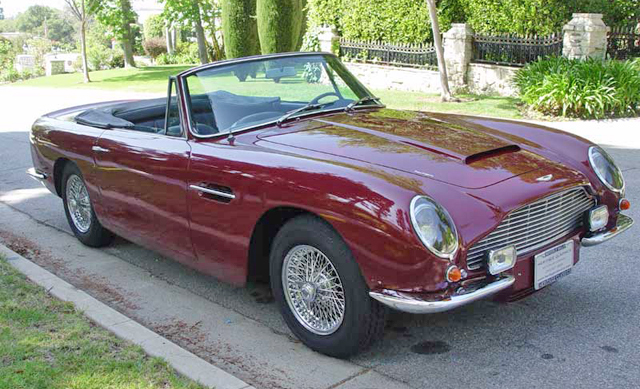
Something like the 1967 Aston Martin convertible?

Maybe the 1968 Mustang GT Fastback?

The car most resembling how I’ve been feeling recently happened to be our third car, the car like me.  We’d bought it used from some co-worker whose face (much less his name) has breached my mind’s curved horizon.  Used is a benevolent description: a couple of common idioms would aptly depict its constitution: . . .On its last legs or has one foot in the grave.  Desperation left little choice: I needed any car that worked to travel the 40 miles daily to a necessary yet useless and under paying job that freed me from beneath the spiked heel of a former employer who was a notoriously brutal, hateful, and infamously outspoken attorney that beguiled jurists to award her clients the largest financial settlements in state history.  Charm was never wasted on me, though.  Neither was persuasion.  She wasn’t the boss, she was the owner: I wasn’t her assistant, I was her indentured servant.  It was I who felt the eviscerating pressure from the pointy toe of her blah-blah collection of blah-blah-blah’s high-heeled shoe.  So I grabbed at the first job even though they’d lowball me and I’d need to buy any car.

The car, a foster child of sorts, had been purchased then passed on, then sold and sold and sold until the gravely agitated owner whispered the auto’s immediate availability for cash only.  And so I became the hastily orphaned auto’s benefactor.  Until that one day arrived (the last bead threaded onto the string), when, as no surprise, another function failed and the pertinent idioms came to mind like eerie messages in the Magic Eight Ball: Are you throwing good money after bad or Are you pouring money down the drain?  It all boiled down to a decision which I couldn’t face, so just like I did in the sixth grade when I was up to bat and had to face the gawky southpaw with a screaming heater which always caught the inside corner, or the lower back of a cowering batter, I fainted on my way to the plate.  I was removed from the game and poor Gerry Schmidt took a fastball in the kidneys. Procrastination is a conundrum best dealt with tomorrow.

But while I’m not a car, I’m spending more time in the shop and starting to string beads.  Unimaginable maladies have begun to appear (besides hum-drum mental illnesses): Edema of the lower extremities; rare forms of heart failure; pulmonary compromise; and rare to boot!  My conditions occur in less than one percent of patients!  Rare is a good thing, right?  Not in medicine.  Rare means few, few means no research, no research means no remedy.

I’ve been feeling lately like a mid-year 1983 Buick which runs, starts in the coldest Chicago winters, and does what a car should do.  Yet recently I’ve heard more pings, louder knocks, noticed oil spots on the garage floor, and the lighter no longer glows orange.  That’s why I’ve been posting less frequently: I’m fatigued, terribly sad witnessing this decline, and frightened.

But to end on a bright note, here’s the car I’d be: a 1965 Cadillac Eldorado! 

 

Posting Sans "Going Postal"

Dear Meta:

Just a brief post via email sending my sincerest appreciation for your recent comment on my blog re: the feature story about me and my living with bipolar II disorder showing up in the on-line version of the Melbourne (Australia) newspaper! Since it’s been two weeks since its initial publishing in the Sunday Chicago Tribune (September 8, 2012), I can only surmise that the story made its way to Australia by way of Cape Hope, South Africa aboard a determined, yet slow freighter bound for New Zealand. Odd, how the most notorious scandals spread across the internet like licentious brush fires, but a story about mental illness, its anonymity, and far-reach takes weeks to reach across the globe.

Please check out her blog: “Buried Words and Bushwa” at http://www.picsandstuff.wordpress.com.

Cheers,

T.M. Mulligan
Author & Blogger
(773) 922-6499 (U.S. Residence)
t.m.@tmmulligan.com (U.S. Email)
t.m.@tmmulligan.co.uk (U.K. Email)

BLOGS:
http://www.becomingnotbecame.org (Mature)
http://www.humphreytales.com (Youngsters)

Election 2012: Forget the Gays! Let’s Kill the Middle-Class!

SCENE:

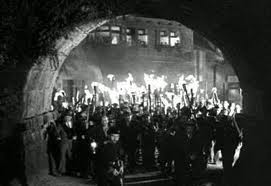
A mob of men and women sporting haute couture ensembles are followed by domestic staff brandishing fiery torches, weed-wackers, and gilded “breaking ground” shovels move at an accelerated pace (note: they are not running; they never run; they simply walk with tremendous determination) between the craggy, overhanging cliffs somewhere near Malibu or the tall, dense sand dunes near the Hampton’s.  They scream hateful epithets like “And you thought Polo was just an after-shave,” or “Only a monster prepares his own taxes,” or “Even a hunchback is beholden to religion for its servile and miserable life.”

CUT TO:

A group of men and women run up narrow, rocky paths or stumble through swallowing, deep sand.  They’re absolutely terrified, and yet they clutch one or two possessions (laptop, picture frames, deed to a house) even though their requires two hands.  You get the sense that they’re clutching all that remains of their life.  Suddenly a heavyset, winded man loses his balance and though others try to grab his free hand, they yell things like, “Let go of the picture,” or “It’s only a college degree!”

But suddenly he holds the framed diploma tightly against his chest as he teeters over the edge and everyone watches as he falls into the abyss tightly holding his most precious possession.

Welcome to December, 2012 if the Republican machine takes hold of the White House.

I think that it’s perfectly normal to ignore distracting noise, especially campaign noise, when 120% of your attention to personal-matters-at-hand is parsed and you’re really not interested in cockfighting.

That is until your private AGI (adjusted gross income) permits political campaigns to assign you a specific economic class moniker. The herding of same AGI’s should get your attention.  Once you’ve been economically branded you begin to recognize topics related to your self-proclaimed monikers (or, sub-classifications) which label behaviors and values, your distinguishing parts, (which you once defended, affirmed, and proudly paraded). These distinguishing parts have been diminished by time into a complex, amalgamated you much less the “youthfully combative sum of your parts” and much more like your mother or father (with very distinctive differences).

Until the amalgamated you becomes campaign fodder, a cadaver dissected in public by wielding derisive displays of contempt and hatred resurrecting foregone battles to right history’s wrongs and to spread fear like an airborne toxin.  How on earth, you think to yourself, have I been put on the ballot?

Because the run for leader of the free world has nothing to do with leading.  It’s become a referendum prosecuting or defending the future of the middle-class.  The American middle-class: devoted family, work ethics, values, respect, you get what you can afford, hard-working, proud, stable, honest, neighborly, caught. . .in the middle. . .of change.

But greed changed all that.  First bankers got greedy, then brokers got greedy, the home owners got greedy, and then. . .lower to lower-middle class were qualified for mortgages on real estate which was falsely inflated to satisfy everyone’s greed.  Families that simply couldn’t afford to buy a home found themselves underwater (owing more that the home is really worth.  In other words sellers, brokers and lenders all told varying degrees of lies and the poor schmuck wanting his piece of the American Dream ended up being the real sucker in the scheme.  But not one banking executive has gone to jail or forced to pay for those lousy mortgages out of their skyrocketing profits.

Do I Look Like A Pigeon?

There’s a basic tenet of parental behavior to which many ascribe:  Whatever you don’t like, don’t understand, or frightens you about your child, you’ll try to ignore it, or threaten it, or eliminate it under the guise of childhood protection.

If you had known me as a child you would never describe me as: bashful, shy, inhibited, reserved, demure, or innocent.  Especially innocent!  I blame my lack of innocence on a creative incarceration complete with shackles, pillory, and thumbscrews (metaphorically speaking) as the adult-authority’s recommended protocol for youngsters that emigrate to the shores of their imaginations.  My crime?  Being entertained by my imagination’s liberty to dream of things or experiences which landed far beyond the limits of our lower-middle-class capabilities, and of which I insisted were possible despite our depressed economic status.  Not that I asked for things that we couldn’t afford.  I asked for things which required creativity or compromise or cunning.  I only asked for things which were possible but perplexing; things which, if I were taller or older or motorized I could procure.  But I was a short, plump, uncoordinated child that wrestled with an unbridled imagination and raw creativity which everyone described as teetering between adaptation (the positive, yet painful struggle of change: unyielding animosity between divorced parents, recent move to the south side) and abdication (an attempt to cope by disengaging himself from his misery by displacing reality with imagination).  I had just begun implementing a plan which might conquer both my hells (before/after move).  Using creativity and imagination I might be able to map my way free of their self-centered, ego-inflamed romantic ideals and out from under the shitty and selfish mess the adults-in-charge created, then forced down my gullet like corn down the throat of the holiday goose.

So authority figures convened to develop a strategy designed to lower the volume of my imagination and increase interest in my new-world order.  By discouraging escape and encouraging capitulation they hypothesized that I would slowly build a positive (and comfortable) reality without careening into fantasy, imagination, or creativity.  In other words, we’ve tested him and he ain’t no Einstein, scored dead-center 50th percentile, and, thank God, kind, dull, unambitious, and docile: he’s simply avoiding change by daydreaming.  So the adults broke their huddle and walked to the line of scrimmage; a defense full of adulthood, authority, corporal punishment, and varying degrees of coercion designed to obliterate the supply bridge between me and my creativity and imagination.  But I was on the offensive and understood that in a matter of seconds my pulverization would commence; I mustered some resistance, usually a subtle mockery of mumbled affirmations.

Their boundless resources, their freshly recruited therapists (secretly screened in the convent) hammered my resistance and during a nighttime raid caused a debilitating breach, a nightmare, which cast doubt on imaginations allegiance.  Creativity wasn’t strong enough to deflect their incessant whittling away at my corners, sanding down my resolve in order to spit me out at eighth grade graduation: a shining example of what to do with a square peg when the world offers only round holes.  The nuns, lay-people, and counselors believed that by distracting my distractions, by motivating and redirecting and sympathetic yet tyrannical concern and instruction, they could successfully extinguish what, at the time, was thought to be simple imagination.  And I would take my place among my fellow eighth grade graduates poised for the adventure of public middle-school, then high school, and finally be added to the third-shift at some manufacturing or assembly plant as one more blue-collar-assembly-line-lifer with low expectations and very little hope.  

Tragically, these nuns and educators were in pursuit of an example, a trophy, proof that plucking me from a sea of personal trauma and forcing me to face the reality to which I was born.

How nearsighted they were to think they eliminated my problem.  It was much worse than that.  They confirmed, even back then, that it was real and I wasn’t just imagining things.

“You Brought This On Yourself,”

momwashingdishes
My mother’s back: her way of avoiding conflict.

That’s what my mother used to say, her back to me, and her hands wrist deep in dishwater.  I needn’t see her hands to know she was wringing them upon hearing my news; I could tell by the way the muscles in her forearms were flexing.  There were several of these confessions at the kitchen table over the years, and I always found her reaction astonishing.  She was incapable of ever helping me solve whatever dilemma I disclosed.  The scope of my problems were well beyond the dimensions of her upper-flat apartment and any collateral influence her small circle of single-mothers might discover.  No, my mother lived a small, tightly wound existence, and like those gated-communities with elaborate, electronic gates and guard-posts manned by ex-militia, she’d honed the art of deflection, quickly interrupting my admission like a towering volley ball player blocking an opponents spike, by conjuring up the standard retort to unwelcome news, “You brought this on yourself.”

Which in many instances was both honest and obvious.  Most people don’t find themselves in a pickle by being an innocent bystander.  Most pickles are borne of poor planning and even poorer execution.  But not all admissions warrant my mother’s standard suppression.  For instance, the admission that you suffer from a mental illness in which you slide from a manic state to a depressive state as easily as Ferrari’s change lanes on the Autobahn. And that stress is a definite trigger, especially if that stress is a direct response to particular issues, situations, or circumstances.

What I’d like to know is whether other bipolar patients are accused of mania by a friend or relative when attempting to communicate important (and potentially volatile issues), and if so, does your intensity escalate in direct response to their continued defensiveness about the issues you are attempting to discuss?  And if the discussion derails and car after car of well-intentioned-but poorly-stated-examples jump track and pile atop each other deeply burying your initial point, does the person with whom you are now arguing with pull out the trump card, the ace-in-the-hole, the Coup de Grace and draw the conclusion that your passionate (implication: ridiculous) and persevering (implication: absurd) diatribe is characteristically manic, therefore you are literally, ranting like a lunatic, what do you do?  Back off as proof of your sanity (thereby recusing your accusations)?  Or stand firm and mad which guts the rationality of your point-of-view?

I recently cautioned a close friend that, out of desperation, played that card, and immediately quelled my interrogation.  But later, when civility returned, I quietly cautioned him of setting this precedent: “If I’m defenseless or simply tired of fighting, and he is intent at satisfying his blood lust, I’ll shut him up by asserting he’s Manic.”  Because most likely I’m not manic and accusing me of being manic in the context of an argument is cowardly and insensitive.

And lest you’ve forgotten, my mental illness is a disease not a strategy; it’s not my power play.

I’m out of control and therefore, by the very nature of the disease, am incapable of rational thought or reason; and the last thing an irrational person wants to hear is he’s behaving irrationally.  Talk about a dog chasing its tail!

Any thoughts?