Dog Days of Summer

The eastern sky was more black than blue by the time I took Jenni for her last walk of the day.  There happened to be just enough wind to cause unzipped jackets to billow and flap like fitted sheets pinned to clothes lines.  As our days shorten I switch on the flashing red bicycle light which I’ve affixed to her collar alerting motorists and pedestrians alike that a very purposeful Wheaton Terrier was strutting like Travolta in “Saturday Night Fever” so make way!  I too, had a beacon; an LED flashlight was tethered to my cane, its purpose was purely selfish.  It bathed the path with a subtle pale blue glow providing me with some degree of vision when we passed beneath the thick canopies of mature trees which flank both sides of the road.

It’s very generous of Jenni, allowing me to tag along on her thrice daily adventures!  Apparently she discovers artifacts and remnants left behind by ancestors perhaps, or, most likely the Dabner’s dachshund’s deliberate defection of its defecation which made me wonder if there’s a big difference between what dog’s leave behind and what smoker’s leave behind.

Overall the evening’s constitutional was deemed a success!  Jenni met a few new behinds to the neighborhood.  I met their owners and we made small-talk while our pets introduced themselves.  When my mood is heavy the mere chime of Jenni’s dog tags are like herald trumpets announcing a great adventure is about to begin.  When I see her so happy about a walk, it’s actually infectious, and I too suddenly become part of her circumnavigation of our block just like Magellan.

Some people think dogs smile.  I think dogs live their lives anew each day.  I’d smile if every new day was, in fact, a new day.

Wouldn’t you? 

The American Lexicon Is Fundamentally Evolutionary

We make all kinds of decisions every day.  I’d assert that a tenet of life is decision.

Decisions are based on a fundamental understanding of options.  These options are often presented through language.  Our language has mirrored our intellectual expansion during the past twenty years (since the commercialization of the internet), but it’s also exponentially increased the likelihood of poor decisions versus good decisions.  And not for the reason you’re probably thinking about right now.

It’s not that our decision-making ability has declined, it’s that our American English lexicon has been stripped of standards and replaced by Idiolects which are varieties of a specific language unique to an individual. In other words, how an individual (all individuals) use parts of speech specific to the language they’re speaking.  Huh?  Are you suggesting that we’re using vocabulary generally accepted but individually defined?

Yes, for example: I’ve had a great evening; would you like to come up for a night cap?  Twenty years ago you had a pretty good idea that the night cap meant some form of refreshment and m-a-y-b-e. . .But today a night cap most likely is prone to interpretation, and depending on the interpreter, the night cap might be the evening’s last tango which spins and dips and clutches its way to dawn, or the night cap might be the gut-wrenching sound of starboard iron scraping along larboard iron in a dense fog on a moonless night in the frigid north sea.  Both invitations were accepted but only one, the former, seemed to coalesce.  The latter was respectfully disharmonious and most likely eliminated any tandem future.  Okay, so what?  What’s this got to do with me?

We’re all assuming that what we say and what they hear are synonymous.  But in this day and age of individuality, identity, and me-me-meism which is reinforced constantly through internet-based social networks and the hardboiled, pragmatic, and mundane personal updates which someone somewhere will proclaim as unique (dismissing our language’s standard usages) and applaud their meism misuse (interpretation) of vocabulary, and whammo!  A word or phrase which held a generalized meaning now has a bastard son.  This phenomenon is known as Language Evolution Based on the Idiolectic Intersection of Individual Adoption.

So what’ve you been blathering on about?

Simply put: What you know you’re saying (standardized use) is being heard as something different (Idiolectic use).  Perhaps if communication was bipartisan (the talkers and listeners understand that their communication is reshaping the English lexicon) then we might lessen misunderstandings and agree to use a mutually standardized language in order to foster a sense of unity.

Election 2012: Forget the Gays! Let’s Kill the Middle-Class!

SCENE:

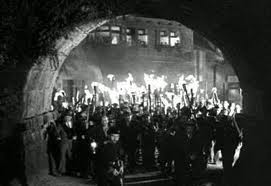
A mob of men and women sporting haute couture ensembles are followed by domestic staff brandishing fiery torches, weed-wackers, and gilded “breaking ground” shovels move at an accelerated pace (note: they are not running; they never run; they simply walk with tremendous determination) between the craggy, overhanging cliffs somewhere near Malibu or the tall, dense sand dunes near the Hampton’s.  They scream hateful epithets like “And you thought Polo was just an after-shave,” or “Only a monster prepares his own taxes,” or “Even a hunchback is beholden to religion for its servile and miserable life.”

CUT TO:

A group of men and women run up narrow, rocky paths or stumble through swallowing, deep sand.  They’re absolutely terrified, and yet they clutch one or two possessions (laptop, picture frames, deed to a house) even though their requires two hands.  You get the sense that they’re clutching all that remains of their life.  Suddenly a heavyset, winded man loses his balance and though others try to grab his free hand, they yell things like, “Let go of the picture,” or “It’s only a college degree!”

But suddenly he holds the framed diploma tightly against his chest as he teeters over the edge and everyone watches as he falls into the abyss tightly holding his most precious possession.

Welcome to December, 2012 if the Republican machine takes hold of the White House.

I think that it’s perfectly normal to ignore distracting noise, especially campaign noise, when 120% of your attention to personal-matters-at-hand is parsed and you’re really not interested in cockfighting.

That is until your private AGI (adjusted gross income) permits political campaigns to assign you a specific economic class moniker. The herding of same AGI’s should get your attention.  Once you’ve been economically branded you begin to recognize topics related to your self-proclaimed monikers (or, sub-classifications) which label behaviors and values, your distinguishing parts, (which you once defended, affirmed, and proudly paraded). These distinguishing parts have been diminished by time into a complex, amalgamated you much less the “youthfully combative sum of your parts” and much more like your mother or father (with very distinctive differences).

Until the amalgamated you becomes campaign fodder, a cadaver dissected in public by wielding derisive displays of contempt and hatred resurrecting foregone battles to right history’s wrongs and to spread fear like an airborne toxin.  How on earth, you think to yourself, have I been put on the ballot?

Because the run for leader of the free world has nothing to do with leading.  It’s become a referendum prosecuting or defending the future of the middle-class.  The American middle-class: devoted family, work ethics, values, respect, you get what you can afford, hard-working, proud, stable, honest, neighborly, caught. . .in the middle. . .of change.

But greed changed all that.  First bankers got greedy, then brokers got greedy, the home owners got greedy, and then. . .lower to lower-middle class were qualified for mortgages on real estate which was falsely inflated to satisfy everyone’s greed.  Families that simply couldn’t afford to buy a home found themselves underwater (owing more that the home is really worth.  In other words sellers, brokers and lenders all told varying degrees of lies and the poor schmuck wanting his piece of the American Dream ended up being the real sucker in the scheme.  But not one banking executive has gone to jail or forced to pay for those lousy mortgages out of their skyrocketing profits.

“Go Ahead,” they urged, “See If It Fits.”

According to results recently delivered to scientists at an annual meeting of the Categorize, Classify, and Typify Society that more than 92% of the American workforce can be identified as bearing the common traits associated with one of only two populations: unaffectedly round or affectedly round.  Of the 92% of American workers, 97.639% fall into the unaffectedly round while the remaining 2.361% not only self-identify with the characteristics associated with affectedly roundism, but maintain those characteristics no matter the consequence or makeover.  But the most surprising statistic was satisfaction: Nearly 100% of both populations felt little job satisfaction.  And as an addendum, most professionals believe that the hole which they currently occupy doesn’t accurately represent them,

It had been six months since the crash and like so many accidents turned a normal life into a new normal life; I’m not saying that the normal was better than the new normal; I’m simply using pre-crash as a point of reference of which to compare. My normal life had all the normal things: A life partner of 23 years named Nick, a beautiful Victorian home, a cute little MINI convertible, lovely gardens, custom clothing, Rolex watch, retirement accounts, money in the bank; all the trappings. But as the old adage goes “nothing in life is free” and I never knew the cost of having all the normal things until June 28, 2008 when I was not one of the normal things; as a matter of fact, I was one of those new normalists substituting for the normal team.

How many of us continue to force a round peg into a square hole only to find it frustrating, angering and eventually impossible? Some of us can manage to get a corner in, some of us trim the excess by dummying down or taking jobs beneath of us, some of us simply place the round peg atop of the square hole hoping one day one of them will change enough to fit.

On June 28, 2008 I finally realized that I would never fit into one of their holes. My roundness wouldn’t even fit into their round hole because much like metric versus english, a wrench which looks like a close fit isn’t a fit at all and simply won’t work.

“You Brought This On Yourself,”

momwashingdishes
My mother’s back: her way of avoiding conflict.

That’s what my mother used to say, her back to me, and her hands wrist deep in dishwater.  I needn’t see her hands to know she was wringing them upon hearing my news; I could tell by the way the muscles in her forearms were flexing.  There were several of these confessions at the kitchen table over the years, and I always found her reaction astonishing.  She was incapable of ever helping me solve whatever dilemma I disclosed.  The scope of my problems were well beyond the dimensions of her upper-flat apartment and any collateral influence her small circle of single-mothers might discover.  No, my mother lived a small, tightly wound existence, and like those gated-communities with elaborate, electronic gates and guard-posts manned by ex-militia, she’d honed the art of deflection, quickly interrupting my admission like a towering volley ball player blocking an opponents spike, by conjuring up the standard retort to unwelcome news, “You brought this on yourself.”

Which in many instances was both honest and obvious.  Most people don’t find themselves in a pickle by being an innocent bystander.  Most pickles are borne of poor planning and even poorer execution.  But not all admissions warrant my mother’s standard suppression.  For instance, the admission that you suffer from a mental illness in which you slide from a manic state to a depressive state as easily as Ferrari’s change lanes on the Autobahn. And that stress is a definite trigger, especially if that stress is a direct response to particular issues, situations, or circumstances.

What I’d like to know is whether other bipolar patients are accused of mania by a friend or relative when attempting to communicate important (and potentially volatile issues), and if so, does your intensity escalate in direct response to their continued defensiveness about the issues you are attempting to discuss?  And if the discussion derails and car after car of well-intentioned-but poorly-stated-examples jump track and pile atop each other deeply burying your initial point, does the person with whom you are now arguing with pull out the trump card, the ace-in-the-hole, the Coup de Grace and draw the conclusion that your passionate (implication: ridiculous) and persevering (implication: absurd) diatribe is characteristically manic, therefore you are literally, ranting like a lunatic, what do you do?  Back off as proof of your sanity (thereby recusing your accusations)?  Or stand firm and mad which guts the rationality of your point-of-view?

I recently cautioned a close friend that, out of desperation, played that card, and immediately quelled my interrogation.  But later, when civility returned, I quietly cautioned him of setting this precedent: “If I’m defenseless or simply tired of fighting, and he is intent at satisfying his blood lust, I’ll shut him up by asserting he’s Manic.”  Because most likely I’m not manic and accusing me of being manic in the context of an argument is cowardly and insensitive.

And lest you’ve forgotten, my mental illness is a disease not a strategy; it’s not my power play.

I’m out of control and therefore, by the very nature of the disease, am incapable of rational thought or reason; and the last thing an irrational person wants to hear is he’s behaving irrationally.  Talk about a dog chasing its tail!

Any thoughts?