The Night My Liberty Was Nullified (Thursday, July 10, 2008)

Thursday, July 10, 2008 started out normally: cotton had been stuffed between my ears sometime throughout the night; my body had gained an enormous mass as well, its weight pulling me deeper into the feather bed, my heavy legs swinging to the edge like cast iron bells; my feet encased in iron felt ready for the ocean floor; I pushed my body upright using arm strength and sat motionless for five minutes in a kind of stupor; a man with no goal; no alarm; no schedule; no deadline. Simply a man with time. And this time continues to tick, on and on, and in this stupor it doesn’t stop, it simply continues to drum, and I am oblivious to its march. In the mornings time fails to exist; there’s simply the stupor and the weight and me, or what I think is me, trying to read the details of an unfamiliar map in poor lighting and without spectacles.

It took two hours to complete my morning routine which Nick and I have outlined on two cards and placed in the bottom edge corner of my medicine cabinet. The cards remind me of the order of bathing: brush teeth, start shower, hair, body, face, shave, squeegee, towel dry, brush hair, after-shave balm, deodorant, patch, hang towels. If I fail to use the list I forget where I am in the sequence and either stop altogether or restart from the beginning. My inability to concentrate on even the most menial activities is another symptom of my depression. I suppose I’m fortunate though, in this fog I find myself in, I don’t really judge the degree of my disability. It’s not as though yesterday I had two legs and today one. This disease is invasive: it’s a brown-out; not quite a black-out, but enough surge to switch off delicate systems and place them in a suspended mode. Next came dressing. The simple selection of items was daunting. Incapable of processing difficult code, I simply grabbed shorts, shirt and sandals and hoped I wouldn’t look like a clown.

I was exhausted by the time I made it to the garden. Nick was there working on a crossword and presented me with a cup of coffee. I opened my laptop and quickly discovered I was unable to concentrate on even simple navigation. Pulling myself up from my chair I hoisted myself onto the sofa and fell back asleep.

During sleep I began to hear the quiet invitation of the river. “Come to the river,” it asked. “Come to the river, it’s quiet here,” it pleaded.

I heard Nick’s voice far away, in the distance, miles behind me, “Harlan,” he yelled. I awoke, looking longingly for the river but all I saw was Nick, “I heard your yelling outside, about going somewhere; where were you going?” he asked. “To the river,” I said, “It was calling me.”

After a number of telephone calls I found myself in our car speeding to the hospital to be admitted. By this time exhaustion had overtook me. My resolve against the disease, its voices, its demons and magic and trickery had ceased. I was a harm to myself. I was in significant danger and unstable and required hospitalization in order to save my life from itself.

Upon entering the hospital the stark reality of mental illness was immediately evident. Once announced that you require psychiatric care you are moved through a well-oiled machine. I was placed in a triage room and asked a simple question: have you had homicidal or suicidal thoughts? A simple “yes” answer thrust my welfare to the front of the line: papers were shuffled, calls were made, registration was completed, body searches conducted, personal belongings and shoes removed and bagged, a personal security guard assigned, and the single most powerful yet profoundly simple right was revoked: my right to freedom. I had now become a legal liability requiring constant supervision in a small waiting room with other psychiatric patients. And I was incapable of leaving without seeing a doctor. I had been incarcerated by my own volition.

I found it impossible to sit in the holding cell with severely psychotic patients: one yelling someone was stabbing her; another rocking and laughing/crying; a third belching and retching; a fourth pacing like a caged cat. I asked to sit outside, right next to the pen. My guard agreed. About two hours into this episode there was a guard shift-change and I was ordered – ordered to get back into the holding pen. When I flatly refused the guards began to don rubber gloves and said, “Don’t make us lay hands on you, sir! Do not make us lay hands on you!” as though I were a criminal. I said, “I’m simply depressed! Christ, had I known it was going to be like this, I’d have simply killed myself!” and Nick and I walked back into the cell.

Nick and I sat in that holding cell for a total of five hours until at last my name was called and we (Nick, my guard and I) were escorted back to an empty emergency examination room. A nurse threw back the curtain and asked Nick to step out while she interviewed me. She was an angel, I thought, looking at her compassionate eyes and heavenly smile. She inquired as to why I found myself at the ER and I explained the days events. I told her that my language got out of hand, I talked of suicide but had spoken out of turn, and I really just wanted to go home with Nick and did not wish to be admitted.

A platoon of doctors came and went and finally I was discharged honorably into the night. It was determined that I was not a suicide risk and would see my personal psychiatrist the next day and that Nick would have to remain at my side until that time.

This mental illness has kidnapped my sanity; it has revoked my right to free thought and happiness; it has sentenced me to life with a chance for parole only if I continue to absorb Paxil at night before bedtime. But even this mindful incarceration, this disease and its disability pales in comparison to the penal colony operating under the guise of patient safety.  Having willfully turned over my right to freedom was the most eye-opening, chilling, humiliating experience of my life and one in which I will not soon forget.

Quality Counts

I recall favorably the first night I spent in my spouse’s garret twenty years ago.  Naturally, I maintain this memory carefully, doting on it like a delicate photograph that’s aging, edges first, a creeping brown border and satellite-like spots threaten my recollection.  There are certain details which remain as crisp as a carrot because their impact struck me with tremendous velocity: his lingering fragrance hidden in the cotton of yesterday’s white shirt, the organization of his morning rituals: washcloth, cream shave, razor, brush.  I remember these sneak-peaks into his privacy because they played important roles in who he was daily.  All men have similar morning rituals but what impressed me, even back then, was his carefully selected instruments.  Many men could care less, but for him it was important to have the precise razor or brush or after-shave balm.

Another time we’d been invited to a business colleague’s home for dinner.  He orchestrated a wonderful meal which reflected skill, passion, and pride in what he presented to his guests.  But most amazing was the absence of commotion, replaced instead by ease and fluidity and sufficiency produced by efficient use of very few utensils.  I never ask for a recipe, but I did ask the secret to his efficiency.  His reply?  Limit yourself to four knives, but buy the very best knives: spend the extra money in the beginning, rather than repeatedly replacing them.

I allow myself the luxury of paying close attention to my private rituals and the tools by which I perform them.  Personal details or items (whether tool, accessory or peculiarity) does someone select?  These very personal choices provide a glimpse of who they really are, who they are and how they behave in private, when no one is watching or evaluating.  These details are the intimacies of an individual.  They’re not declarations or pronouncements or bravado; they’re not obvious, are often found in private rooms (bedroom, bathroom), are easily overlooked as an insignificant article or one of propriety’s niceties.  But I have found them to contain much more passion than everyday items.

Personal details are often sought out or surreptitiously discovered or introduced by way of kindred spirits.  They’re rarely received as gifts because their personal significance is concealed for fear of ridicule by friends for their dandiness.  Cost is rarely a deterrent; if a person has selected a specific item their determination to acquire it is very strong; they’ll scour the marketplace; they’ll participate in auctions; they’ll keep abreast of discounts; and if all else fails they will happily exchange money for the possession or, if it is simply beyond their reach, they’ll step away and always admire the item with the hope of a giddy teenager meeting her teen idol.

It’s possible to obtain objects which are more than capable of performing the same tasks.  For example fountain pens and ball-point pens; Bulova and Breitling watches; thermograph and letterpress stationery.  It’s not the price that assigns value.  Workmanship, materials, design, style, function and longevity all play important roles in my decisions.

A word of caution if the item is categorized as luxury: the old adage you get what you pay for is very important.  A replica of an item is not an inexpensive version of the item.  A replica is, at its basest, a forgery, misrepresenting itself as authentic at a 75% mark down.  If you find a deal too good to be true, it is too good to be true!  If you’re really in the market for luxury items do a lot of homework first; learn everything you can about the item; understand the difference between worth and value; and don’t buy as an investment unless you’re an aficionado.

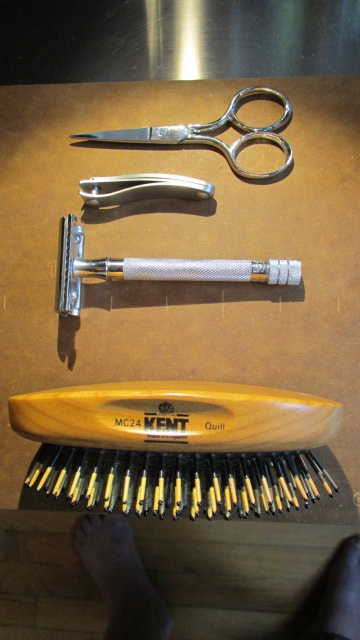
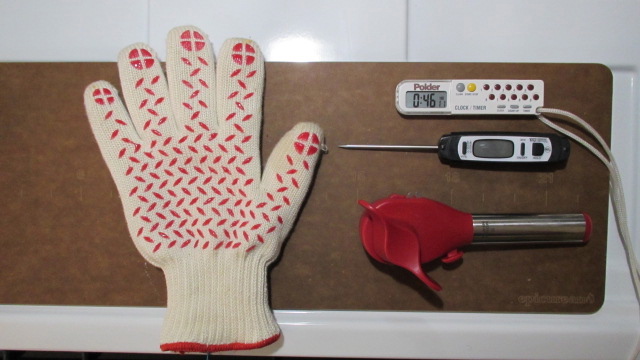
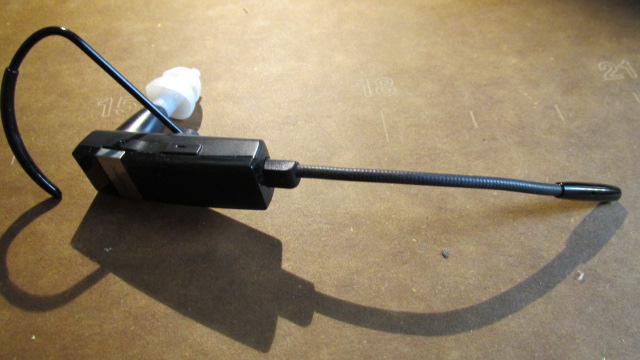
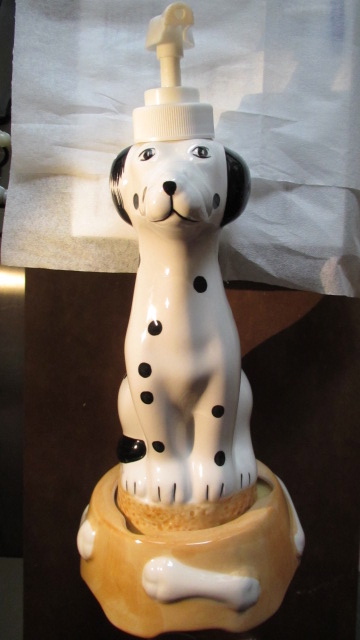
These are my personal details: Grooming: Merkur safety razor, Niegeloh Topinox nail trimmer, Erbe scissors (Solingen, Germany); Kent hair brush (UK); Proraso shave cream and after-shave; Burberry Brit Eau de Toilette; Stationery: Letterpress monarch paper and envelopes, fold-over note card and envelopes, calling card, and return address label; Nakaya Urushi-Lacqured Long Writer fountain pen; Kitchen: Victorinox 10-inch Chef’s knife, 3-1/4-inch Paring knife, 12-inch Granton Edge Slicing knife; ARY Hot Gloves with red silicone grip; Polder Digital timer; Kuhn Rikon can opener; Audio: Etymotic Research HF5 in-ear earphones; Etymotic Research High-Fidelity ear plugs; Etymotic Research er89-2 Bluetooth cell phone headset; General: Fenix LED flashlights; Boker Solingen pocket knives; Barking Dalmatian Soap Dispenser.

Back Then, Ignorance Was De Rigueur

At the end of the 60’s and carrying into the 70’s there still seemed a deep-rooted sentiment: if it’s none of your business, then keep your nose out of it.  Which seemed to work fine for most people.  Of course every neighborhood had its busybody, just as it had its grouchy-keep-off-my-grass-senior-citizen, and bubble-gum-snapping-younger-than-her-bosom-suggests-daughter-of-a-longshoreman.  But by-and-large, if it didn’t directly involve you then you were commanded to stay-out-of-it.  And woe be the kids with clumsy feet: too inattentive or naive to jump when they spot trouble; or those nearest the melee when it explodes, or the small-fry-wanna-be whose taunts often ignite newly produced testosterone because they all will be hauled to the principal’s office for punishment followed by the famous litany of idiotic parental rhetoric: “. . .well, if he jumped off. . .;” “If I’ve told you once. . .;” and the classic “I  could see those <insert surname  here> boys were trouble. . .”   But the message was always the same: mind your own business.

Now, that’s not to say there was a lack of dinner-table rumor-mongering, my mother usually updating us on the goings-on of the neighborhood.  But, if the rumor was rated PG-13 and above, we were given the briefest synopsis, censored beyond recognition, devoid of any example of debauchery, infidelity, or any despicable acts whether or not the “I’m-not-naming-names-neighbor-three-doors-down” was perpetrator or victim.  My mother’s talent for omission was legendary, but her dinner-table-abridging offered very little by way of a storyline, but witnessing her agility at avoiding incriminating details while maintaining a conversational tone was so entertaining that my older brother wanted to call the Watergate crew and offer them her secret of how-to skirt the truth and avoid prison for perjury.  He said he tried but was told they don’t take messages for inmates.

But even spreading gossip was considered a breach of social convention and was practiced with the highest degree of discretion.  I overheard my mother talking on the phone about Mrs. Bowers and her recent loose-lipped huddle at Kroger’s with Mrs. Hanson about boys, booze, broads and a bathtub: to Mrs. Bowers chagrin the broad and bathtub belonged to Mrs. Hanson.  Right there in aisle 5-A Mrs. Hanson’s strong upper lip began to quiver and like a mudslide, her conviction simply gave-way taking her sand-bagged courage with it and Mrs. Hanson dropped to the floor as if someone had cut her marionette strings.

Back then the message was loud and clear: keep your mouth shut! 

And I suppose it was that exact 1960’s deflection of responsibility, respect for authority, and absolute ignorance of any activity which happened outside the euphemistic “four walls” of our family (and home) that created a vacuum of moral accountability.  This social ignorance was the fertile ground from which victims sprouted already marinated in the tenets of civic propriety: keep your mouth shut and mind your own business.  Now add a new genus of Catholic leadership: an indubitable, irrefutable and influential priest whose intentions, if questioned, are defended rigorously by the diocesan hierarchy.  These two social renunciations: bewilderment on the part of the parents and blindness on the part of the Catholic Church created the perfect playground for sexual predators that mocked piety and disgraced through indignity and malice, the Christian image of the protector of children.

We had a predatory priest back in Catholic grade school.  As a pedophile he’d developed quite a reputation and a skillful set of traps which left little, if any scars, except those which appeared years later.  He developed a certain degree of notoriety: A staggering example of the decades-long failure of the Church’s treatment (reflection and counseling) resulting in reassignment or perhaps the estimated number of casualties he produced (across generations in one family).  His ecclesiastic devotion was a stark contrast to his budding reputation as “overly affectionate” or “physical with boys beyond acceptable behavior” so the Arch Diocese of Milwaukee continued to pry his paws away from parishioners at one church (akin to “running him out of town”).

He was hurried over to a safe house for an overhaul: counseling, hand-slapping, celibate reminders, penitence, forgiveness, and then off to some R & R (restoration & repair), placed back into the deck, reshuffled, and dealt to an ignorant congregation of affable and duteous parents who’d bred reverent and obedient children.  Some devote parishioners believed that the affection of a doting priest was reserved for the innocent of the innocents, were venerated by God and anointed (via the local messenger, i.e. priest) with an extra helping of divinity.  I remember hearing that some devoted parents would volunteer their children’s time to vocational pursuits i.e. ironing vestments, vacuuming sacristies, opening the weekly offering envelopes, in order to maintain proximity to the priest should a divine message be received.  But back then, back in 1969, that’s how Catholics behaved because they were taught that a priest was called by God to act as emissary here on earth; and the most important (mysterious, and grossly misunderstood) tenet of a priest’s appointment was his unconditional vow of celibacy (the state of being unmarried and, therefore, sexually abstinent).

And that presumption, that priest’s were not sexual, was the perfect degree of insulation these priest’s and their superiors needed to stave off accusations of impropriety brought to the diocese.  And here’s the revelation:  No matter how impassioned, no matter how unthinkable the alleged violations seemed, no matter that these abominations were reruns from previous parishes, the victim, a child, with nothing to gain (and so much to lose) were often suspect!  First by the parents, then the parish leaders, then when facing the priest in his rectory, and then, if pursued, again face-off with highly respected and very suspicious diocesan officials and the priest (whose interest and adorations became manipulative, threatening, painful episodes and were so outrageous and impossible to prove, that the only logical and least damaging conclusion anyone with any sense could draw:  the child is  exaggerating, misconstruing, or unintentionally and without malice positioned themselves near the priest and misunderstood their physical contact as egregious.

And frankly I don’t know which buckled first: The highly improbable assertion that a child repeatedly seduced a religious official vowed to celibacy or the unquestionable devotion of generations to the Catholic Church (the age-old collapse of a faith in God and a faith in the Godliness of men ordained by Him).  But what it took to shift the burden of proof from the victim (child) to the perpetrator (priest) was a departure from isolation and silence to community and conversation.  When adults decided that blind allegiance to any organization purely based on what that organization tells you to believe is, in and of itself, questionable, was when the fortified walls of some of the world’s oldest and most revered organizations began to weaken.

It’s not what we’re told by leaders (whether religious, political, corporate) that has the capacity to tear this world apart.  It’s what we believe that we’re told.  It’s not the children’s fault that the Catholic Church protected and permitted decades of sexual abuse.  It’s the adult’s fault (whether or not your the priest or the parent or the pope).  It’s an adult’s responsibility to question authority each and every time it violates freedom!

There isn’t one person on this planet that stands above repute.  Except, that is, perhaps the children.

Well, It’s Hard To Say

I have been remiss in posting as of late.  Life (as it did two years ago) became a stubborn child this past week; pouty; immobile until Thursday, when it threw one hell-of-a-tantrum causing wave after wave of disappointment.

Well actually this Life I’m referring to is someone else’s Life.  You might be asking yourself, “Now what-on-earth could T.M. be doing with someone else’s Life?”

I admit that our Lives were manufactured by the same tailor and seamstress, but I didn’t cavalierly grab any old Life from the rack as I dashed out the door only to realize my gaffe as I witnessed my animated hands deliver a precise punchline causing an eruption of laughter from the small, yet long-standing cadre of pals gathered near my bar stool.  Uh-Oh, I thought as I threw back a shot of Jaegermeister, I must’ve grabbed someone else’s life today with immediate regret.  I knew how ill-fitting this Life was, especially while sitting at a bar; what’s the chaser for Jaegermeister?  Pickled ham hocks!

No, it wasn’t like that.  It was more like Edward VIII turning to George VI and saying, “Your bloody stammer will not preclude my abdication!  It’s my bloody crown and I’ll do with it as I please!  When it’s yours, feel free to do as you please.”

So, what does the Gentlemen’s Guide to Etiquette say about “abdicating your Life?”

After Reading This, Stop It or Justify It

Practically every drinking-age adult has, at one time or another, usually while extremely drunk, publicly pronounced their ideas, sentiments, questions, ultimatums, proposals, tantrums or a million different things which, under normal circumstances, i.e. sober, would never eek past their lips.  These are gargantuan declarations!  These are reasons for avoidance, distance, even termination.

And usually forgiven and forgotten.  And rarely, if ever, does the persecution of both the drunk and the debacle continue on for years.

So why can’t people who live with mental illness be granted the same degree of forgiveness after a manic episode that left behind a degree of destruction comparable to that of a bender?

Why is being out of my mind different than drunk out of my skull?  How are the senseless rantings of a brain gone haywire different than the senseless expletives and threats of harm screamed during labor?  Is it easier to forgive mistreatment when you understand the cause and empathize with the sufferer? 

Our society (by-and-large) is hell-bent on maintaining a safe distance, a polite disinterest, and muted intolerance of mental illness by refusing to educate itself.  Does the defense I most often hear, “It’s because they don’t understand what you’re going through,” justify bullying, abuse, denial, exclusion or acrimony?    What is it about mental illness that the majority of American’s find impossible stand?   It’s ignorance; civil ignorance.  If you’re ignorant you’re not required to empathize.  So educated people can mistreat me due to their ignorance of my disease.

Maybe that’s why there are people (who used to be close friends) that remain angry about what I said four years ago while I was losing my mind.  Because they have a right to be as ignorant about my mental illness as they like, but I’ve got to watch my P’s and Q’s so I don’t piss anyone off while I’m in a manic phase.

Why is forgiveness conditional?