Recovery: A Saw Blade and Alpine Climbing (Journal: July, 2008)

I had thought that an increase in medication would signal a decrease in depression. But my psychiatrist corrected my logic and chose two separate metaphors to describe my recovery: 1) A hand saw; and, 2) Alpine Climbing.
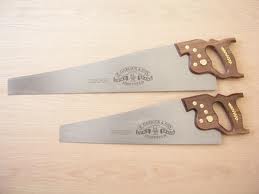
Picture a well-made 26″ cross-cut hand saw with its blade facing upwards.  Don’t look at the teeth but look at the blades carefully honed angle-of-rise as its surface broadens to eventually equal the width of the handle.  And the teeth are hand-shaped on a grinder causing the familiar serrated edge which means there are several contact points (peaks and valleys) along the saws blade.  My mind when in major depression is like a serrated cross-cut hand saw blade. There’s a consistent up hill climb but in order to achieve the handle one needs to live through a number of peaks and valleys.

Similarly, the Alpine Climbing endeavor is peaks and valleys to which I am ignorant: I am not a mountaineer, having lived for 50+ years at or slightly above sea level.  But something odd occurred recently: my sea level suddenly rose skyward and I, lacking any previous experience went tumbling like poor Jill after Jack tripped showboating his coronet.  And then there it was, sea level, way up there, beyond tree canopies, even higher than some clouds.  It wasn’t until my psychiatrist explained that sea level remained fixed; it was I who had tumbled downward, spiraling like bath water down the drain.

From its approach I studied the aspect or face which I would climb to reach my first base camp.  The first leg I climbed alone (except for talk therapy and psychiatric medications) and joined my psychiatrist/sherpa at base camp where he was waiting with our racks.  We left the dark despair and feelings of hopelessness at base camp in mid-July, 2008.  We lightened our load by leaving behind my feelings of worthlessness and the idea that my life has collapsed, I am invisible in my own life and I would be better off dead. We both agreed that we didn’t need to drag those thoughts with us to the summit. We shouldered our racks and tightened the harnesses, checked and rechecked; thus began my apprehensive and cautious attempt to the distant summit of Peak Recovery.  The trek had been an exhaustive challenge across an unfamiliar landscape filled with dark crevasses of suicide and treacherous, newly fallen snow provided a dense foothold for our crampons, but which also hid the setbacks of insufficient dosages. But the activity of climbing and breathing the thin, cold air provided a sense of refreshment and newfound challenge.

Friends of mine and especially Nick have asked why I would’ve been so lucid for so long, then after meeting my psychiatrist it seemed as though my bottom gave out. It wasn’t until this afternoon as I write this entry that the reason occurred to me: I had spent the better part of two years in an utter state of unhappiness; unhappiness in my job, unhappiness in my relationship and unhappiness in my life. Yet, everyone in my life thought everything was swell and marvelous and happy! I had tried everything I knew how, from changing jobs, to self-medicating, to alcohol abuse, but nothing would erase that consistent gnawing pain I felt in my heart, or quiet those scratching, irritating noises in my head. Right up to the end I tried desperately to hold on, to simply hold on to the last end of rope, my fingers bleeding and numb. Until I saw my psychiatrist for the first time and he said, “there’s nothing to be ashamed of when you ask for help. You cannot possibly do this alone.”
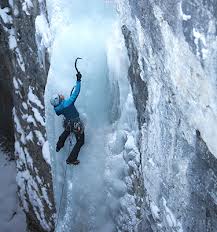
It was then, right then, that I knew the futility of my fight; it was right then that my heart recognized kindness and a serene noiselessness smothered the incessant clamor filling my head.  This epiphany of surrender brought an end to my life as desperation.  When I released my hold my consciousness experienced a forced power-off; a reboot in safe-mode.  When I eventually opened my eyes there stood my psychiatrist who helped me to my feet and said “Now we can start at the beginning rather than the end.  The end which you fought valiantly to avoid never would’ve been avoided. Life starts when labor ends.  We all start on the heels of the end.”

My recovery continues to be slow with delays and disappointments along the way.  And yet, as we stop to rest I tell him of the anger and disappointments in my life. My psychiatrist/sherpa listened intently and then offered the most important advice of all: “Climb this mountain as though your life depends on it, because it does.”

Oomphlessness

It’s odd, this.

All my life I carried some kind of drive, as though the first-baseman-mitt-sized hands of a dad pushes a shy son to join the group; nudging, like the dog’s wet muzzle flips your hand like a pancake in order to be petted; knocked, like the brass-ring a toothless lion holds loosely between jaws, and which falls against a brass plate sounding more like the dinner bell than the formal announcement of a visitor.

This propulsion, like a jet plane, carried me to soaring heights where earth stretched like a night watchman and people, critical to life, shrunk so small so quickly that they hardly mattered.  Wouldn’t you think things of such importance could be seen from above?  Monuments can be seen; impact can be seen; destruction can be seen.  But people or their self-designations like importance or starvation or anger or bigotry or religion or anything, anything they’ve said or thought or threatened you can’t see.  You can see evidence, like ugly scars; at night lights dot the darkness like worn drapery holding back dawn, but some areas appear engulfed in flames, such a wide swath of light that I’d heard it told that the moon, once proud of its subtlety, is thinking of moving on, to Mars or Neptune maybe, a planet looking to adopt a real satellite, not some space junk.

The experts (who, self-admittedly, know very little about mood disorders, and even less about proper treatments) have identified this lack of oomph as a signature symptom of depression.  Ironically, the less oomph the more depressed.

Perhaps people have created a number of different systems all designed to manage oomph.  Clocks are oomph speedometers; birthday’s are oomph reminders; corner offices are oomph autobahn; retirement accounts are oomph cruise control.

Without oomph it would appear that I have no where to go and no reason to go there.  When you live with a mental illness you’re still in the same pool with everyone else.  It’s just that you’re knee-deep at the shallow end while everyone else with oomph keeps swimming back and forth and back and forth and will eventually join you here at the shallow end.  As they pass one or two might’ve noticed your inertia and may ask why you weren’t swimming, do you know how to swim, are you afraid to swim?

Oh no, I reply, I am oomphless; my brain doesn’t produce oomph; but in a world that places a high value on one’s degree of oomph, I think it’s better that I look like I have oomph because everyone that has it, is absolutely convinced that everyone has it, and those that aren’t using theirs are. . .

Are not oomphless.

What It’s Like


Upon awakening I remember that today is just one more day in a long line of days and while I know there’s an end to the string I can’t yet see it.  Still under the weight of Clonazepam I haven’t heard Jenni bounding down the stairs ready for a romp.  This hour or two is what I call my lay-over: I’m between medications neither of which are therapeutic; both of which masquerade symptoms of my mental illness.  Heavy and lethargic I pause a moment bedside to take a 30 second assessment of mood, same as last time, whenever last time was.  My memory of yesterday is monochromatic: I’m aware that things happened, but their details blend into the blizzard; yesterday and yesterday’s yesterday and all their predecessors simply disappear during the night.  Even painful arguments, bad news, anger and disappointments flee and aren’t carried forward, but get stopped at the border; most get turned away; a handful are waved through, arbitrarily, and sit idly, stuck, their reason or purpose kept by officials at the border; memories without purpose are like pieces of truck tire littering the highway; of no use.

My medicine awaits: nine orange pills like little life preservers, taken at three different times throughout the day.  The Teva variety lift you quickly, like a propulsion ride at a theme park, but their half-life is only a few motivated, buoyant hours until the bridge disintegrates beneath your feet and down you go, debris tumbling to the bottom; the lethargy is impossible to escape, like a tar pit or a muddy slope, incapacitated you reach for your next dose.  My goal every day is simply to be productive and purposeful.  Incomprehensible on my own.  I hate the fact that my daily life couldn’t produce if not for these nine orange pills.  But without them depression causes my torso to ache, it demands darkness and silence, it prohibits hope, it sleeps.

As usual, at this hour I’m so tired I struggle to fix dinner, to talk to my partner; watching TV, if I wasn’t eating I’d be asleep.

This is what it’s like.  Probably a good thing I won’t remember this tomorrow.

Time To Grow Up (Part 1 of “Career, What Career?”)

Even though I hold an advanced degree from a prestigious university known for its performing arts alumni, when I arrived in Chicago in 1987 my one skill which could be directly applied to working was typing.  Aside from the awards, the accolades, and the New York literary agent, I was essentially unskilled labor with a penchant for writing.

So what happens when serendipity is redefined, from inevitability to dumb luck; what happens when destiny becomes balls that bounce, cookies that crumble, and no matter how long or how hard I stare, there’s nothing in those damned cards!  On top of which the two of us (that beat the odds (especially “gay odds”) and weathered the turbulent tests of fidelity and loneliness to survive a three-year, trans-atlantic, long-distance relationship) will finally step to the front of the line and impart on one small corner of our American Dream.  We’ll rent our first apartment, gladly accept hand-me-down furniture from in-laws, establish bank accounts so that the perfunctory bi-weekly paychecks will magically appear, one after another ad infinitum  all building to an orchestral crescendo heralding every couple’s ultimate goal: a future of happily-ever-afters!

After a dozen interviews I heard the same inane reasoning:  “I can’t hire someone as educated as you for a job like that!”  So I rewrote (and removed) my post-graduate degree and within two weeks I was hired by a local messenger company answering telephones for $5.29 per hour (1987).  It took four months to develop into a caged maniac; promoted to A/R to photocopy microfiche eight hours a day – it took two months before the facial tics started; traded to Customer Service (at a messenger company, Customer Service is akin to W.C. Field’s dog: we got kicked a lot) where I survived thirteen days shy of one year until a brutal and prematurely cold and sleet-slickened Friday afternoon in early November hammered bike messengers and my phone lines were blinking “Mayday!  Mayday!” when, from the other side of dispatch, some moron kept calling my name like an impatient car horn stuck in gridlock. I actually can recall hearing that last straw snap as I bellowed to the moron a string of expletives which crackled loudly like firecrackers.  Problem was, the moron happened to be Mrs. Moron Owners-Young Second Wife.  Precariously riding the subway while holding a wet box filled with desk items, a pink slip and final check was crappy enough: I was an easy target for the pick-pocket whose style was anything but subtle.

There’s got to be a better way than this, I thought as I walked home from the subway station.  There’s got to be something or somewhere I can apply my skills as a playwright.  Within four months Serendipity and her cousin Veracity knocked on our apartment door with an idea. . .

Today: A Luxury

The most palatable way to describe what happened was breakdown: here one moment and gone the next; as though the circuit-breaker had flipped and all power shut down.  However, there wasn’t darkness; there was light, but a different kind of light; a brightness of light, unfiltered light, new light.  There was pain and heaviness and listlessness; a wet woolen blanket anchoring me, keeping me sullen and stuck.

I don’t recall much of my past though it sits in the back of my mind much like past novels I have read; I recall the characters and the story but its significance has lost its weight; images too, are there, pasted into photo albums and which draw certain emotions, but no longer carry consequence.  Tomorrow and all future tomorrow’s sit in a low ground fog obscuring my footing and therefore I await for tomorrow to come into today before I take my first steps.

Therefore I have today, simply.  I have these twenty-four hours.  I am free to interact and experience this day fully, without the encumbrance of yesterday or the anticipation of tomorrow.  Today stands alone, like an oak or black chestnut tree in its glory: everything is new to me.  Even time slows as I have no activity which reaches backward or pulls forward.  Today is my focus and my luxury.