The Crisp Season of Change

At last it’s arrived, like a visit from my favorite uncle who told tales of unimaginable childhood freedoms (having been raised on a fruit orchard farm).  At long last it’s arrived, the darkness of dawn mornings and the dimness of late afternoon twilights.  Finally, finally it’s arrived, the season of the apple and the pumpkin and hot cider.  And thank God they’re gone, days that grated like my cat’s yowling or, tortuous days akin to the incessant presence of my just-turned-teen sister and her coterie of screeching and cackling teensters (defined as a pimply, high-pitched, recently teened and obstinate-as-hell, alien transmutation); those chronically simmering days followed by feverous and languid nights, the forecasted but broken-promised breeze failed to arrive like those letters from your summer camp romance.  Relief has clocked-in, elbowing out a tireless summer which dropped anchor like a battleship of fervent seamen and remained well past dry-docking the sailboat.  The ease of fruit pie-like single-layered simplicity (shorts sandals shirt) has given way to the time-consuming layered bundling like wrapping grandmamma’s Chatsford teapot for shipping, encasing oneself with layer upon shedable layer.

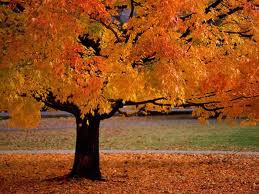
I’ve recently concluded that I prefer seasons of change (Spring and Fall) over seasons of suffering (Summer and Winter).  I enjoy the initial imperceptible adaptations which occur in the early spring and early fall: Spring’s first cautious knock of Snow Drops; fall’s tentative nips of brusque breezes.  Of course these trepidations soon give way to Spring’s salvo of elevating stems topped with an eternity of color and Fall’s broad strokes of vividly colored canopies which subtly cautions us of life’s temporal cycle.  The seasons of change also highlight our world’s overwhelming beauty and diversity; it’s also a testament that every piece of (what we call) life patiently waits its turn to express its individual magnificence, it’s solo, when the world recognizes its achievement during the season’s glory!
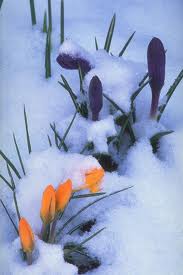
If only we, as part of nature, would patiently wait for our turn to shine with respect for each other (and our colorful diversity).  And that we, as a Snow Drop or a stitch in Autumn’s auroral quilt, are an irreplaceable verse in life’s grand narrative.  
The (Un)expected Outcome(s)

Fear stops me like a two by four to the back of the head.  Real fear.  Not anxiety, not nervousness, not hesitation.  The kind of fear that rushes to a moment of quiet like children playing musical chairs.  Real Fear.  Life or Death Fear.  My fear has been the writers-block-in-residence for the past fourteen days.  My fear was a distraction; then my fear developed into an annoyance; then fear and I were bedfellows, fear being the last thing at night and first thing upon waking that knocked on my mind’s front door.  What is my fear?  I’m afraid I’m dying.

As you know, in November, 2008 I was classified as bipolar.  This determination included established and biased reasoning for my life on a seesaw: I was predisposed to life as a yo-yo by genetic roulette.  This milestone was marked by a simple psychiatric ah-ha.  Their specialty professes its ideological conjecture as formative and their ignorance evidenced by the devastating news that they can’t offer a cure, or even a likely protocol.  Instead they offer an indifferent forecast of pharmaceutical trials often resulting in failure and cautioned of a likely future weathering mania-driven misjudgments followed by the doomed deciension into a grey melancholia exacerbated by the digestion of manic destruction and attempted repair.  And then there’s that overcast statistic regarding effectual suicides: 40%.

Fear immediately hit the brakes and sent my entire life crashing headlong into the windshield. Fear sat immobilized by truths: I’ll only be free of madness if I’m one of four out of ten.  Fear’s rationale was logical and pragmatic; why endure decades of depression and delirium only to draw the same conclusion?  I’d decided to ignore Fear’s advice and try, one day at a time, to continue my membership in the sixty percent club.

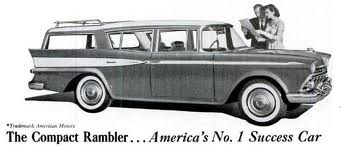
But two months ago despite my determined effort to avoid that 40%, a wholly separate yet equally incurable physical condition reappeared. Its symptoms are aggravated and impairing; inexplicable weight gain (45 pounds in six weeks); undermining fatigue; breathlessness following exertion; intentional harboring of fluid forced from arteries and causes swelling and immobility.  But just like the Rambler my father owned in the early sixties, no one could determine the cause of the knocking.  That is, until the 1959 V-8 wagon blew a cylinder and sent my father’s first love to every car’s destiny: an auto scrap yard seen from the interstate.  Will my erosion be similar?  An unidentifiable murmur like a whispered yet repeated rumor one day erupts and immediately my initial litany of enigmatic symptoms is sensible, albeit much too late for prevention and most likely too late for intervention.

I’ve been blindsided by these illnesses and worse, hobbled by their improbable cures.  This simply was not my life’s expected outcome.  Or so I believed until very recently when I remembered what a mentor once suggested as a remedy to writer’s block:

“Writer’s block excuses lazy writers; Write about what’s preventing you from writing; Suddenly you’re mindlessly writing and only when you pause do you remember what was prohibiting your expression, but you can’t remember why.  When you can’t write, you must write.  The living face death every day — and then go about living!”

Dog Days of Summer

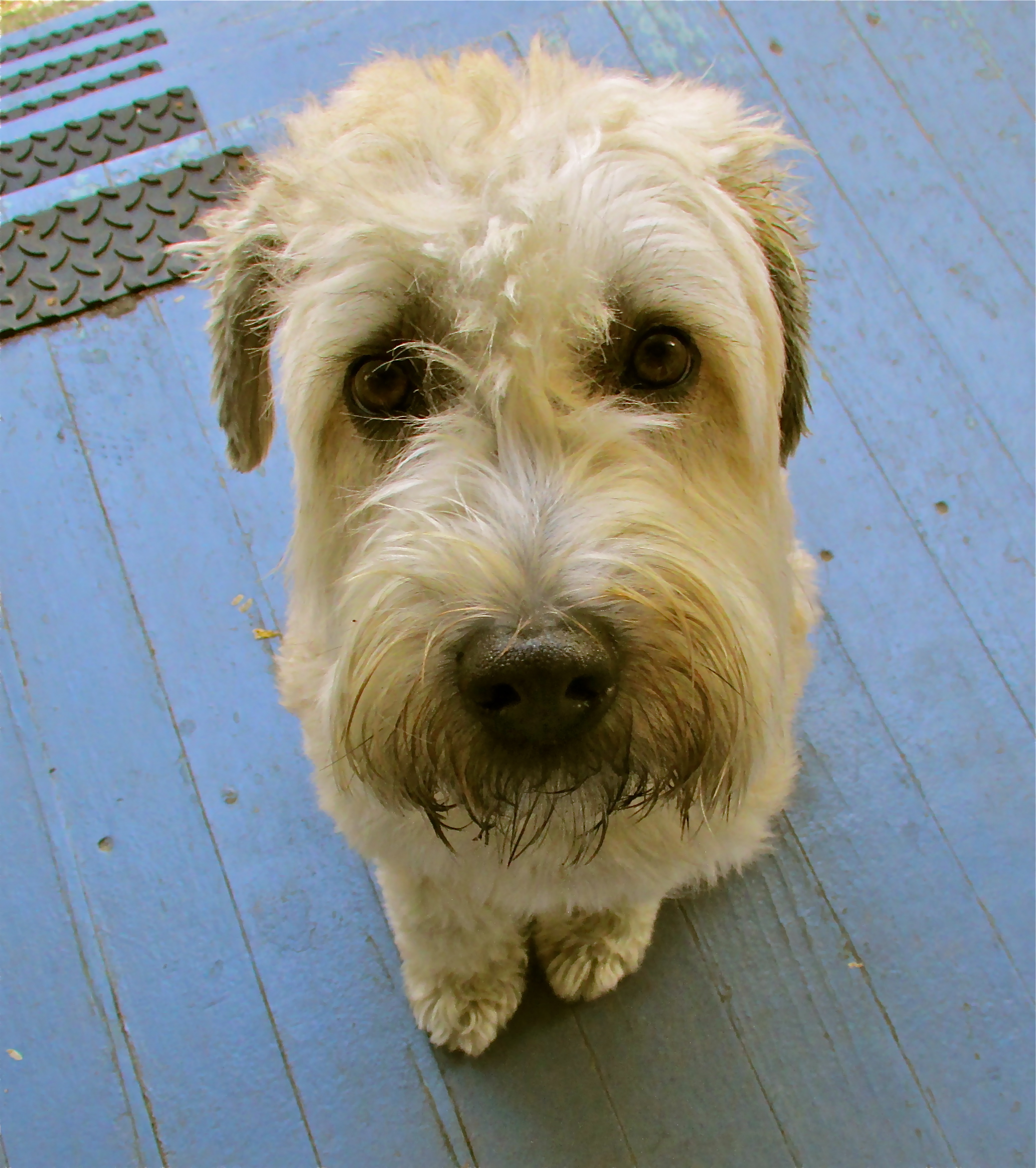
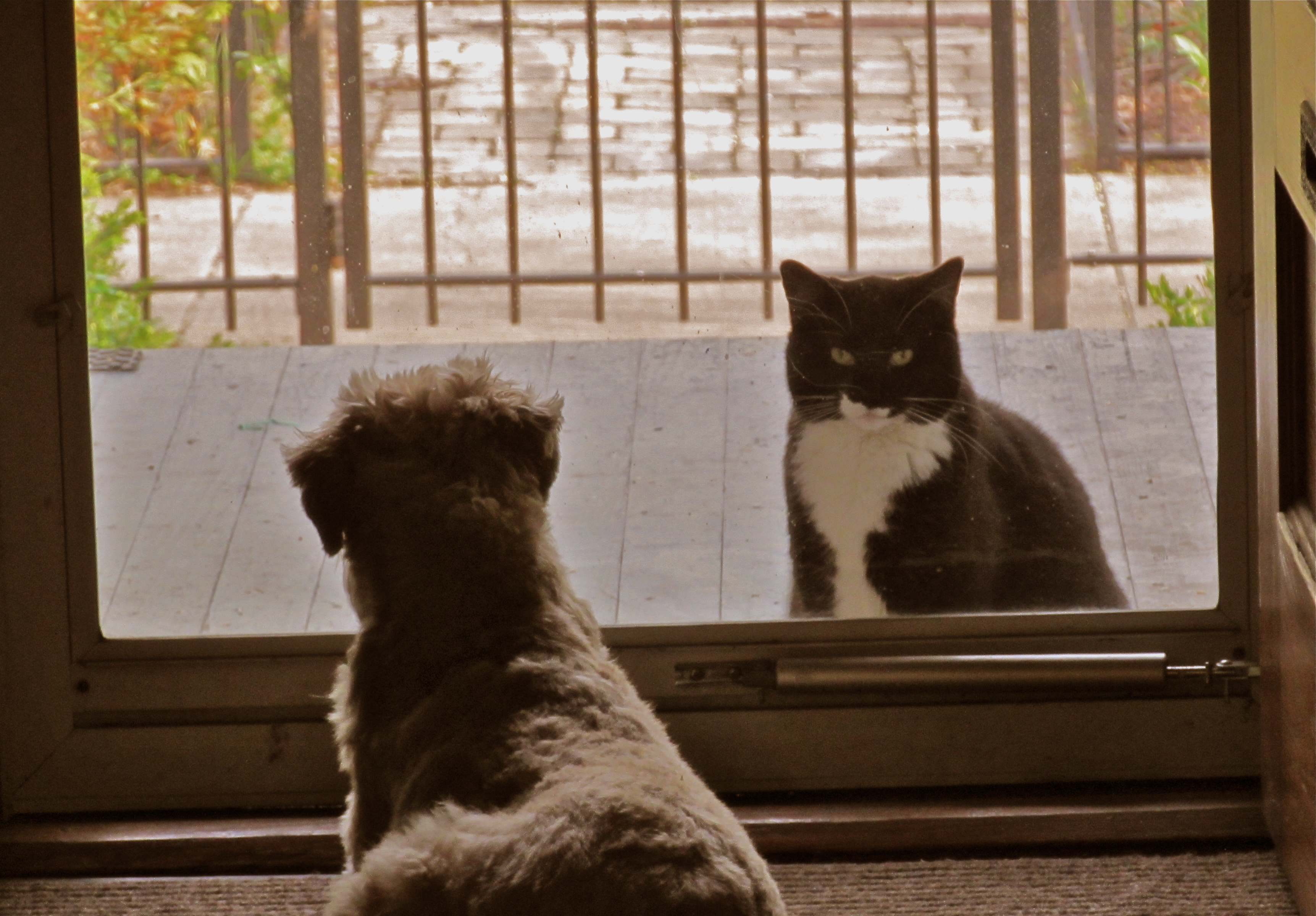
The eastern sky was more black than blue by the time I took Jenni for her last walk of the day.  There happened to be just enough wind to cause unzipped jackets to billow and flap like fitted sheets pinned to clothes lines.  As our days shorten I switch on the flashing red bicycle light which I’ve affixed to her collar alerting motorists and pedestrians alike that a very purposeful Wheaton Terrier was strutting like Travolta in “Saturday Night Fever” so make way!  I too, had a beacon; an LED flashlight was tethered to my cane, its purpose was purely selfish.  It bathed the path with a subtle pale blue glow providing me with some degree of vision when we passed beneath the thick canopies of mature trees which flank both sides of the road.

It’s very generous of Jenni, allowing me to tag along on her thrice daily adventures!  Apparently she discovers artifacts and remnants left behind by ancestors perhaps, or, most likely the Dabner’s dachshund’s deliberate defection of its defecation which made me wonder if there’s a big difference between what dog’s leave behind and what smoker’s leave behind.

Overall the evening’s constitutional was deemed a success!  Jenni met a few new behinds to the neighborhood.  I met their owners and we made small-talk while our pets introduced themselves.  When my mood is heavy the mere chime of Jenni’s dog tags are like herald trumpets announcing a great adventure is about to begin.  When I see her so happy about a walk, it’s actually infectious, and I too suddenly become part of her circumnavigation of our block just like Magellan.

Some people think dogs smile.  I think dogs live their lives anew each day.  I’d smile if every new day was, in fact, a new day.

Wouldn’t you? 

The American Lexicon Is Fundamentally Evolutionary

We make all kinds of decisions every day.  I’d assert that a tenet of life is decision.

Decisions are based on a fundamental understanding of options.  These options are often presented through language.  Our language has mirrored our intellectual expansion during the past twenty years (since the commercialization of the internet), but it’s also exponentially increased the likelihood of poor decisions versus good decisions.  And not for the reason you’re probably thinking about right now.

It’s not that our decision-making ability has declined, it’s that our American English lexicon has been stripped of standards and replaced by Idiolects which are varieties of a specific language unique to an individual. In other words, how an individual (all individuals) use parts of speech specific to the language they’re speaking.  Huh?  Are you suggesting that we’re using vocabulary generally accepted but individually defined?

Yes, for example: I’ve had a great evening; would you like to come up for a night cap?  Twenty years ago you had a pretty good idea that the night cap meant some form of refreshment and m-a-y-b-e. . .But today a night cap most likely is prone to interpretation, and depending on the interpreter, the night cap might be the evening’s last tango which spins and dips and clutches its way to dawn, or the night cap might be the gut-wrenching sound of starboard iron scraping along larboard iron in a dense fog on a moonless night in the frigid north sea.  Both invitations were accepted but only one, the former, seemed to coalesce.  The latter was respectfully disharmonious and most likely eliminated any tandem future.  Okay, so what?  What’s this got to do with me?

We’re all assuming that what we say and what they hear are synonymous.  But in this day and age of individuality, identity, and me-me-meism which is reinforced constantly through internet-based social networks and the hardboiled, pragmatic, and mundane personal updates which someone somewhere will proclaim as unique (dismissing our language’s standard usages) and applaud their meism misuse (interpretation) of vocabulary, and whammo!  A word or phrase which held a generalized meaning now has a bastard son.  This phenomenon is known as Language Evolution Based on the Idiolectic Intersection of Individual Adoption.

So what’ve you been blathering on about?

Simply put: What you know you’re saying (standardized use) is being heard as something different (Idiolectic use).  Perhaps if communication was bipartisan (the talkers and listeners understand that their communication is reshaping the English lexicon) then we might lessen misunderstandings and agree to use a mutually standardized language in order to foster a sense of unity.

I Had a Car Like Me Once

QUESTION:
If you were a car, what kind of car would you be?

An old classic?
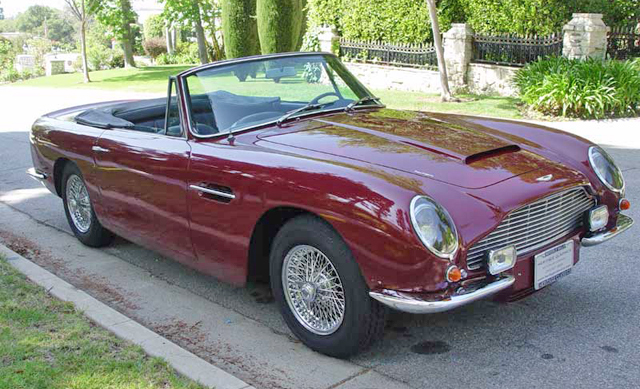
Something like the 1967 Aston Martin convertible?

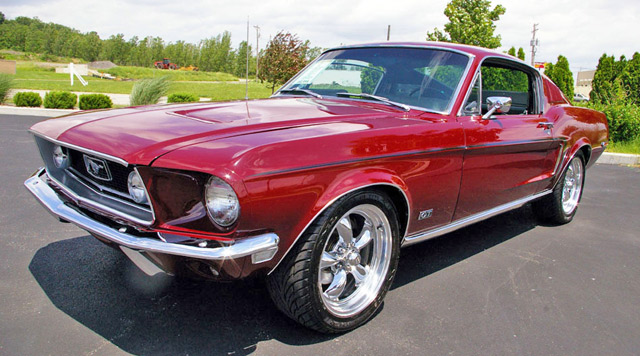
Maybe the 1968 Mustang GT Fastback?

The car most resembling how I’ve been feeling recently happened to be our third car, the car like me.  We’d bought it used from some co-worker whose face (much less his name) has breached my mind’s curved horizon.  Used is a benevolent description: a couple of common idioms would aptly depict its constitution: . . .On its last legs or has one foot in the grave.  Desperation left little choice: I needed any car that worked to travel the 40 miles daily to a necessary yet useless and under paying job that freed me from beneath the spiked heel of a former employer who was a notoriously brutal, hateful, and infamously outspoken attorney that beguiled jurists to award her clients the largest financial settlements in state history.  Charm was never wasted on me, though.  Neither was persuasion.  She wasn’t the boss, she was the owner: I wasn’t her assistant, I was her indentured servant.  It was I who felt the eviscerating pressure from the pointy toe of her blah-blah collection of blah-blah-blah’s high-heeled shoe.  So I grabbed at the first job even though they’d lowball me and I’d need to buy any car.

The car, a foster child of sorts, had been purchased then passed on, then sold and sold and sold until the gravely agitated owner whispered the auto’s immediate availability for cash only.  And so I became the hastily orphaned auto’s benefactor.  Until that one day arrived (the last bead threaded onto the string), when, as no surprise, another function failed and the pertinent idioms came to mind like eerie messages in the Magic Eight Ball: Are you throwing good money after bad or Are you pouring money down the drain?  It all boiled down to a decision which I couldn’t face, so just like I did in the sixth grade when I was up to bat and had to face the gawky southpaw with a screaming heater which always caught the inside corner, or the lower back of a cowering batter, I fainted on my way to the plate.  I was removed from the game and poor Gerry Schmidt took a fastball in the kidneys. Procrastination is a conundrum best dealt with tomorrow.

But while I’m not a car, I’m spending more time in the shop and starting to string beads.  Unimaginable maladies have begun to appear (besides hum-drum mental illnesses): Edema of the lower extremities; rare forms of heart failure; pulmonary compromise; and rare to boot!  My conditions occur in less than one percent of patients!  Rare is a good thing, right?  Not in medicine.  Rare means few, few means no research, no research means no remedy.

I’ve been feeling lately like a mid-year 1983 Buick which runs, starts in the coldest Chicago winters, and does what a car should do.  Yet recently I’ve heard more pings, louder knocks, noticed oil spots on the garage floor, and the lighter no longer glows orange.  That’s why I’ve been posting less frequently: I’m fatigued, terribly sad witnessing this decline, and frightened.

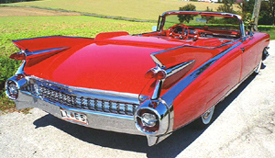
But to end on a bright note, here’s the car I’d be: a 1965 Cadillac Eldorado!