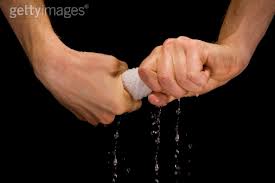
There’s Cold and then there’s Cold!

THERE’S COLD . . .

001-pondsCold cream, the cold shoulder, cold as ice, having a cold, Cold War, stone-cold dead, cold sores, knocked-out cold, cold (sexual disinterest), cold feet, cold turkey, cold water man (a Scot that doesn’t drink alcohol), cold cuts, cold storage, catch a cold, “…has a cold…” (politician, diplomat, or executive is fired), cold air, quit cold (die suddenly), cold fish, cold snap, cold as a cucumber, “blood runs cold” (profound apathy for others), cold blood, cold storage, cold cereal, cold sweat, cold front, cold comfort, “cold hands, warm heart” (lovey-dovey idiom), “cold, hard cash” (nothing’ but greenbacks003-coldone (US currency printed in green on one side starting in 1862; aka “Legal Tender”)), “feed a cold and starve a fever” (axiom first used in 1574 as a remedy for fever), “a cold one” (euphemism describing an ice-cold beer), “… she’s a cold one (or, cold tart)”, (disparaging expression used by a refuted suitor when describing a woman disinterested in his unmannerly advances), “cold as a witches bosom [sic]” (vague expression of “cold” in varying contexts), cold, hard facts (1. Empirical Data generally used in the sciences for unquestionable facts; 2. My mother’s off-handed remark whenever I 004-coldduck1was dumped by a girl (implying “. . . silly boy, you’ll never get a girl so face the facts . . .”)), cold case (police investigation which remains unsolvable after exhausting every lead), cold plate (recipes served cold), cold duck (originally invented in Detroit in 1937 and was based on a German legend. The recipe calls for one part Mosel wine, one part Rhine wine with one part of Champagne,002-coldshwr2 seasoned with lemons and balm mint.), knocked cold, leave out in the cold, out cold (unconscious, intoxicated, sound asleep), stop cold, take a cold shower (an often futile attempt to quell the hormones associated with lust). 

AND THEN THERE’S COLD . . .

004-below01“Cold enough for you?” I kept an eye on my thermometer all yesterday. The temperature remained steady at -13º F which coincidently is the precise temperature of ice cream. I’ve lived in the Northern Hemisphere all my life, so I’m very familiar with the winter season: days are shorter, sun remains low on the horizon, a cloudy and snowy day is likely to be warmer than a clear day (clouds capture heat and the sun’s too low on the horizon to radiate warmth added by clear skies which allows ground heat to rise upwards), all dogs love snow, we all wish for a “White Christmas.”

006-lifebelow0“If you don’t cover your ears and nose they’ll be the first to freeze, next will be your fingers and your toes,” At -13º F frostbite can begin immediately to susceptible parts of the body such as: tip or whole nose, ear lobes, fingers, and toes.  Common warning signs include: progressing numbness and a loss of sensitivity to touch. The affected area will also tingle or feel as if it is burning. As the condition worsens, the pain begins to fade or eventually disappear. Frostnip (which I experienced only yesterday on my right hand)) is a superficial freezing of the outer layer of the skin which turns white as blood circulation decreases, then stings, and becomes quite painful. Frostnip can occur during vigorous outdoor activity and you may not be aware of it until you stop exercising. 
001-sledding2“Come in from the cold!” was a chorus sung ritually during winter by my aunt that babysat for us. She knew what was coming when I refused to wear the childish, insulated, and nylon snow pants. So she kept vigil at the window which overlooked the school yard for that first warning sign of a child wearing cotton pants and sliding and falling into drifts of snow. I never noticed that my wet pants quickly yielded to the cold. Suddenly my bottom half was encased in ice which would stick to my legs. Every step home felt like pen knives were being poked into my legs, my bottom, and my feet. When I stepped into the house and started to undress my aunt hurried to stop me, then quickly placed me right in front of the heat register and turned up the heat. Then she handed me a cup of hot cocoa saying, “Drink that cocoa slowly because as those pants begin to melt, so will you. And honey, you ain’t felt anything that hurts like that!” Then over her shoulder as she walked away, “And tomorrow those snow pants won’t look so childish!”

001-girlwithdog1 “It’ll be a cold day in hell!” before I cross the street to schmooze. The other night I saw a leggy woman walking an equally leggy dog wearing a unitard (the long-legged dog was wearing it not the leggy walker, who’d resemble an Olympic swimmer languidly strolling down a snowy sidewalk on a blustery eve). I and my dog crossed the street beneath the guise of doggy introductions. After they’d had their bouts of butt-ery I finally asked the woman, “what on earth is your dog wearing?” Her Tsk, followed by the 180 degree hair toss followed by a voluminous, lung-filling sigh told me that our humorous repartee was chilly when her answer was dipped in the patronizing tone fondue, “Why, it’s a Unitard, of course; cold dogs are a reality. They’re all wearing them in Lincoln Park. But I suppose way up here in . . . in Roger’s Park . . . “ to which I interjected, “Lady, are you lost? This is Edgewater where, believe it or not, our dogs wear fur coats in winter and in summer we relish our hot dogs!”

← Back

Thank you for your response. ✨

Summer’s Surrender to Fall


aa-drapes

Moments after awakening, your verve ignites the hope of one more day of Summer and you fly from bed covers sticking your landing on chilling quarter-sawn floors like Mary Lou Retton. Skating across the frozen floor you throw open the curtains (as if they were silken chenille drapery hung casually in your Latin Quarter Pied-à-terre) waiting to be awash in dawn’s low-horizon sunlight.

Disappointed, the monotonous Gray Gang rolled into town minutes after midnight like lawless gunmen in frontier westerns. Intimidated townsfolk peeked through barren curtains and set about fortifying their modest homes: Searching for gaps in windows and beneath doors they stuffed the clefts with thick, woolen remnants similar to pre-dawn dog walkers that shelter themselves behind fleece and neoprene.

The liberated leaves figure-skate about my feet then streak skyward caught in a draft like summer kites and the floating dreams of a child:  All at once they’ve coagulated into knee-high tempests which zig and zag like adolescents chasing each other at noon time. Colors flash against skies of blue or gray or ashen citrine patch quilts. These October skies challenge the manufactured, yet awe inspired Independenceaa-leaves Day fireworks. The path, covered in a thoughtless arrangement of patterns and color like ballroom carpeting, have been crushed and watered and dissolved into an ingress of mislead and slippery shortcuts. In the day’s dusk, from afar the drained and disheartened scraping of pasted leaves to sidewalks which coincidently echoes the desperate sound of your repeated scraping of an overcooked and decoupaged fried egg from your sister-in-laws idyllic and maniacal “Panicured,” (the cookware’s equivalence of a mani-pedi).

That handful of cooled late summer sun slips through desperate fingers like sand, and jabs through gangways, half-naked trees, and slowly hibernating perennials. Yet each slice of sunlight reminds one of that perfectly chilled Cosmopolitan, sipped, as passers-by were evaluated, or that push-up pop and root beer float enjoyed during a devastating humid evening, or slightly and lightly limed key lime pie savored beneath Mrs. Landowski’s heirloom Sycamore that breezy summer afternoon. We hope we can squeeze just one more day of memories to keep our hope inflated, like the aa-boytireboy two doors down who’s anxiously and devotedly pumping a chronically flat rear tire is wholly disinterested in the waning blossoms and bye-bye of blue birds and tumbling bumblebees all which undoubtedly signify Summer’s surrender to Fall. But if we cease pining for what is lost and watch that boy two doors down, we might learn a lesson which the earth has known for eons:  Summer is but one season in four, four which may not be idolized as Summer, but which bring changes that tickle nature just like a favored uncle or aunt might’ve brought penny treasures which I adored.
And like the forever flattened tire that the boy two doors down finally acquiesced, try as hard as you might, we’re simply observers of a world that remains true to it’s own change of seasons, or, if you will, its life’s purpose.  What might our world be if we expressed an unwavering commitment to who we are and what we do?


My Penned Invention of the Pen Invention (repost)


It would prove to be one of the most remarkable events to fall into the lap of England in   the 1930’s. Even Sir Thomas Cartridge, the infamous historian, essayist, and reputed hawker of odious innuendo was aghast when he said, “Everyone familiar with this tragic and despicable crime certainly expected him to be found guilty. But even judicial scholars were non plus: no one had an inkling that an incidental consequence caused by an accidentally stowed and unfortunately uncapped fountain pen which predictably bleeds if it touches any absorbent material, would influence the most harrowing murder trial in fifty years.   The Daily Telegraph and The Guardian immediately blamed the pen makers asserting through editorials that the fountain pen design had remained literally unchanged since Nicolas Bion first described them in 1807.  The pen makers quickly accused ink firms of altering their inks’ characteristic by employing diluted formulas that produced inks lacking gelatinous properties.  If needed, pen makers would blame their customers, insisting that a consistent discharge of ink by a nib pushed absent-mindedly into textile is an accepted (if destructive) characteristic which sensible owners attempt to avoid.  Therefore, it is my opinion that the barrister’s distraction caused by the importance of his closing argument overshadowed his gentleman’s grooming, without malevolence pocketed the fountain pen which immediately enjoyed a degree of notoriety (and sales) normally bestowed upon articles belonging to aristocracy.  It’s as if he’d dropped a jet plane into his pocket!”
To what was Sir Cartridge referring?  An extravagant and utterly preposterous event of the 1930’s: The common ink pen was borne on the heels of a legal decree: The Royal Courts of Justice abolished the use of fountain pens in every courtroom in Great Britain.  Parliament added that the newly invented practical and leak-proof pen would be the only writing instrument sanctioned for official use in every governmental building of Great Britain.


The calamity started just after the lunch recess of an infamous murder trial and the sudden appearance of an embarrassing stain which continued its growth like an algae bloom beneath the front pocket of an expensively tailored white cotton shirt belonging to and draped upon a notorious barrister from London. The barrister who, it is told (in hushed tones lest you be accused of slander), that the verdict of guilt had nothing to do with his impressive (and lengthy) closing argument which meticulously and repeatedly outlined the precise order of events.  The barrister’s timeline was so thorough that whatever doubt lingered in the far corners of the courtroom had been swept away like cobwebs.


The shameful guilt could almost be seen atop the plump, rounded shoulders of the torturous, adulterous, and maniacal MP who, it was alleged, kidnapped a prominent debutante from a society ball, trussed her up like a common farm animal ready for slaughter, bludgeoned her to unconsciousness, then drove her to a vermin-infested garret atop a saloon on the East End.  She remained imprisoned for a fortnight and each afternoon the MP would appear in the pub and with gluttonous abandon, he ate and drank himself into a repulsive and monstrous stupor, and dragged himself up the back alley stairs, unlocked the bolt, and repeatedly forced the delicate young woman to participate with or perform for him heinous, bestial, and inhumane acts which included demonic rituals, chanting, and minutes before he strangled her with the sash from his MP gown, he branded the young woman’s breast with a mark which closely, was almost identical to the stain on the barrister’s front pocket.


Jury members were quoted after the trials conclusion that the increasing stain resembled an apparition of the brand suffered by the victim, and that it was impossible to ignore, for even a brief time, or explain its appearance as a leaky fountain pen, when the leak didn’t appear until the very moment the barrister mentioned the brutality, causing the MP to leap from his chair.  As police subdued and removed the wailing MP, the barrister turned back to the jury who, at the same time, uttered an audible gasp, followed by a scream, then a shout as a dozen arms flew into the air and pointed at the haunting image displayed upon the barrister’s shirt.  The courtroom quickly dissolved into utter chaos as jurors ran from the courtroom and some incredulous men leapt over the railing and attempted to strip the barrister of his shirt, optimistic that it would fetch a tidy sum from someone indulgent in such macabre items.


From that day fountain pens were banned from courtrooms across England and the first stationer able to manufacture a pen whose ink was safely sealed in a chamber and distributed in incremental volume only when in use, was sure to win the patent and the incredible wealth which would quickly follow.


As the anniversary of the fountain pen’s exodus approached, rumors began to circulate that the Judiciary acted beyond its dominion when it issued the restriction, and continues to defend its authority successfully whenever a challenge is brought before the High Court.  England’s De La Rue and Conway-Stewart pen companies, as well as France’s Cartier and ST Du Pont, Germany’s Pelikan and Montblanc, and Italy’s Omas and Visconti all concluded that the solution required a combination of distinct and precise components: a cartridge, ink, and a system by which the ink could be laid upon the writing surface at the exact volume to ensure a consistent line.  These accomplished, fastidious and resplendent pen manufacturers were perplexed: never before in the history of handwriting were the makers of pens required to reconsider the importance of ink and its transference to the paper as their conundrum.  Ink had always been considered declasse, pedestrian and hackneyed.  Suddenly they’ve acquired relevance and attention and thusly required the world’s greatest maker’s of pens to invite them to participate in this befuddled exercise.


The common and convenient ballpoint pen emerged from an unlikely location, a small town on Cornwall’s North Coast that hugged the jagged cliffs carved by the Celtic Sea.  Citizens of Bawhl Point (between Boscastle and St. Gennys) were stout, good-humored, and straightforward Englishmen.  Hardened by their generational resolve to survive the harrowing conditions of England’s southern tip, an isolated peninsula which stretches three hundred kilometers out to sea, and constantly exposed to the full force of the Atlantic’s prevailing winds.


John Gahter IV, the eldest of five brothers and sisters, and assumed heir to the Gahter and Sons Ball, Valve and Pipe Manufacturing Company had recently been contacted by a local chemist, F.H. Inkes.  While conducting his business, Dr. Inkes used a technology which required small, spherical particles to be integrated into an easily replaceable plastic ball-check valve which, while under incredible pressure, would release a steady and predictable volume of fluid onto a row of glass slides placed on a rotating table which turned clockwise every six seconds.  Dr. Inkes wanted to know if Mr. Gahter and his manufacturing company could develop such a valve, and if so, could they manufacture a consistent quantity per month?  Mr. Gahter was intrigued and would discuss its possibility with his engineers and plant manager.  He promised to contact Dr. Inkes within a few days to inform him of his company’s decision. If Mr. Gahter and his employees were absolutely sure they could manufacture the valve then he and Dr. Inkes could further discuss all the business particulars.


Dr. Inkes was an analytical chemist whose expertise was well-known throughout England’s small number of chemists who utilized an uncommon technology, High Performance Liquid Chromatography (HPLC) to separate and identify compounds suspended in common liquids.  The information discovered during these tests were extremely useful to chemists, especially those conducting research involving complex and indistinguishable compounds.  Until recently when high-ranking officials at Scotland Yard and a few football executives learned that urine samples subjected to HPLC would separate and identify individual elements (of which may or may not interest them).

It took Mr. Gahter and his company two months to perfect the valve which Dr. Inkes requested.  But in the process, the two men made a startling discovery: fluid can be distributed at a consistent rate when pressure is applied, and the margin between the sphere and outlet must be perfectly calibrated to the viscosity of the ink.  Mr. Gahter and Dr. Inkes were awarded the patent for the steel ink pen and, of course, shocked most of Europe, and as Parliament promised, their ink pen was quickly distributed to all  governmental buildings throughout the Empire.

A reporter from The Guardian reputedly asked Mr. Gahter and Dr. Inkes what name was given to their invention?  Mr. Gahter replied, “It’s called the Bahwl Point Pen,” and Dr. Inkes quickly added, “And the first model is named after my good friend, John Gahter; “the Gahter” pronounced J-A-H-T-E-R.”


Nothing More, Nothing Less

image

Of all the words of mice and men, the saddest are, “It might have been.” ― Kurt Vonnegut

My regret, as it relates to an incident which first occurred forty-five years ago, is a testament to the idiom, “What goes around, comes around.” It suggests that my intermittent regret is atonement for the pleasure discovered so many years ago. This regret appears when loneliness is in full bloom; this deep seated crater, evidence of a familiar collision between bond and betrayal. It’s then, at that point of emptiness, that my pleasing recollections tease like Saturday double-feature matinees. The collection of memories occurs as thirst, my unquenchable devotion; or reappears every once in a while like time’s patina on my beloved silver tea service.

I was hoping for a magnificent catharsis upon my reconciliation of the incident and my fractional culpability; that my written admission might forgive years of verbal omission; that truth is lighter than shame; that recollection isn’t always significant and time’s forgetfulness would diminish the episode in the tent to childhood antics. But that humid summer night awareness arrived like an overdue letter, the content of which landed like a heavyweight’s right hook to the kidneys burying his fist deep so as to eventually become a part of me. But that is not the case. Instead of a breeze wafting past my memory and snagging itself on the thin fan blades of time, I discover that recollection and the question of responsibility are loans against my character, and which will one day, demand to be settled. That is, someday everyone will confront actions which involved someone else to determine what fraction of the incident belonged to them, and what, if any, reparations they needed to make. I’ll pony up whatever it costs to finally discharge this forty-five year debt. And yet, I remain suspicious as to the degree of honesty, because truth is an All In bet played foolishly by amateurs then followed by ruin. The same with truth; uncovering white-lies is hardly threatening. But to declare my behavior publicly after four decades of denial is dangerous and alienating. We as a society avoid the truth: Just tell me what I want to hear and keep the truth for Mr. Jones, nothing more and nothing less.

image“Let’s not burden our remembrance with a heaviness that’s gone.” – William Shakespeare

It was a torturous July night, one which promised cold fronts: instead Mother Nature kept Hot and Humid to work a second shift; it was hot and quiescent and a blanket of humidity wrapped itself around the tent like a gauze dressing. A bright summer moon shot its light through the opened, netted windows and collected at the foot of our sleeping bags. ‘Ihe only sound was the whisper of a passing Impala or Nova as it whispered down Lapham Street. Pete and Jimmy were fast asleep on their half of the tent; Jimmy laying on his side, Pete on his stomach, both facing the wall. David and I were both lying on our backs staring at the tents’ nexus. The heat kept chained dogs to bay for relief; thank God for their suffering as it was the only distraction rescuing us from Serendipity; Our slow, repetitive breathing, and perhaps the scratch of a bare foot on nylon. Calm to kids was known as bored and bored kids look for action. But calm with David was breathless. Perhaps we fell asleep; perhaps I turned on my side to face him and found him naked; perhaps it was all an accident; perhaps it was a cosmic collision, a misdemeanor in which one of us crossed the double yellow line of personal space and found ourselves in the middle of an adolescent fender bender.

Perhaps it was calculated; perhaps appetite and thirst were presented at auction to the highest bidder; perhaps I signaled to the Great Auctioneer in the sky my silent bid and purchased a lifetime of homosexuality. But in reality it was, simply, memorizing David. Naked. Nothing more and nothing less.

image“We rarely regret of having eaten too little.” –Thomas Jefferson

I don’t know if it’s my self protection but I need to complicate the simplicity of this moment: as though my whole life were riding on this one throw of the dice. I need to turn this into something larger than life; a Busby Berkeley production filmed in Panavision or CinemaScope; a film directed by Cecil B. DeMille. I was in desperate need of an epiphany; I ransacked my memory for the appearance of an oracle; I hoped for a deity’s prophecy which I could present to friends and family foreshadowing my unexpected interest in the physiques of men? Christ, there must be some significance that I can assign to the reruns of a deteriorating memory which has been nailed to my consciousness for twenty five years? It can’t possibly be as simple as being mesmerized by Jim’s baby brother’s exhibition of arousal. It can’t be naïveté when David rolled to his side, pleased by my curiosity. it can’t be as careful as two boys fingers dancing along ridges of goose-flesh. It can’t possibly be as innocent as that. Christ! It could have been any boy, any night, any chance glance. And I cannot remember if I touched David or if David touched me or what we did, if anything, while we were naked. Or if we just laid there undressed and studied each other. It seems hard to imagine that David and I would have merely laid there, inactive for ten minutes. It seems plausible that there was activity. But if there was, I cannot remember it. And yet I was fascinated. Much more than curious, I was drawn, I could feel my attention consumed, my hesitation devoured. It wasn’t that he was completely different than I, it was that he was simply different than I. He was thin and lean, I was husky; I was dark haired, hazel eyes, he was blond and blue. All I knew was that I wanted to have a body like his, and if I wasn’t going to have a body like his then the next best thing was to get my hands on as many bodies like his as I could.


Those Damned Little Pills

amanandpill

For the very first time since I swallowed my first 20 mg. tablet of Paxil four-and-a-half years ago, I finally understand why so many people living with mood disorders stop or want to stop ingesting those damned little pills. Those little pills, like slap-happy lovers, amend their  promises of change immediately after they’ve failed you once again.  One more chance?  One more try?  We’re narrowing the field; one day we’ll strike the right chord, just have patience.  Patience?  What patience?  NAMI (National Alliance on Mental Illness) reported that adults who live with serious mental illness die 25 years earlier than other Americans . . .

Imagine yourself standing next to the Greyhound bus to say good-bye to Hope as she takes a window seat, looking at you detached and hopeless2indifferent.  Your worst fear is happening: That Greyhound bus is leaving you utterly Hopeless.  Hopelessness is a loaded .38 in the nightstand on your dad’s side of the bed; hopelessness is impressionable and interested in alternatives; hopelessness implies that the rough-housing and agonizing conflict you’ve accepted as life is all yours, pal, so grab some gloves and climb into the ring!

Eighty-sixed and cast aside, people with mood disorders are often adrift and desperately clutch to any buoyant object to preserve the credo of the awringingdowncast, that missing people like you are rescued.  But there is no rescue.  Or search.  No one even noticed you were gone.  But then serendipity zips past on her jet-ski waving and reassuring her return. Immediately you squeeze and squeeze again until every bit of blue sky is wrung from her fly by.  You weave strands of hope into bonds of promises and cling to them for their six-week trial, hoping your wholeheartedness created the perfect environment for the mood stabilizing drug to speed down your arterial on-ramp and slide into your bloodstream, easy-sneezy!

Nope.  Nothing.  Nada.  That bitch Hope and her batty cousin, Serendipity played you once again for the hapless Sad Sack, the lunatic adrugcompdesperate for clemency, the believer of broken promises in the form of a pill.  Those damned little pills!  The pharmaceutical industry’s great hoax endorsed by psychiatrist’s, dispensed by Pharmacists, and dutifully swallowed with some water and a handful of hope.  Hope that it’ll take; make a difference; do something; ease my burden; make me laugh.

At my desk 30 minutes after waking, the gravity of hopelessness, fatigue, and apathy plunge my mood underwater; the depressive side of bipolar ajetleads to chronic pleas for the manic cavalry to save the day.  Hold on, I mutter to myself, Just hold on for the pills; they’ll carry you far away from despair. Into my mind’s ground fog I wander further out on the pier when a carefully apportioned packet of dextro-amphetamine salts (think F-22 Raptor Fighter Jet in a mach-1 vertical climb); mood-stabilizer (think the F-22 Raptor running out of gas); and anti-depressant (think glider) are swallowed to ensure mood stability.  Followed by a pair of diuretics to reduce significant edema caused by heart failure and pulmonary hypertension.  At last I down two pain medications and one muscle relaxant for back and knee pain associated with recent weight gain caused by heart failure and venous insufficiency.

How did life become a scene from Soylent Green?  Not so long ago I’d lounge sleepily awaiting the skipping return to bed of my spouse.  Now mycomforter mornings are strict regimens in a very specific sequence to assure all medication has been ingested.  I too, would like nothing more than to flee from this pill-filled merry-go-round so-called Life and run back to that sanctuary of pressed sheets, downy comforters, famished pillows which swallow everything, and quiet, inside-joke laughter reserved for those blessed with wellness.

Instead, every morning I sit at our kitchen table despising those damned little pills.