I became Harold’s (my father’s name) youngest son when he was forty-nine years old. Forty-nine today isn’t what it was in 1958, especially when you lived life full bore. By the time I became conscious of his presence (three years old) he’d already begun his initial descent. He had the looks of Walter Cronkite, the physique of Jackie Gleason, the temper of John McEnroe, the contempt for women of August Strindberg (Swedish Playwright and infamous misogynist 1849-1912), the alcoholism of Johnny Cash, and a creative and innovative mind in the areas of electrical and mechanical engineering.
There were just two of us (me and my older (2 years) brother. That is, until 1972 (I was 14 years old), when the dirty laundry was aired: Our father had a previous marriage which produced two daughters and a son. As I recall I was excited by the prospect (kind of like the “Brady Bunch“) and my brother was apprehensive and quite angry. The confession of a first marriage only occurred because the eldest daughter had the strong desire to discover what happened to her “real daddy.” The first wife’s precept that no one was to try to find their father until she had passed was strictly enforced and subsequently honored by all. She passed in the early 70’s after which the eldest daughter’s search began. As to why our mother or father kept this secret and never disclosed anything about it is anyone’s guess.
The marriage bond between my father and mother was broadsided by the wrecking ball in 1963 when the County Sheriff appeared at our front door to serve our dad his notice to vacate immediately which, we learned later, was a bitterly contested condition of their divorce. From that day on and until the day he died he expressed a cruel, ruthless and chronic acrimony and rancor toward our mother which he publicly and conspicuously displayed, especially when we visited on Sunday afternoons. I don’t know if his brutish and vengeful behavior during our visits was aimed at my brother and I, or if he thought we’d run back to headquarters and repeat verbatim his vitriolic euphemisms such as “that god-damned pollock” (those were the only words he ever used to reference her). I think his ruthless contention began after his first wife deserted him in the middle of the night with the children and his business partner and their business’s assets liquidated to cash. The few things he treasured had fled in the night leaving him alone and penniless.
But he was not the victim; he was the perpetrator.
As I was to learn later in life, my father lived fast! It took me a number of years before I could admit that my dad had already been someone else’s dad before he was mine. What’s more, he was dad to three kids and husband to some lady some place and neighbors and club members and tavern buddies and business partners and customers all of whom I would never meet, but of whom meant very much or very little to him, and this whole other life never ever in a million years, not even for a split second ever imagined that somewhere some day in the universe there’d be Harold’s youngest child telling you their life story. Well, until the age of fourteen I thought Harold being my dad was a one-act play; I was shocked to discover that there had been an earlier play, a one-man production entitled The First Dad is the Real Dad penned by his first family, which unbeknownst to me, devolved my one-act into a superfluous epilogue found in ancient Greek dramas.
Yet there were earlier chapters, when he was practically barbaric; young and handsome and strong and libertine. Chapters in which he had pockets stuffed full of youthful immortality and adventurous hunger. Chapters which bore great resemblance to the stories of Hemingway or Faulkner or Steinbeck. Chapters of male bonding and passage: acquiring the finesse of fly fishing; developing the patience of a deer hunter; learning how to set up camp. Chapters about acquiring mechanical and electrical skills when combined with his creativity conjured up devices which awed his employers. It’s these chapters that are out-of-print, those few siblings able to remember have long passed, names of friends or places or dates abandoned. It would seem that my understanding of who and what my father really was would be conjecture, similar to explanations of figures in portraits painted by famous artists.
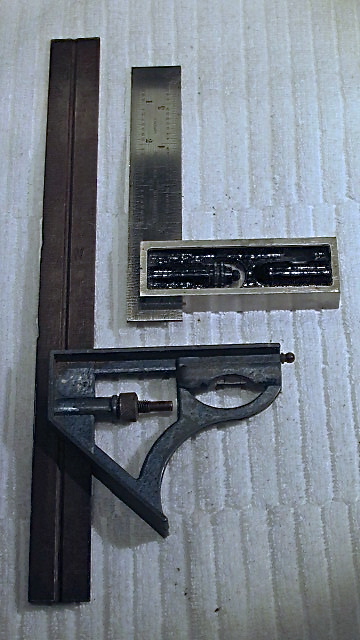
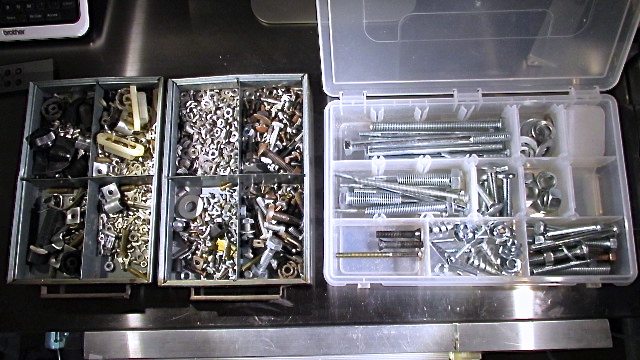
Except, there was one trail which we’d never bothered to follow: a couple of phenomenally heavy boxes which contained an enormous array of hand tools, parts, components, knobs, fuses, and rust. These boxes had been buried in my brother’s basement for years, neither he nor I had any practical use for them. In fact, they reminded both of us of particularly painful memories when both of us declined our dad’s invitation to study drafting in high school (and therefore follow his life’s path) and turned our attentions to the performing arts. That was when I could feel my father’s pride drain from him as though he’d just been gutted. But fifty years later, after I endured a break down and was determined to entertain my curiosities and creativity I spotted the art of wood working. And I read a passage: “A Woodworker works wood with hand tools, he doesn’t machine wood with power tools.” And so began my acquisition of various tools, all with specific purposes, and some which looked distantly familiar, as though I’d stumbled across them long ago but didn’t know what, if any, use they’d have. What I didn’t understand then, I clearly understand now: Context was missing; meaning was missing; purpose and use and technique and discipline and understanding were all missing the first time, as an adolescent, I had found them. But today, as I work wood with my hand tools I finally understand my father’s native language. A language of tools and imagination and creativity. A language of applied science. A language which died the same day he did.
But it’s been rediscovered and is as important to me as the discovery of the Dead Sea Scrolls. I finally understand the language he’d been speaking, how he saw his world, what he’d use to solve problems, and why he was so devastated when my brother and I impolitely snubbed his advice about drafting class and joined glee club instead. And while I’m overjoyed to finally uncover a common thread uniting me to my dad, it’s also bittersweet: It’s a reminder that he’s gone and a wish that I’d give anything if he and I could, for just one day, sit together in my work space and “talk shop.”
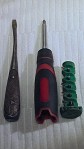
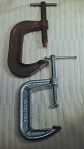
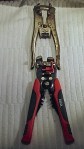
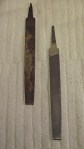
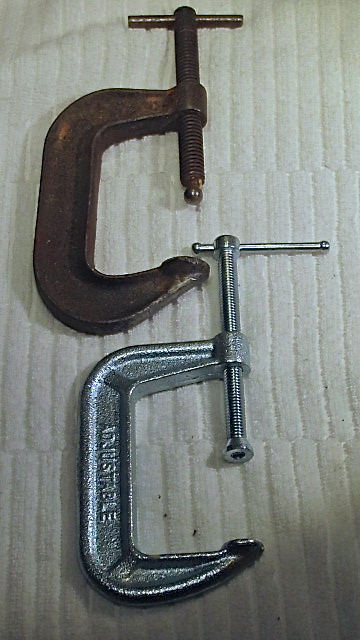
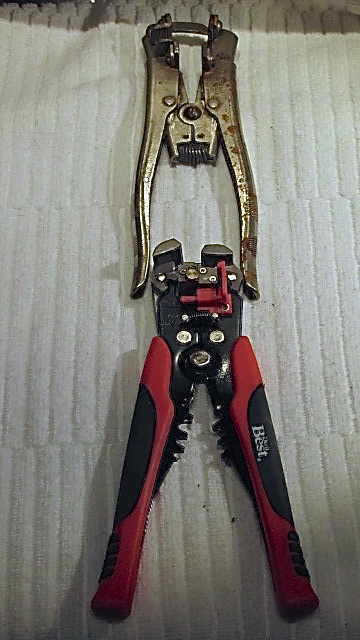
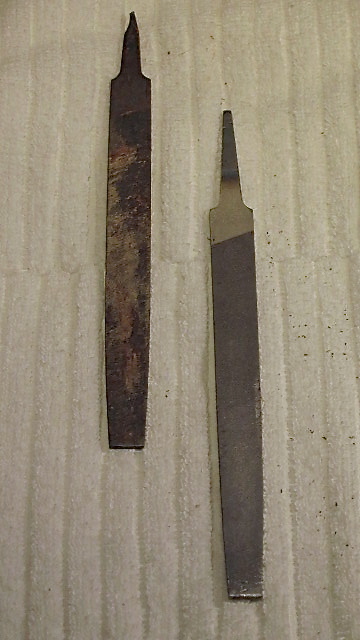
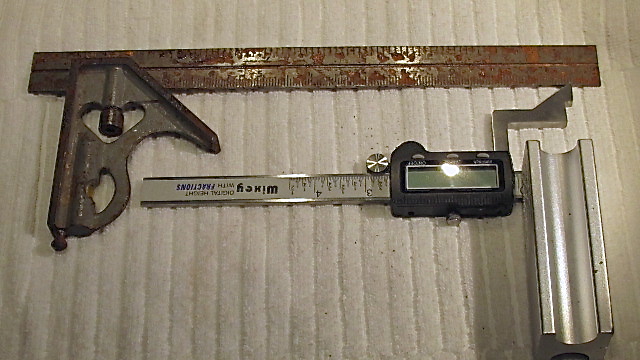
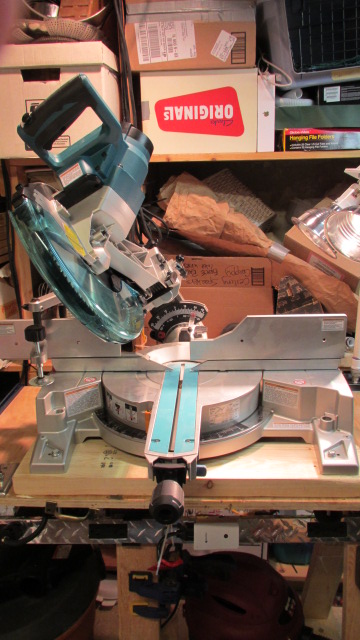
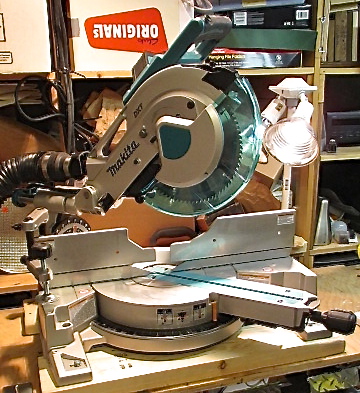
The attached pictures show my dad’s tool at the top or the left and my tool underneath or to the right of his.
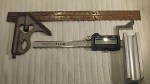
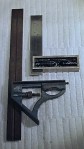
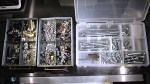
0.000000
0.000000
 , strike out, airline, stitches, lipstick, heartbreak, failure, beer, hangover, diamond ring, varsity letter, loss, win, marriage,
 house, flat tire, hook line and sinker, kids, grand kids. Yet these moments shaped us like a sculptor’s tools; these moments pop up like toast reminding us that life is really what we’ve learned by living. Those children and adults abruptly had their lives erased like lessons on a chalkboard.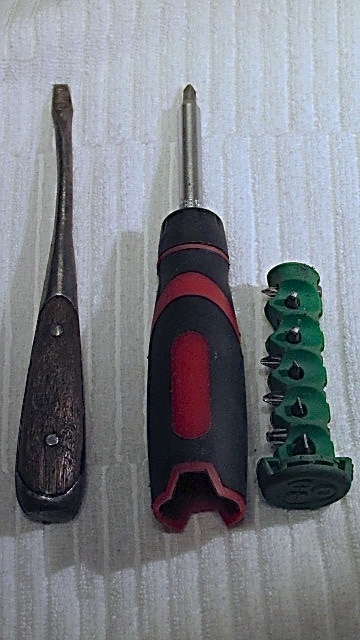


 HARLAN DIDRICKSON