After 50 Years, I Can Speak My Father’s Language

I became Harold’s (my father’s name) youngest son when he was forty-nine years old.  Forty-nine today isn’t what it was in 1958, especially when you lived life full bore.  By the time I became conscious of his presence (three years old) he’d already begun his initial descent.  He had the looks of Walter Cronkite, the physique of Jackie Gleason, the temper of John McEnroe, the contempt for women of August Strindberg (Swedish Playwright and infamous misogynist 1849-1912), the alcoholism of Johnny Cash, and a creative and innovative mind in the areas of electrical and mechanical engineering.

There were just two of us (me and my older (2 years) brother.  That is, until 1972 (I was 14 years old), when the dirty laundry was aired: Our father had a previous marriage which produced two daughters and a son.  As I recall I was excited by the prospect (kind of like the “Brady Bunch“) and my brother was apprehensive and quite angry.  The confession of a first marriage only occurred because the eldest daughter had the strong desire to discover what happened to her “real daddy.”  The first wife’s precept that no one was to try to find their father until she had passed was strictly enforced and subsequently honored by all.  She passed in the early 70’s after which the eldest daughter’s search began.  As to why our mother or father kept this secret and never disclosed anything about it is anyone’s guess.

The marriage bond between my father and mother was broadsided by the wrecking ball in 1963 when the County Sheriff appeared at our front door to serve our dad his notice to vacate immediately which, we learned later, was a bitterly contested condition of their divorce. From that day on and until the day he died he expressed a cruel, ruthless and chronic acrimony and rancor toward our mother which he publicly and conspicuously displayed, especially when we visited on Sunday afternoons.  I don’t know if his brutish and vengeful behavior during our visits was aimed at my brother and I, or if he thought we’d run back to headquarters and repeat verbatim his vitriolic euphemisms such as “that god-damned pollock” (those were the only words he ever used to reference her).  I think his ruthless contention began after his first wife deserted him in the middle of the night with the children and his business partner and their business’s assets liquidated to cash.  The few things he treasured had fled in the night leaving him alone and penniless.

But he was not the victim; he was the perpetrator.

As I was to learn later in life, my father lived fast!  It took me a number of years before I could admit that my dad had already been someone else’s dad before he was mine.  What’s more, he was dad to three kids and husband to some lady some place and neighbors and club members and tavern buddies and business partners and customers all of whom I would never meet, but of whom meant very much or very little to him, and this whole other life never ever in a million years, not even for a split second ever imagined that somewhere some day in the universe there’d be Harold’s youngest child telling you their life story.  Well, until the age of fourteen I thought Harold being my dad was a one-act play; I was shocked to discover that there had been an earlier play, a one-man production entitled The First Dad is the Real Dad penned by his first family, which unbeknownst to me, devolved my one-act into a superfluous epilogue found in ancient Greek dramas.

Yet there were earlier chapters, when he was practically barbaric; young and handsome and strong and libertine.  Chapters in which he had pockets stuffed full of youthful immortality and adventurous hunger. Chapters which bore great resemblance to the stories of Hemingway or Faulkner or Steinbeck.  Chapters of male bonding and passage: acquiring the finesse of fly fishing; developing the patience of a deer hunter; learning how to set up camp.  Chapters about acquiring mechanical and electrical skills when combined with his creativity conjured up devices which awed his employers.  It’s these chapters that are out-of-print, those few siblings able to remember have long passed, names of friends or places or dates abandoned.  It would seem that my understanding of who and what my father really was would be conjecture, similar to explanations of figures in portraits painted by famous artists.

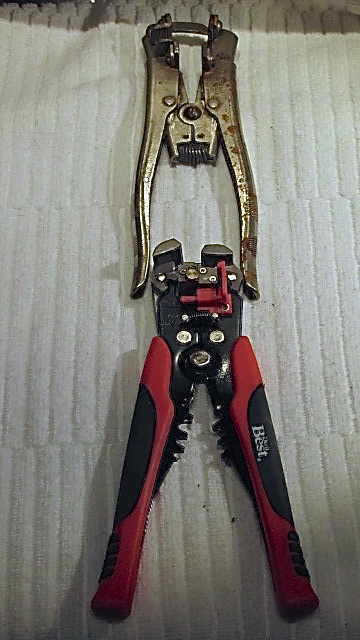
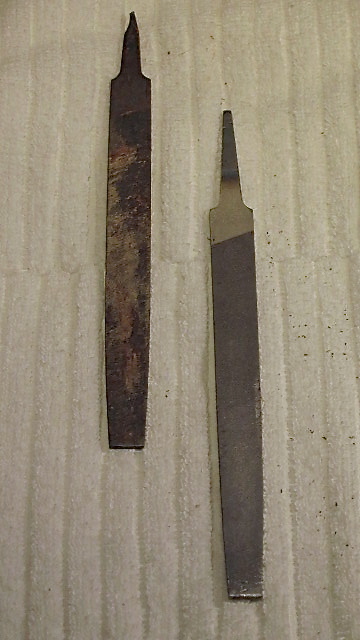
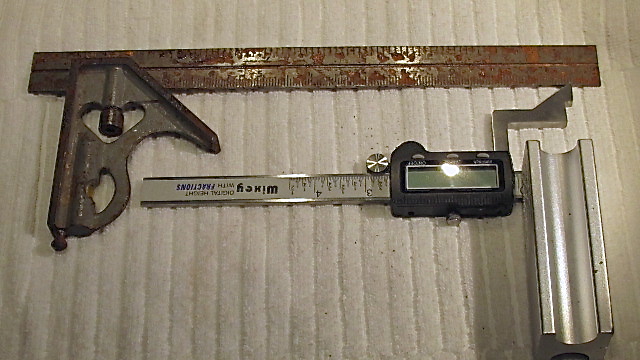
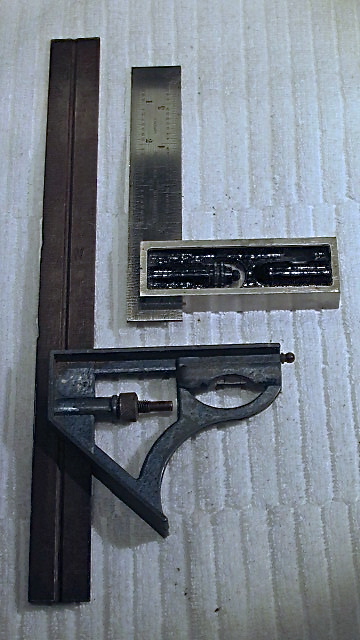
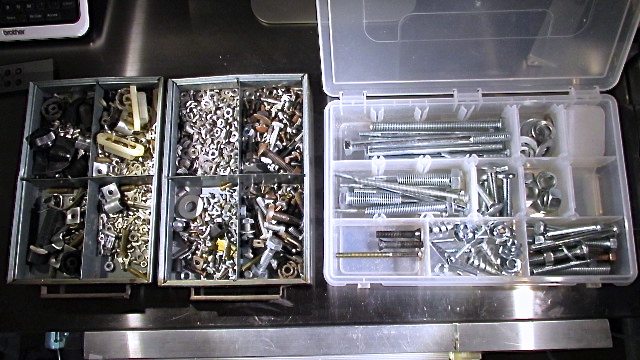
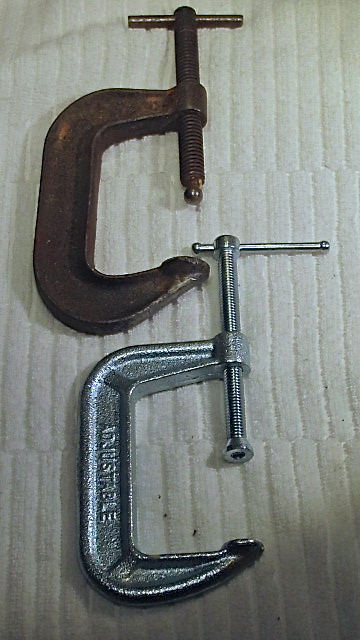
Except, there was one trail which we’d never bothered to follow: a couple of phenomenally heavy boxes which contained an enormous array of hand tools, parts, components, knobs, fuses, and rust.  These boxes had been buried in my brother’s basement for years, neither he nor I had any practical use for them.  In fact, they reminded both of us of particularly painful memories when both of us declined our dad’s invitation to study drafting in high school (and therefore follow his life’s path) and turned our attentions to the performing arts.  That was when I could feel my father’s pride drain from him as though he’d just been gutted.  But fifty years later, after I endured a break down and was determined to entertain my curiosities and creativity I spotted the art of wood working.  And I read a passage: “A Woodworker works wood with hand tools, he doesn’t machine wood with power tools.”  And so began my acquisition of various tools, all with specific purposes, and some which looked distantly familiar, as though I’d stumbled across them long ago but didn’t know what, if any, use they’d have.  What I didn’t understand then, I clearly understand now: Context was missing; meaning was missing; purpose and use and technique and discipline and understanding were all missing the first time, as an adolescent, I had found them.  But today, as I work wood with my hand tools I finally understand my father’s native language.  A language of tools and imagination and creativity.  A language of applied science.  A language which died the same day he did.

But it’s been rediscovered and is as important to me as the discovery of the Dead Sea Scrolls.  I finally understand the language he’d been speaking, how he saw his world, what he’d use to solve problems, and why he was so devastated when my brother and I impolitely snubbed his advice about drafting class and joined glee club instead.  And while I’m overjoyed to finally uncover a common thread uniting me to my dad, it’s also bittersweet: It’s a reminder that he’s gone and a wish that I’d give anything if he and I could, for just one day, sit together in my work space and “talk shop.”

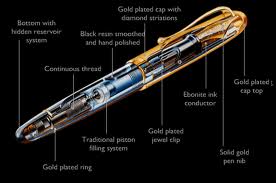
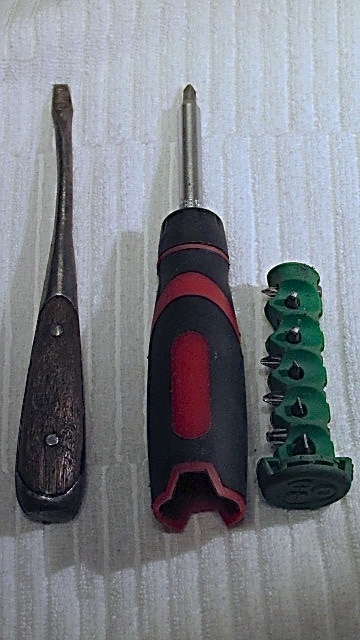
The attached pictures show my dad’s tool at the top or the left and my tool underneath or to the right of his.
Mental Illness: Metaphorically Speaking

It’s like a rain delay during the sixth inning of the seventh game of the World Series

It’s like everyone else forgot your birthday;

It’s like dining alone in, what was, your favorite restaurant;

It’s like all your clothes turned into varying shades of gray;

It’s like, who cares?

It’s like, I Want My Life Back!

It’s like a clogged drain.

It’s like I never heard the punchline.

It’s like the weariness of a fourteen mile boot camp hike.

It’s like losing your sense of smell.

It’s like living senselessly.

It’s like being stood up in a crowded restaurant without your wallet/purse.

It’s like sunny days, wagging tails, and giggles from children are intolerable annoyances.

It’s like being unhappy for so long you’ve forgotten what happiness was.

It’s like your friends don’t call as often.

It’s like vanilla, just vanilla, only vanilla, vanilla.

It’s like time’s hands got tired, quit, and moved to Florida.

It’s like there used to be normal, but now there’s this new normal which isn’t better or improved; the new normal is the generic of normal.

It’s like that dull ache of heartbreak.

It’s like the Dead Sea (lowest), Antarctica (coldest), and Macquarie, AU (cloudiest).

It’s like this every day.


March’s Centerfold of “Gimme Wood”

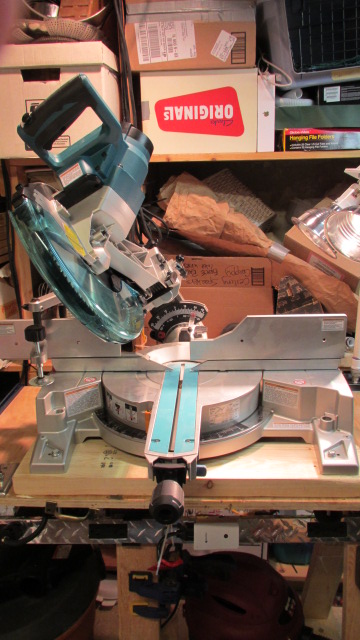
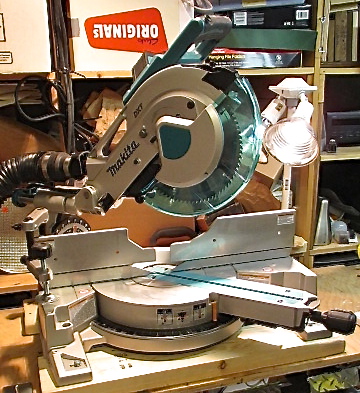
I’m not sure how many of you receive the monthly periodical “Gimme Wood,” but ever since March of this year when their centerfold was a beauty from Japan, I’ve been dreaming of getting my hands on one of them.  I was so determined to get one that I engaged one of those traffickers in Japan to arrange everything on my behalf and she’d be a welcomed addition to my household.

Well, lo and behold, I found her online, and while she’s not “new” she’s been gussy’d-up, had a face-lift, and, most importantly rehabilitated.  She arrived at my doorstep about three weeks ago, but I kept her in the basement guest room fearing ridicule from my friends.  It wasn’t until yesterday that I finally put my hands on her and fired her up!

Unbelievable!

A slow start but once she got going. . .Jeez, I’ve been wasting time on American ones. . .I should’ve got one from Japan last year!

She’s mine forever, and there’s nothing anyone can do to take her away from me.  At long last my mitre corners will fit and I’ll be able to saw wood 10″ wide!

I love my Makita 10-inch dual slide compound mitre saw with laser.

Deconstruction: Or, The End Is A Great Place To Start

I was never known to have an aptitude for or interest in any kind of creative expression which involved my hands (with the exception of typing).  My friends are surprised by my newly discovered passion for woodworking, and they’re especially surprised that my knowledge has been self-taught.  But it’s less about knowledge and more about three things: 1) Curiosity; 2) Failure; and 3) Experience.

I think I’m a builder by nature.  There’s no proof; actually there’s plenty of evidence to the contrary.  Many friends are flummoxed by my very recent interest in woodworking.  Frankly it’s just a different way to express my curiosity and creativity.  I’m drawn to puzzling problems and paradoxical possibilities.

But I’m also impatient, prone to cutting corners, and okay with outcomes expressed by “good enough,” or “that’ll do.”

Why do we dream dreams we want, but are incapable of achieving?  Because we plunge headlong into a project long before we fully understand the knowledge or practical training required. It’s only when I encounter a surprise obstacle do I understand the depth of my ill-preparedness.  The obstacle can’t be avoided; it requires immediate attention (which in turn demands research and reading and materials) which dampens the initial excitement like a toy that breaks after 10 minutes.  Setbacks are a normal part of any project, but patience and an understanding of how your project is assembled helps in the long run.  

My self-education in woodworking stemmed from a pen stand a carpenter built into an exquisite barrister bookcase.  When I enquired if I might procure a pen stand from him, he replied in, what I was certain a foreign language:  All you do is put a half-inch core box bit in the collet of your router, adjust your cut depth, make sure your fence is square and both the in feed and out feed halves are aligned, check your speed, adjust the feather boards, and hit the switch! What?!?!? I sat on the internet for two hours deciphering his email.  Eventually I located the things he referenced and purchased them absolutely clueless as to what one does with them in order to produce the aforementioned pen stand.  I had decided to entertain my curiosity, put up cash betting that I could figure it out, and enjoyed for the first time in 20 years the brazen self-assuredness and absolute impunity (which, I bemoaned was carelessly frittered away by clodhopping, trust-funded youth).

But I’ve been bemoaning wrongly.  It’s not that youth squanders audacious and foolhardy behavior, but that I, when the significance of adulthood grabbed me by the throat and squeezed, surrendered my curiosities like possessions to a customs officer, and drifted farther and farther and farther still away from the entertainment that life could be.  That adventure was supplanted by decades of slick marketing campaigns which led to the acquisition of goods the commercials told me I’d like.  And then, Kaboom!  One hell-of-a-manic-episode and like the iconic Chaplin tramp, I was thrown out of the club and into the street.

And feeling just as I did when my older brother told me to get lost when he didn’t want me to tag along with his older pals, I finally understood that life only looks the way it does, because that’s how I look at it.

So today and a year of days before today I’ve promised to listen to my curiosities, promised to try things I haven’t done, and promised to fail as often as I can because failure assuredly makes curiosity laugh.


The Crisp Season of Change

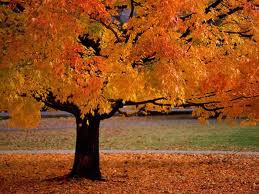
At last it’s arrived, like a visit from my favorite uncle who told tales of unimaginable childhood freedoms (having been raised on a fruit orchard farm).  At long last it’s arrived, the darkness of dawn mornings and the dimness of late afternoon twilights.  Finally, finally it’s arrived, the season of the apple and the pumpkin and hot cider.  And thank God they’re gone, days that grated like my cat’s yowling or, tortuous days akin to the incessant presence of my just-turned-teen sister and her coterie of screeching and cackling teensters (defined as a pimply, high-pitched, recently teened and obstinate-as-hell, alien transmutation); those chronically simmering days followed by feverous and languid nights, the forecasted but broken-promised breeze failed to arrive like those letters from your summer camp romance.  Relief has clocked-in, elbowing out a tireless summer which dropped anchor like a battleship of fervent seamen and remained well past dry-docking the sailboat.  The ease of fruit pie-like single-layered simplicity (shorts sandals shirt) has given way to the time-consuming layered bundling like wrapping grandmamma’s Chatsford teapot for shipping, encasing oneself with layer upon shedable layer.

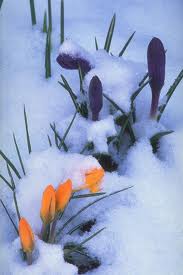
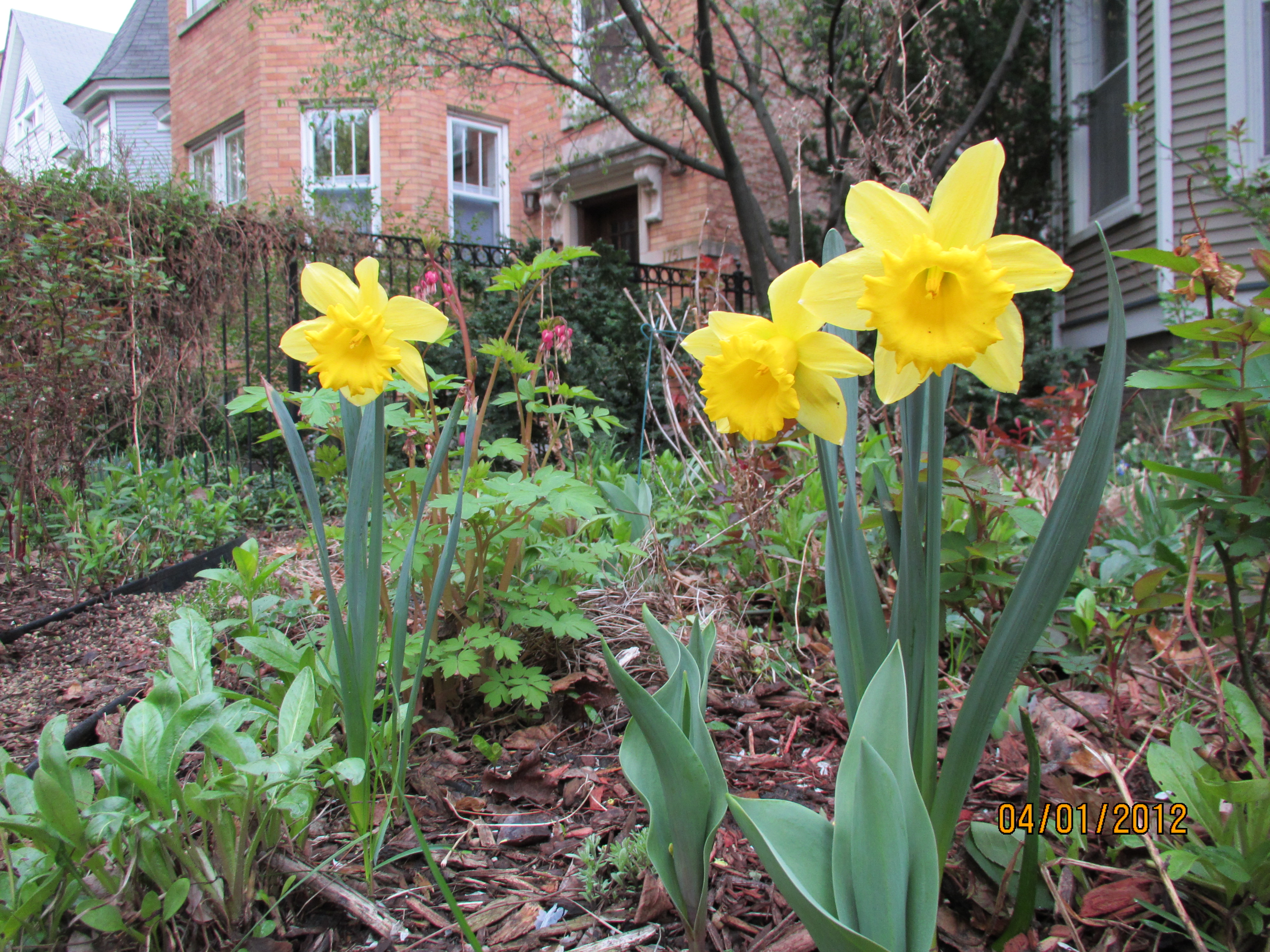
I’ve recently concluded that I prefer seasons of change (Spring and Fall) over seasons of suffering (Summer and Winter).  I enjoy the initial imperceptible adaptations which occur in the early spring and early fall: Spring’s first cautious knock of Snow Drops; fall’s tentative nips of brusque breezes.  Of course these trepidations soon give way to Spring’s salvo of elevating stems topped with an eternity of color and Fall’s broad strokes of vividly colored canopies which subtly cautions us of life’s temporal cycle.  The seasons of change also highlight our world’s overwhelming beauty and diversity; it’s also a testament that every piece of (what we call) life patiently waits its turn to express its individual magnificence, it’s solo, when the world recognizes its achievement during the season’s glory!

If only we, as part of nature, would patiently wait for our turn to shine with respect for each other (and our colorful diversity).  And that we, as a Snow Drop or a stitch in Autumn’s auroral quilt, are an irreplaceable verse in life’s grand narrative.